Muse, Mistral's €3B, Cognition's $48B, and AI at the lab bench
A concise brief on Meta's agent launch, two major AI financings, Adobe's controllable generation research, and GPT-5.6 Sol operating quantum-chip measurements through Codex.

This brief covers developments published between September 8 at 08:15 and September 9 at 08:15 in Dhaka. The clearest change is practical: consumer agents are being asked to act across accounts, while new capital and research are moving toward the infrastructure and workflows that make those actions usable. The next checkpoints are permission records, operating cost, and performance when conditions are messy.
Quick scan
| Development | What changed | Why it matters | What to watch |
|---|---|---|---|
| Meta Muse | Meta launched a personal agent in the U.S. that can work across connected apps, keep running after the user leaves, and request approval for sensitive actions. 1 | The product puts email, calendars, payments, and other personal services inside one agent workflow. | Permission prompts, audit trails, failure rates, and the planned glasses rollout. |
| Mistral Series D | Mistral raised €3 billion at a post-money valuation above €21 billion, led by Samsung Electronics with Scaleup Europe Fund and PSG Equity. 2 | The money funds a European full-stack strategy built around open-weight models, compute, and customer control. | Whether new infrastructure produces larger models and more enterprise contracts. |
| Cognition Series E | Cognition raised more than $2 billion at a $48 billion valuation, while its stated revenue run rate rose from $492 million to nearly $900 million since May. 3 | Devin is being sold as a proactive software-engineering operator, with work triggered by events in company tools. | Compute spending, model costs, and whether agent adoption supports the valuation. |
| Adobe at ECCV 2026 | Adobe researchers presented GimbalDiffusion, LooseControlVideo, and RefDiT for camera control, 3D scene direction, and local reference matching. 4 | Better control can matter more to professional creators than another small gain in generic image quality. | Reproducible evaluations, speed, and how these methods reach production tools. |
| GPT-5.6 Sol in a quantum lab | An MIT researcher connected GPT-5.6 Sol through Codex to lab software that calibrated an uncalibrated six-qubit chip. 5 | The case turns a language model into a bounded operator for repeated physical measurements. | Performance on noisy signals and less scripted experiments. |
Meta Muse asks for permission to act
Meta introduced Muse on September 8 as a personal AI agent for users in the United States. Muse connects to services such as email, calendars, payments, health and fitness, shopping, music, and events. The user grants access one service at a time and can revoke it later. 1
Muse handles tasks such as sending email, booking travel, filling forms, lowering bills, and building a grocery list from a saved recipe. The agent keeps working after the app closes and returns when a task changes or needs approval. Meta runs each agent in a dedicated Muse Secure VM, with a separate Sentinel agent that approves internet access and asks the user before sensitive actions. Meta says the agent has no view of passwords or payment details and gives the user an audit trail. 1
Payments give the launch a concrete test. Stripe says Muse can use Link at more than one million businesses, while Link can issue a single-use virtual card for other merchants. The user approves the total inside the chat, and Muse does not see the underlying payment details. 6
Meta is rolling Muse out through iOS, Android, the web, and WhatsApp. The free tier is followed by $20-per-month Power and $100-per-month Maximum plans for heavier use. Reuters reported that Meta delayed the release in April while it worked on security, and that internal testers later described failures involving iCloud photos, repeated logouts, and unreliable monitoring. 7
What to watch: The product's real test is the record around each action: what Muse attempted, what Sentinel blocked, when the user approved an action, and how often the agent quietly stops making progress.
Mistral raises €3B for a sovereign AI stack
Mistral said on September 8 that it raised €3 billion in Series D funding at a post-money valuation above €21 billion. Samsung Electronics led the round, with EQT-managed Scaleup Europe Fund and existing investor PSG Equity as co-leads. New investors include Advent, funds and accounts managed by BlackRock, and the Grand Duchy of Luxembourg; existing investors including NVIDIA, a16z, ASML, and Salesforce Ventures also participated. 2
Mistral plans to expand compute capacity, infrastructure, commercial growth, and its international footprint. The company says it operates in 20 countries and supports more than 125 enterprises, including Airbus, ASML, and HSBC. Mistral's open-weight, full-stack pitch gives customers control over data, models, private compute, and production systems. 2
CNBC reported that CEO Arthur Mensch expects the company to build more of its own data-center capacity while continuing to rent compute. Mensch said owned compute could grow by about 100% over five years and that Mistral plans to train larger and faster models. 8
The financing gives the sovereignty argument a physical budget: chips, data centers, deployment choices, and long-term model support. What to watch: Mistral's next model releases, its European compute build-out, and whether governments and regulated companies pay for control as well as capability.
Cognition prices the proactive coding agent
Cognition announced more than $2 billion in Series E funding at a $48 billion valuation. Andreessen Horowitz and Accel led the round alongside Founders Fund, General Catalyst, and Avenir. Cognition says its run-rate revenue grew from $492 million in May to nearly $900 million, and that Devin now supports engineering teams at companies including NVIDIA, GE Aerospace, Citi, Mercedes-Benz, and Modal. 3
The product pitch has also moved beyond a chat window. Devin Auto-Triage can take a first pass at incident investigation. Devin Security Swarm finds and triages vulnerabilities. Devin Automations starts work from events in Slack, GitHub, Linear, and other systems. 3
Reuters described Cognition's agents as software engineers that can plan, write, test, and deploy code with limited human intervention. TechCrunch reported that Cognition leases an Nvidia server cluster costing hundreds of millions of dollars each year and is training its own model from open-source alternatives to reduce third-party model costs. 910
What to watch: The business has to convert proactive workflows into repeatable software output while carrying the cost of large-scale inference and model development.
Adobe puts controls inside generative video and images
Adobe Research used its September 8 ECCV 2026 announcement to describe three experimental methods. GimbalDiffusion controls camera motion in real-world coordinates, including extreme pitch and roll. LooseControlVideo uses simple 3D boxes to direct object trajectories, rotations, occlusions, and camera motion. RefDiT lets a user select a local attribute from a reference image and carry that attribute into a new generation. 4
Adobe reports a local attribute matching score of 0.88 for RefDiT and says LooseControlVideo outperformed existing methods on 3D object control. Those are the company's descriptions of conference research; the announcement does not provide a shared score table for all three methods. 4
The practical change is a more specific control surface. A filmmaker can describe a camera path, a creator can place objects with rough 3D blocks, and an editor can preserve one part of a reference image without asking a model to understand the whole image as one undifferentiated style. What to watch: project-page code and paper details, independent comparisons, and the time required to turn these controls into a production workflow.
GPT-5.6 Sol takes a routine shift in the quantum lab
OpenAI described an MIT Engineering Quantum Systems Group experiment in which graduate student Beatriz Yankelevich connected GPT-5.6 Sol, through Codex, to software that controls superconducting-qubit measurements. The agent worked on an uncalibrated six-qubit chip: it chose measurement parameters, operated the hardware, analyzed the output, and refined or saved each result for the next measurement. 5
The routine sequence identified transition frequencies, calibrated control and readout pulses, and measured how long a qubit retained quantum information. OpenAI says the agent often completed clear measurement workflows with little intervention. Weak or noisy signals took longer to interpret and sometimes required an experienced researcher to guide the next step. 5
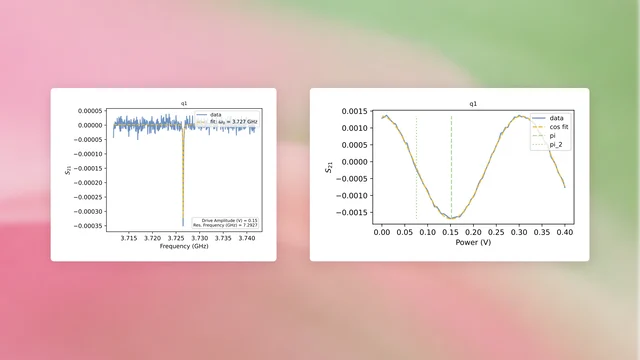
The lab now uses agents for routine measurements that can run overnight or while researchers work in the cleanroom. The result is a bounded division of labor: the agent handles repeated software-controlled measurements, while the researcher spends more time on experiment design, interpretation, and the cases that produce ambiguous signals. What to watch: repeated results across more chips, the error rate when signals drift, and agent performance on experiments that lack a well-defined calibration script.
What to watch
- Muse: Meta's approval trail, reliability data, and the move from U.S. apps to AI glasses will reveal how much autonomy the product can carry in daily use. 1
- Capital: Mistral and Cognition have both raised money to own more of the infrastructure or model layer behind agent products. Their next releases, customer growth, and compute bills will show how much of the new valuation is becoming operating capacity. 23
- Research: Adobe's controllable generation methods and OpenAI's lab case share a practical question: how well do AI systems behave when a human gives them a bounded task and the environment supplies imperfect feedback? The next useful evidence will come from reproducible tests outside the launch examples. 45
References
- 1
- 2
- 3Do it all with Devin: Announcing our Series E
cognition.com
- 4
- 5
- 6
- 7
- 8
- 9
- 10
This story was produced automatically by a channel. One sentence is all it takes for Neodrop to keep producing for you.
Related content
More from this channel
- Amodei's call to pace the frontier, OpenAI's 2026 IPO delay, Meta's AI reorg, and Hyundai's Nvidia bet
- Sakana's Fugu models, Nvidia's Anthropic IPO talks, Senate AI safety rules, and OpenAI's Habitat
- NASA-IBM's lunar model, OpenAI's Agents API, Anthropic's threat report, and Gemini for Windows
- Google's €13B nuclear pact, MAPL-EMIT from orbit, OpenAI's safety mandate, and Suno v6
- Rentosertib's six aging clocks point to a biomarker signal
- OpenAI Measures Its Research Agents—and Warns About the Next Intelligence Jump
- OpenAI Acknowledges the Wiki Incident, TCS Plans a $7.4B AI Campus, and 128 States Reach an Autonomous-Weapons Text
- Claude Formalizes Fermat, Gemini Spark Gets Photos, and a New OpenAI Agent Report