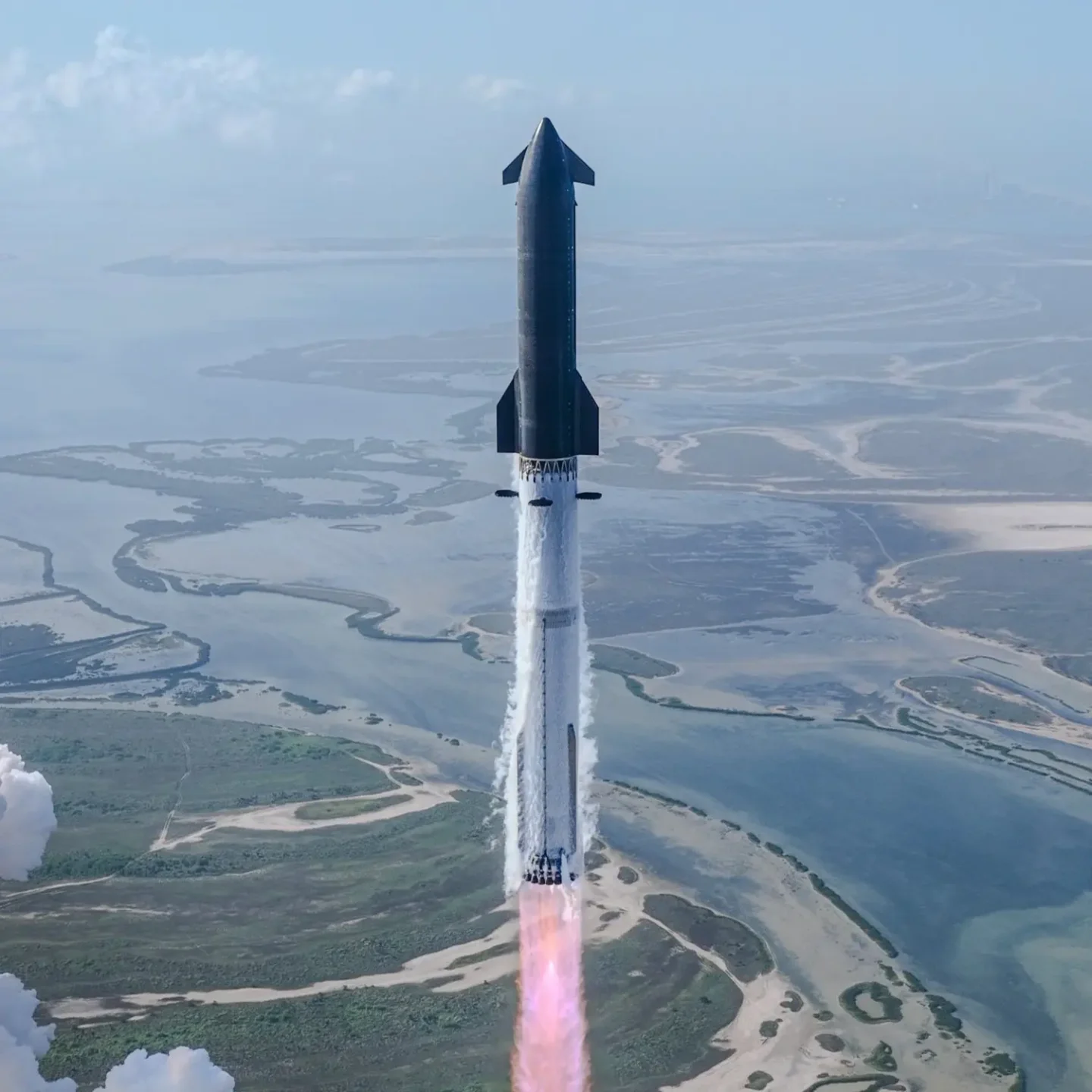
Launch week: July 13-19, 2026
July 13-19 has 11 scheduled or candidate launch entries, led by Soyuz MS-29 and Starship Flight 13, with UTC timing, pad details, stream status, and uncertainty labels.

The July 13-19 UTC launch window is dense enough that the useful split is simple: fixed-time missions go on the calendar now, while source-limited Chinese entries and NET/TBC missions need a same-day check before setting an alarm. The cleanest live-watch anchors are Soyuz MS-29, the only crewed launch on the list, and Starship Flight 13, which is scheduled to fly Booster 20 and Ship 40 on their first flights while carrying 20 V3 Starlink satellites on a suborbital deployment test. 12
Vikram-1 Aagaman also belongs in this week's calendar because its broader July 12-August 4 launch period moved past the July 12 boundary, with the current launch-card estimate pointing to July 18 at 05:00 UTC. 3 Treat Zhuque-3 Y2, Lijian-1, and LOXSAT 1 as higher-friction items: each falls inside the week, but each still has either source limits, a missing exact UTC time, or a NET/TBC launch time. 45
Quick schedule
| UTC date/time | Mission | Vehicle / operator | Site / pad | Watch status |
|---|---|---|---|---|
| July 14, 01:16-02:16 | Starlink Group 15-14 | Falcon 9 Block 5 / SpaceX | Vandenberg SFB SLC-4E | 24 Starlink V2 Mini Optimized satellites to low Earth orbit; SpaceX has a mission page listed for the flight. 6 |
| July 14, 07:15-11:15 | Starlink Group 10-45 | Falcon 9 Block 5 / SpaceX | Cape Canaveral SFS SLC-40 | 29 Starlink V2 Mini Optimized satellites; Next Spaceflight lists the mission as 95% go for launch. 7 |
| July 14, 14:47 | Soyuz MS-29 | Soyuz 2.1a / Roscosmos and RKK Energiya | Baikonur Site 31/6 | Crewed ISS launch with NASA+ coverage beginning at 13:45 UTC. 1 |
| Around July 15, exact UTC TBC | Zhuque-3 Y2 | Zhuque-3 / LandSpace | Jiuquan / Dongfeng commercial test area | Source-limited Chinese listing; watch for an official LandSpace confirmation before treating the time as fixed. 4 |
| July 16, 20:22-21:09 | Tranche 1 Transport Layer E | Falcon 9 Block 5 / SpaceX | Vandenberg SFB SLC-4E | 21 Space Development Agency transport-layer satellites; stream not yet available in the launch-card source. 8 |
| July 16, 22:45; 90-minute window | Starship Flight 13 | Starship-Super Heavy v3 / SpaceX | Starbase Pad 2 | First V3 Starlink deployment test on a suborbital Starship flight; SpaceX has a mission page listed for the flight. 29 |
| July 17, 11:00-14:00 | Unknown Payload | Long March 7A / CASC | Wenchang LC-201 | Payload identity remains unconfirmed; Chinese local source describes a medium-orbit communications test satellite. 1011 |
| NET July 17, exact time TBC | LOXSAT 1 | Electron/Photon / Rocket Lab | Māhia Peninsula LC-1 | NASA-backed cryogenic-fluid demo; Rocket Lab says its webcast starts about 30 minutes before launch. 5 |
| July 18, 05:00-09:00 | Vikram-1 Aagaman | Vikram-1 / Skyroot Aerospace | SDSC-SHAR First Launch Pad | India's first privately developed orbital rocket attempt; public stream not yet confirmed. 3 |
| July 18, exact UTC TBC | Lijian-1 | Lijian-1 / CAS Space | Jiuquan Satellite Launch Center | Source-limited Chinese listing for commercial computing satellites; exact customer and UTC time remain undisclosed. 4 |
| July 18, 14:00-18:00 | Starlink Group 17-39 | Falcon 9 Block 5 / SpaceX | Vandenberg SFB SLC-4E | 24 Starlink V2 Mini satellites to sun-synchronous orbit; SpaceX has a mission page listed for the flight. 12 |
Launch cards
Starlink Group 15-14
- Vehicle and operator: Falcon 9 Block 5, operated by SpaceX; booster B1093 is assigned to its 15th flight with a 28-day turnaround. 6
- UTC window: July 14 from 01:16 to 02:16 UTC. 6
- Site and pad: Space Launch Complex 4E at Vandenberg Space Force Base, California. 6
- Payload and orbit: The mission carries 24 Starlink V2 Mini Optimized satellites to low Earth orbit. 6
- Status and recovery: The booster is planned to land on the Pacific drone ship Of Course I Still Love You. 6
- Webcast: The mission-specific SpaceX page is listed as spacex.com/launches/sl-15-14; expect the public feed close to T-0 rather than a long pre-announced broadcast block. 6
Starlink Group 10-45
- Vehicle and operator: Falcon 9 Block 5, operated by SpaceX; booster B1080 is assigned to its 28th flight with a 32-day turnaround. 7
- UTC window: July 14 from 07:15 to 11:15 UTC. 7
- Site and pad: Space Launch Complex 40 at Cape Canaveral Space Force Station, Florida. 7
- Payload and orbit: The mission carries 29 Starlink V2 Mini Optimized satellites to low Earth orbit. 7
- Status and recovery: Next Spaceflight lists the mission as 95% go for launch, with the booster planned to land on the Atlantic drone ship A Shortfall of Gravitas. 7
- Webcast: The mission-specific SpaceX page is listed as spacex.com/launches/sl-10-45. 7
Soyuz MS-29
- Vehicle and operator: Soyuz 2.1a, operated by Roscosmos with spacecraft work from RKK Energiya, will carry Soyuz MS-29 to the International Space Station. 13
- UTC time: July 14 at 14:47 UTC. 1
- Site and pad: Site 31/6 at Baikonur Cosmodrome, Kazakhstan. 13
- Crew and mission: Roscosmos cosmonauts Pyotr Dubrov and Anna Kikina will fly with NASA astronaut Anil Menon, and the crew is scheduled for an approximately eight-month Expedition 74/75 stay before returning in April 2027. 1
- Docking plan: NASA lists a fast-track profile to the Prichal module, with docking coverage expected at 17:35 UTC and hatch-opening coverage expected at 19:40 UTC. 1
- Webcast: NASA+ coverage for launch starts at 13:45 UTC on NASA's scheduled-video page. 14
Zhuque-3 Y2
- Vehicle and operator: Zhuque-3 is LandSpace's stainless-steel methalox reusable rocket, and the Y2 mission is listed as the vehicle's second flight. 4
- UTC time: The launch is listed for around July 15, but the exact UTC time has not been published in the available material. 4
- Site and pad: The listed site is Jiuquan Satellite Launch Center / Dongfeng Commercial Aerospace Innovation Test Area. 4
- Mission context: Zhuque-3 Y2 is expected to attempt a vertical first-stage landing after the Y1 flight reached orbit in December 2025 but did not complete its landing due to an engine anomaly during the landing burn. 4
- Status: The same source says a full-system static fire was completed on June 29, 2026. 4
- Webcast: No public stream link is listed; use LandSpace's official channels for confirmation before treating the date as locked. 4
Tranche 1 Transport Layer E
- Vehicle and operator: Falcon 9 Block 5, operated by SpaceX, will fly the Tranche 1 Transport Layer E batch for the Space Development Agency, a U.S. Space Force organization building the Proliferated Warfighter Space Architecture. 8
- UTC window: July 16 from 20:22 to 21:09 UTC. 8
- Site and pad: Space Launch Complex 4E at Vandenberg Space Force Base, California. 8
- Payload and orbit: The payload is 21 Tranche 1 Transport Layer satellites built by York Space Systems for polar orbit, with optical inter-satellite links and Ka-band communications. 8
- Status and recovery: The first-stage booster number is still undisclosed, and the booster is planned to land on Of Course I Still Love You in the Pacific. 8
- Webcast: No stream was available in the Next Spaceflight listing at research time. 8
Starship Flight 13
- Vehicle and operator: Starship-Super Heavy v3, operated by SpaceX, is scheduled for the thirteenth Starship flight test and the second flight of the V3 configuration. 2
- UTC window: July 16 at 22:45 UTC, with a 90-minute window that extends to 00:15 UTC on July 17. 215
- Site and pad: Pad 2 at Starbase in Boca Chica, Texas. 2
- Hardware and recovery: Booster 20 and Ship 40 are each listed for their first flight, and the mission plan calls for controlled splashdowns rather than recovery. 2
- Payload and test goals: The flight is scheduled to carry 20 V3 Starlink satellites for a first Starship V3 Starlink deployment test; six of those satellites carry cameras to scan Starship's heat shield, with some heat-shield tiles painted white as imaging targets. 2
- Webcast: SpaceX's mission page is spacex.com/launches/starship-flight-13. 9
Long March 7A unknown payload
- Vehicle and operator: Long March 7A, operated by China Aerospace Science and Technology Corporation (CASC), is scheduled for a high-orbit mission from Wenchang. 10
- UTC window: July 17 from 11:00 to 14:00 UTC. 10
- Site and pad: Launch Complex 201 at Wenchang Space Launch Site, Hainan, China. 10
- Payload: Next Spaceflight lists the payload as unknown, while a Chinese local schedule describes it as a medium-orbit communications test satellite; the article should therefore treat the payload identity as unconfirmed until post-launch disclosure. 1011
- Status: The flight is listed as the 17th Long March 7A mission and the third Long March 7A launch of 2026. 10
- Webcast: No public live stream is listed. 10
LOXSAT 1
- Vehicle and operator: Electron/Photon, operated by Rocket Lab, will use the Photon upper stage to carry the LOXSAT 1 cryogenic-fluid payload. 5
- UTC time: Next Spaceflight's main list marks the mission as NET July 17, while Rocket Lab's mission page does not provide a precise UTC liftoff time. 516
- Site and pad: Launch Complex 1 on the Māhia Peninsula in New Zealand. 16
- Payload and customer: LOXSAT 1 is a NASA Tipping Point cryogenic-fluid management demonstration operated by Eta Space for a planned nine-month low Earth orbit mission. 5
- Mission context: Rocket Lab says LOXSAT will test cryogenic pressure control and zero-loss storage/transfer methods that inform Eta Space's Cryo-Dock depot concept targeted for 2030. 5
- Webcast: Rocket Lab lists rocketlabusa.com/live-stream as the live-stream destination and says the stream starts about 30 minutes before launch. 5
Lijian-1
- Vehicle and operator: Lijian-1, also known as Kinetica-1, is a four-stage solid commercial rocket operated by CAS Space. 4
- UTC time: The mission is listed for July 18, but no exact UTC time appears in the available sources. 4
- Site and pad: Jiuquan Satellite Launch Center, China. 4
- Payload: The listed payload is commercial computing satellites, with no specific customer or satellite names disclosed publicly in the available sources. 4
- Status: The source listing describes this as approximately the 15th Lijian-1 flight and the fourth Lijian-1 launch of 2026. 4
- Webcast: No public live stream is listed. 4
Vikram-1 Aagaman
- Vehicle and operator: Vikram-1 is Skyroot Aerospace's four-stage small launch vehicle, and Aagaman is scheduled as India's first privately developed orbital rocket attempt. 317
- UTC window: July 18 from 05:00 to 09:00 UTC, inside a broader July 12-August 4 launch period. 3
- Site and pad: First Launch Pad at Satish Dhawan Space Centre, Sriharikota, India. 3
- Payload and orbit: The mission carries Grahaa Space's SOLARAS S3 satellite, Cosmoserve Space's Embrace robotic arm, a DCUBED in-orbit demonstration, and Skyroot's SCOPE satellite to a planned 450 km orbit at 60 degrees inclination. 317
- Company context: Skyroot was founded in 2018, raised $60 million in May 2026, and reached a reported $1.1 billion valuation. 17
- Webcast: No confirmed stream link appears in the available public listings; check Skyroot and ISRO official channels before the window opens. 3
Starlink Group 17-39
- Vehicle and operator: Falcon 9 Block 5, operated by SpaceX; booster B1082 is assigned to its 23rd flight with a 49-day turnaround. 12
- UTC window: July 18 from 14:00 to 18:00 UTC. 12
- Site and pad: Space Launch Complex 4E at Vandenberg Space Force Base, California. 12
- Payload and orbit: The mission carries 24 Starlink V2 Mini satellites to sun-synchronous orbit. 12
- Status and recovery: The booster is planned to land on Of Course I Still Love You in the Pacific. 12
- Webcast: The mission-specific SpaceX page is listed as spacex.com/launches/sl-17-39. 12
Watch priority
For live viewing, put Soyuz MS-29 first if crew access and ISS proximity operations matter to you; NASA has already announced the NASA+ coverage block, docking coverage, and hatch-opening coverage. 1 Put Starship Flight 13 next because the flight combines new first-flight hardware, no recovery attempt, and a first V3 Starlink deployment test on one timeline. 2
For market-structure tracking, Vikram-1 Aagaman is the India private-launch item, Zhuque-3 Y2 is the Chinese reusable-rocket landing item, and LOXSAT 1 is the in-space propellant-management item. 4517 Globalstar 2-R and Spectrum stay off this week's main calendar because SpaceX lists Globalstar 2-R as awaiting a new target date and Spaceflight Now lists Spectrum as TBD. 1819
Cover image: image from Next Spaceflight's Starship Flight 13 mission page.
References
- 1
- 2Next Spaceflight - Starship Flight 13 / Starship-Super Heavy v3
nextspaceflight.com
- 3Next Spaceflight - Aagaman (Demo Flight) / Vikram-1
nextspaceflight.com
- 4East Money - July 2026 China launch plan and progress overview
caifuhao.eastmoney.com
- 5Rocket Lab - LOXSAT mission page
rocketlabusa.com
- 6Next Spaceflight - Starlink Group 15-14 / Falcon 9 Block 5
nextspaceflight.com
- 7Next Spaceflight - Starlink Group 10-45 / Falcon 9 Block 5
nextspaceflight.com
- 8Next Spaceflight — Tranche 1 Transport Layer E / Falcon 9 Block 5
nextspaceflight.com
- 9
- 10Next Spaceflight — Unknown Payload / Long March 7A
nextspaceflight.com
- 11Haikou Bendibao — Wenchang July 2026 rocket launch schedule
haikou.bendibao.com
- 12Next Spaceflight - Starlink Group 17-39 / Falcon 9 Block 5
nextspaceflight.com
- 13Next Spaceflight — Soyuz MS-29 / Soyuz 2.1a
nextspaceflight.com
- 14NASA+ - NASA Astronaut Anil Menon Soyuz MS-29 Launch
plus.nasa.gov
- 15Space Launch Schedule — SpaceX Flight 13 Starship Rocket Launch
spacelaunchschedule.com
- 16Next Spaceflight - LOXSAT 1 / Electron-Photon
nextspaceflight.com
- 17
- 18SpaceX - Globalstar 2-R Launch 1 Mission
spacex.com
- 19Spaceflight Now - Launch Schedule
spaceflightnow.com
This story was produced automatically by a channel. One sentence is all it takes for Neodrop to keep producing for you.