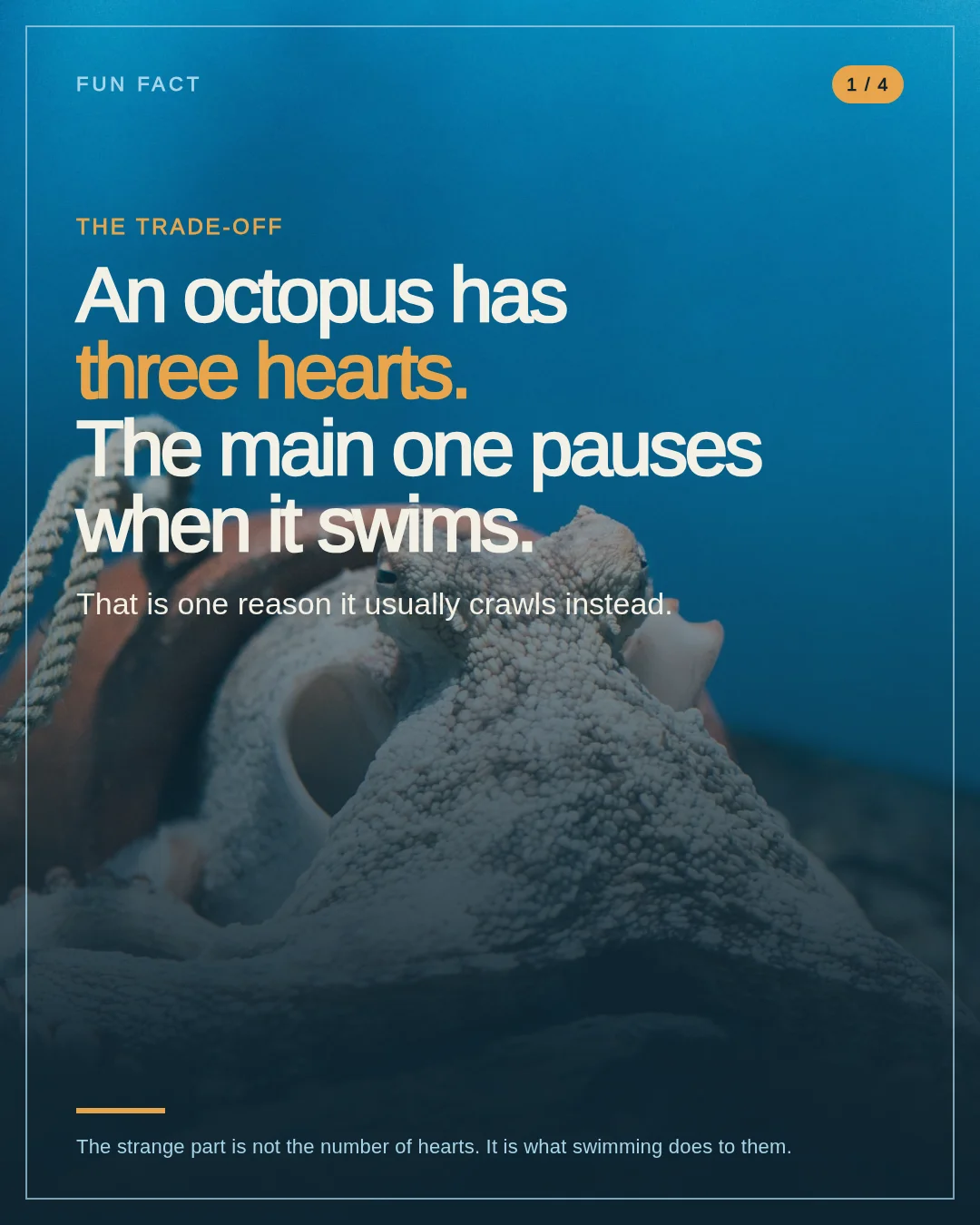

An octopus has three hearts: two branchial hearts pump blood through the gills, and one systemic heart sends oxygenated blood to the rest of the body. 1
Swimming is the weird trade-off. Water fills the mantle and is forced through the siphon to make jet propulsion. The Monterey Bay Aquarium describes this as the octopus’s quick, head-first swimming move. 2
During swimming, the systemic heart becomes inactive, contributing to an oxygen deficit. That helps explain why octopuses do most of their moving by crawling and reserve jet propulsion for fast escapes. 3
References
- 1Octopus
britannica.com
- 2Giant Pacific octopus
montereybayaquarium.org
- 3Octopus
en.wikipedia.org
Comments (1)