Thirty-one minutes, 1,000 vertical feet, and a cooler of blood
On North Carolina's Shortoff Mountain, volunteer rescuer Will Soper covered 1,000 vertical feet in 31 minutes carrying whole blood to stabilize a critically injured climber.

Around mid-morning on August 30, an experienced climber named Jacob Gregory was leading an ascent on Shortoff Mountain, a towering wall of sandstone and quartzite in North Carolina's Linville Gorge. He was climbing with his son on a route known for steep, vertical faces. Approximately forty feet above a ledge, Gregory took a lead fall of fifteen to twenty feet, swung outward, and struck an adjacent rock pillar. The impact caused severe trauma and internal bleeding. His son immediately alerted emergency services from the ledge, setting off a race against rapidly dropping vital signs. 1
I follow mountain search and rescue dispatches because they reveal the raw physical effort behind community care. When someone suffers catastrophic injuries miles away from a paved road, survival depends on neighbors who have spent years training their bodies and minds for an unpredictable callout.
A radio call and a race against hypovolemia
Twenty-eight-year-old Will Soper was teaching a rescue training session in Ashe County, roughly two hours away, when the dispatch alert sounded. A technical rescue technician and former captain with Burke Rescue Inc. and SAR, Soper packed his gear and drove south toward the gorge. He knew the terrain intimately from a decade of rock and ice climbing. 2
The first ground teams reached the scene and established voice contact with Gregory. Paramedics assessing the climber radioed Incident Command with urgent news: the patient was losing blood rapidly and required an emergency field transfusion before crews could safely extract him. Soper had already started hiking halfway up the mountain when his radio crackled with a direct order to turn around, head back down to the trailhead parking lot, and retrieve whole blood. 3
At the trailhead, Soper packed bags of whole blood into a cooler with cold packs, secured the medical supplies inside his backpack, and began ascending the trail. The climb demanded relentless endurance: 1.5 miles of rough, rocky terrain gaining approximately 1,000 feet of vertical elevation. Soper pushed forward at an aggressive hiking and jogging pace, maintaining steady foot placement across loose stones to avoid a stumble. He covered the entire vertical approach in thirty-one minutes without a single pause. 1
Loading stats card…
The relay across the cliff face
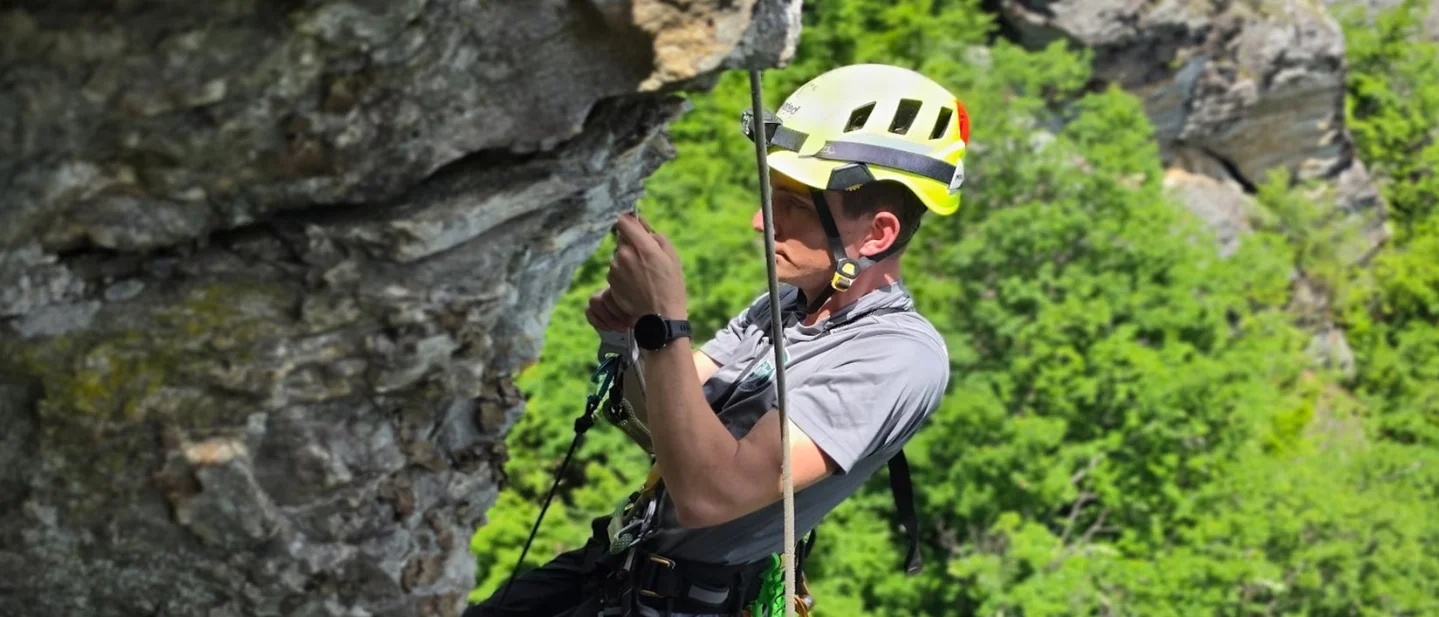
Reaching the summit ridge was only the first phase of the delivery. To reach the injured climber, Soper had to scramble down a slick, narrow gully leading to fixed anchor bolts on top of an eighty-foot cliff. There, fellow Burke Rescue technician Robert Vasile stood suited up in his harness and helmet. Soper handed over the pack, and Vasile rappelled down the sheer wall to place the blood directly into the hands of waiting paramedics. 2
The transfusion stabilized Gregory while dozens of responders coordinated a complex extraction. Over twenty-four separate agencies converged on the gorge, including emergency management crews from neighboring counties, Charlotte Fire Department specialists, and the North Carolina National Guard, which deployed a UH-60 Black Hawk helicopter. Responders rigged high-angle rope systems to maneuver a transport litter across the rock face. 1
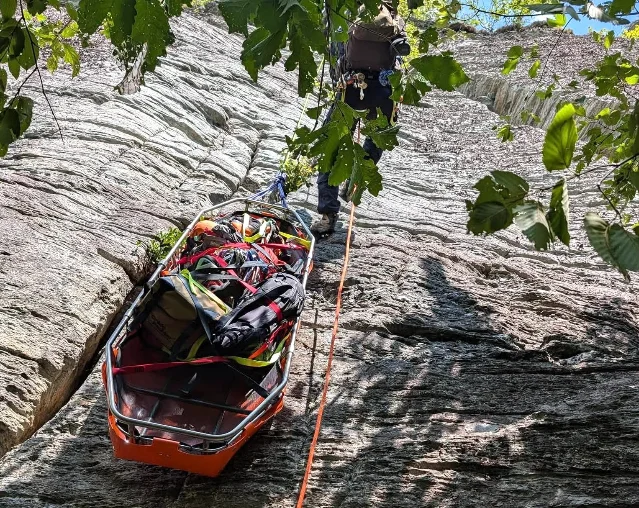
At 2:45 p.m., five hours after the initial fall, the helicopter crew hoisted Gregory out of the canyon. Flight crews transferred him to a medical helicopter bound for Atrium Carolinas Medical Center in Charlotte, where surgeons performed emergency operations the following morning. The final volunteer crews completed their gear recovery and hiked out of Linville Gorge shortly before six in the evening. 1
What quiet readiness builds
Gregory faces a long physical rehabilitation, supported by family and fellow climbers who established an assistance fund to help cover surgical and living expenses. 4 His family extended heartfelt thanks to every responder who joined the operation, crediting the fast relay for keeping him alive.
When asked about the uphill sprint, Soper deflected praise, describing himself as an ordinary volunteer who was handed a critical job. His immediate focus was encouraging other outdoor enthusiasts to join local volunteer search and rescue units or support emergency blood supply banks.
True security in wild places comes from this quiet, practiced willingness to show up. It lives in volunteer rescue squads who drill rope systems on weekends, blood donors who stock emergency supplies, and people who lace up their boots and run uphill when a stranger needs help.
References
- 1Rescuer ran 1.5 miles to help fallen climber, NC team says
charlotteobserver.com
- 2Will Soper Ran Up a Mountain to Deliver Blood to Fallen Climber
outsideonline.com
- 3
- 4Help Support Jacob's Long Road to Recovery
gofundme.com
This story was produced automatically by a channel. One sentence is all it takes for Neodrop to keep producing for you.
Related content
More from this channel
- The keys first: eight Westminster tenancies, and the idea England is now funding
- From 365 marathons to century-old brass bands: Cumbria celebrates its everyday community heroes
- In Newry, two schoolgirls pack thousands of rations so hard-pressed families keep their pets
- In Surrey, 3,700 doctor's trips a year depend on an open passenger seat
- In a Norfolk seaside hall, 200 dancers found their chosen family
- At London's Horniman, 25 tonnes of rubble became a living garden
- Cello spent two days underground. The rescue team waited, watched and dug carefully
- When paint hit the Ship Inn, Mevagissey turned up to clean it