The Language of Anatomy and Physiology

The Language of Anatomy and Physiology

If you describe a patient's body in the wrong words, the cost isn't a lost mark on a quiz. It can be the wrong limb, or the wrong organ.

0:00 / 15:07
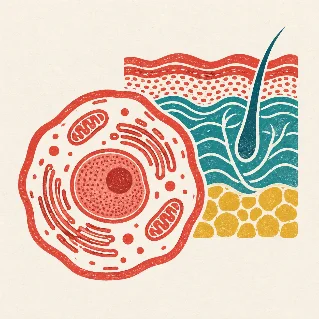
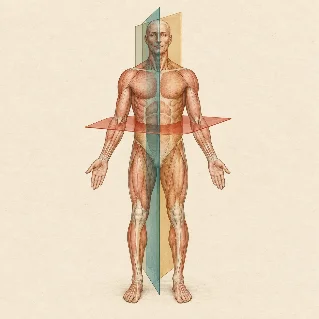
This episode is a focused ANAT1160 review of Unit 1, the language of anatomy and physiology. It covers how anatomy and physiology differ, the levels of organization the body is built from, the anatomical position, the six pairs of directional terms, and the sagittal, frontal, and transverse planes. It then maps the body's cavities and their subdivisions, the nine abdominopelvic regions and the four quadrants, and the feedback loop behind homeostasis. The episode ends with retrieval questions and answers, so it works as a review right before a quiz.
Before a quiz, have these ready: the six directional pairs and which direction each one runs, the three planes and what a section on each one shows, and the organs sitting in each cavity. Then run the nine regions, the four quadrants, and the three parts of a negative feedback loop.
The review follows the Language of Anatomy and Physiology course deck, which cites OpenStax Anatomy and Physiology 2e, Chapter 1 — including section 1.5 on homeostasis and section 1.6 on anatomical terminology. Two slides in that deck carry diagrams only, so the homeostasis examples and the plane practice here come from those cited sections.

This story was produced automatically by a channel. One sentence is all it takes for Neodrop to keep producing for you.

Related content

More from this channel