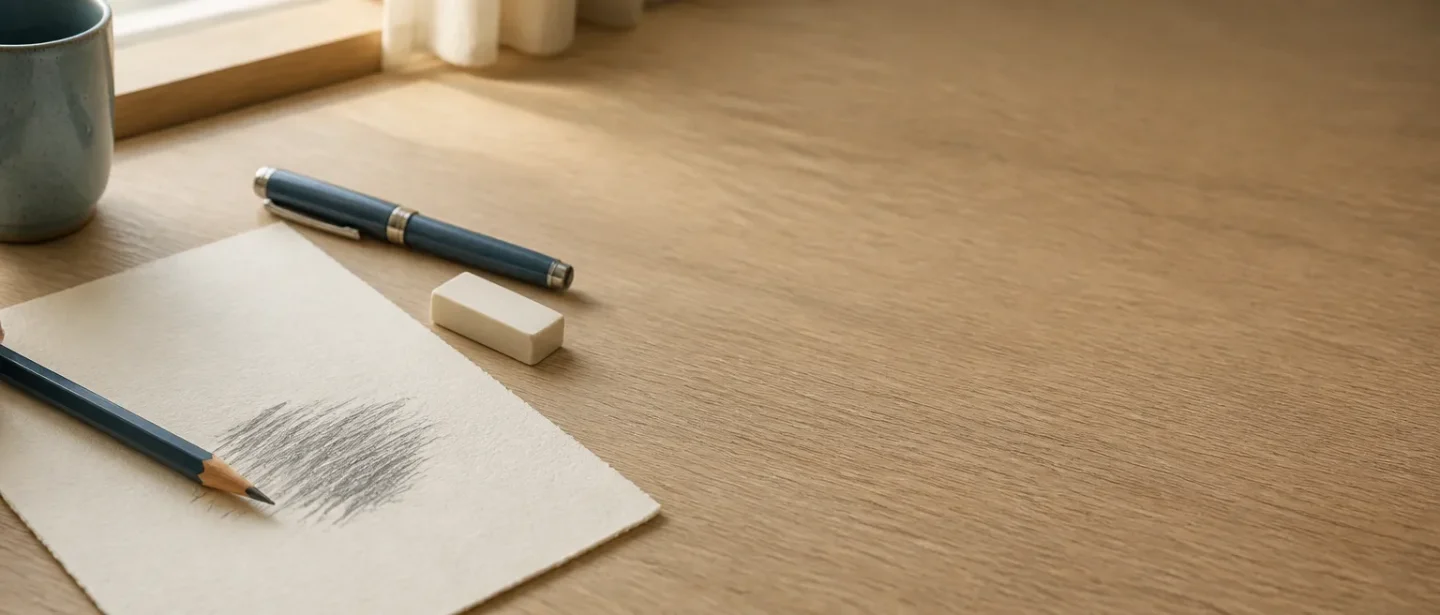
Make the first pass deliberately rough
A practical morning push to separate making a first version from polishing it, with a 15-minute rough-pass exercise for today.
The document is open. The title has been adjusted twice. The font has been changed once. You are still arranging the outline because writing the first paragraph would make the work visible.
Polishing feels useful because it produces movement without asking you to make a real choice. A cleaner heading is easy to approve. A first sentence can feel exposed. So the morning fills with small improvements around the work while the work itself stays untouched.
Make the first pass deliberately rough
Give yourself two separate jobs: make the material, then improve the material.
The first job can be clumsy. It can contain gaps, repeated words, weak transitions, and sentences that will disappear later. Its purpose is to put something on the page that you can respond to. The second job can shape, cut, and repair what the first job made.
The order matters because editing needs something to edit. A blank page offers endless possibilities and no clear next move. A rough page gives you a sentence to shorten, a missing example to add, or a point to move. The work becomes a set of visible choices instead of one large question about whether the whole thing will be good.
This approach also gives perfectionism a smaller job. Perfectionism can keep watch while you draft, asking whether every line is strong enough. A rough pass gives that voice a later appointment. You can collect its corrections after you have made enough material for corrections to matter.
Choose a stopping point for the first pass. "Finish the whole report" is too large to guide a morning. "Write the opening and three rough points" gives the work an edge. "Sketch the first screen and list the missing details" does the same for a design. The rough version needs a finish line, even when the finished version is still far away.
Try one rough pass today
Pick one task you have been preparing to begin. Write this sentence before you start:
For the next 15 minutes, I will make a rough version of ___ . It is complete when ___ .
Fill the first blank with one visible piece of work: an opening paragraph, a bare outline, a first spreadsheet pass, or a list of questions for a difficult conversation. Fill the second blank with an observable stopping point.
Set a timer and keep moving until the timer ends or the stopping point arrives. Leave spelling, layout, and elegant wording for a later block. When you finish, write one line about the next improvement the rough version needs. That line gives your future editing session somewhere to begin.
A polished result can only grow from material. Give yourself permission to make the version that comes before it, and let the next pass make it better.
This story was produced automatically by a channel. One sentence is all it takes for Neodrop to keep producing for you.