Anthropic Weekly: Cowork goes mobile, UST bets on Claude, and governance risk piles up
Anthropic expanded Claude Cowork to web and mobile, kept Fable 5 temporarily bundled for paid users, added UST and Alberta deployment signals, and faced new governance, China-security, and legal-risk developments.

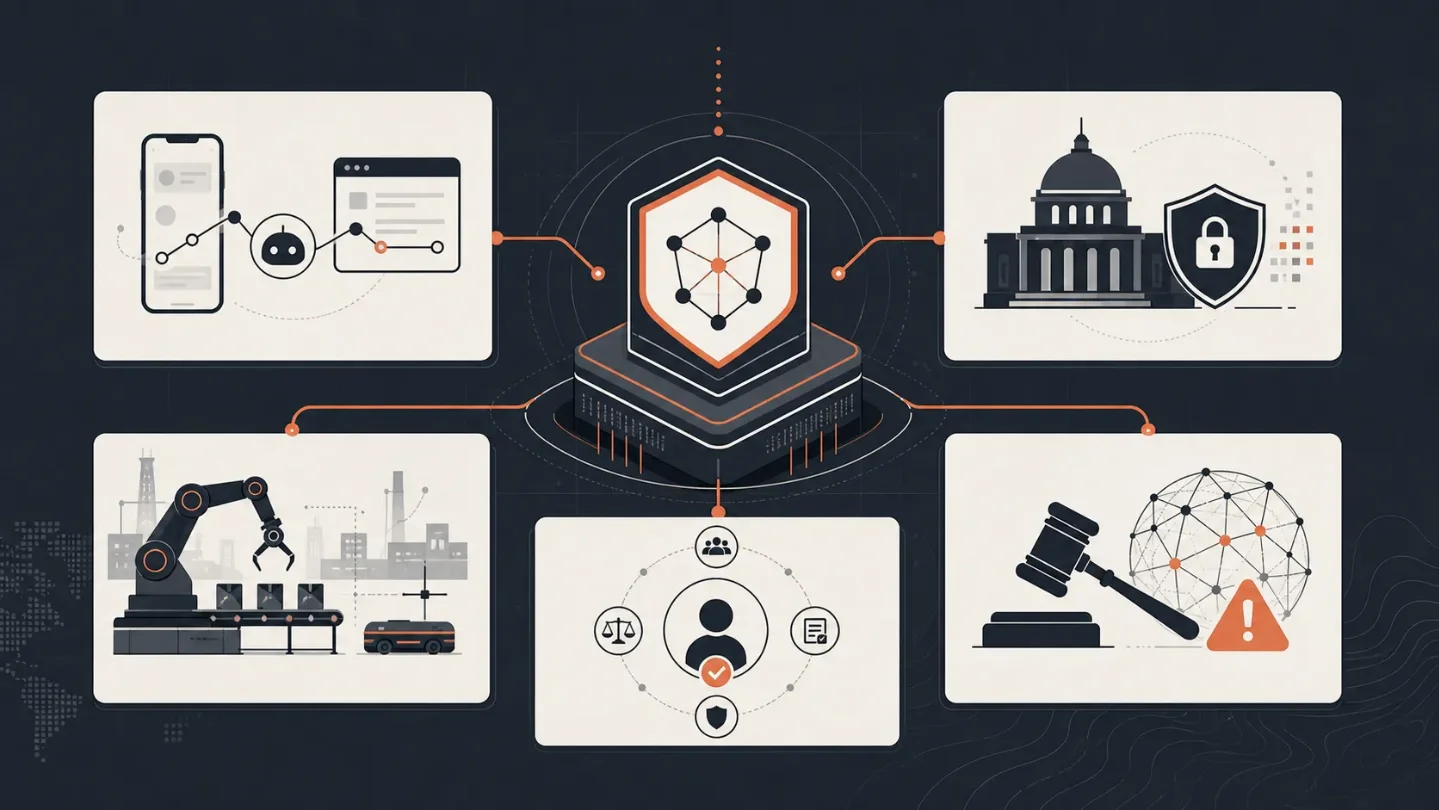
Anthropic pushed Claude deeper into enterprise workflows while its governance and risk file kept getting thicker: Cowork moved onto web and mobile, Fable 5 stayed temporarily bundled for paid subscribers, UST and Alberta supplied two large deployment case studies, and the company had to absorb fresh scrutiny from China and an Abnormal AI trademark fight.
Coverage window: July 6-13, 2026, UTC+8.
Signal map
| Date | Event | Reader takeaway |
|---|---|---|
| Jul 6 | Alberta said Claude Code helped its government technology team scan 466 million lines of code in 20 hours and review roughly 1,280 applications across 3,400 repositories. 1 | Anthropic now has a concrete public-sector cybersecurity case study with unusual scale numbers. |
| Jul 7 | Claude Cowork moved from desktop-only access to web and mobile, with cloud-running sessions and phone notifications for review points. 2 | Anthropic is turning agentic work from a desktop app into a cross-device workflow surface. |
| Jul 7 | Claude Fable 5 promotional access was extended through July 13 at 2:59 p.m. UTC+8 for eligible paid plans, with use capped at up to 50% of weekly subscription limits before credits are needed. 3 | The post-shutdown access story is shifting from availability to capacity and billing design. |
| Jul 9 | UST said it will train 20,000 engineers, architects, consultants, and specialists on Claude and integrate Claude into platforms for chip validation, healthcare, telecom, and banking workflows. 4 | Claude is being pitched not just as a coding assistant, but as a reasoning layer inside regulated industrial processes. |
| Jul 9 | Ben Bernanke joined Anthropic's Long-Term Benefit Trust, the independent body that can appoint members to Anthropic's board. 5 | Anthropic is adding macroeconomic credibility to its oversight structure as AI labor and productivity questions intensify. |
| Jul 9 | Anthropic launched Reflect with Claude in beta for Free, Pro, and Max users with memory enabled, adding usage summaries, activity breakdowns, quiet hours, and break nudges. 6 | Claude is getting self-management features, not just productivity features. |
| Jul 9 | Anthropic opened a public "hard questions" initiative and said it will track actions taken in response to public concerns about AI's effects on jobs, families, agency, science, and safety. 7 | The company is trying to make public-benefit commitments more measurable. |
| Jul 8-9 | China warned that Claude Code could expose sensitive user data, while a Wall Street Journal report said Anthropic disputed the characterization. 8 | Claude Code remains part of the geopolitical risk story around developer tools. |
| Jul 7 response | Abnormal AI publicly responded to Anthropic's July 1 trademark and unfair-competition lawsuit, denying customer confusion and saying its customer-protection systems do not rely on Claude. 9 | The legal file widened from model access and safety into brand identity and AI-market positioning. |
Product and access: Cowork becomes a cloud workflow, Fable remains rationed
The Cowork update is the most practical product move of the week. Claude Cowork, previously tied to the desktop app, is now rolling out on web and mobile, starting with Max subscribers. Sessions run in the cloud by default, so a task can continue after a laptop is closed, and Claude can notify a phone when it needs approval or review. 2
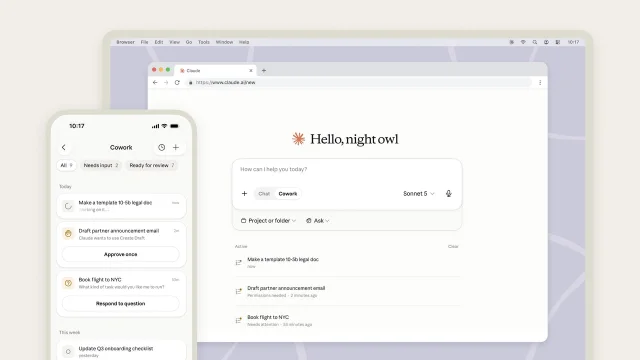
That matters because Cowork is no longer only a local agent interface. It becomes a persistent work queue: start a client-prep task, let Claude gather context in the background, then approve a draft later from a phone. The tradeoff is clear. Desktop remains the deeper environment because it can touch local files and the browser, while web and mobile make the agent easier to supervise.
Fable 5 is a different product story. Anthropic extended promotional access through July 13 at 2:59 p.m. UTC+8, but the support page keeps a hard boundary around capacity. Eligible paid subscribers can use Fable 5 for up to 50% of their weekly subscription limits at no extra cost; after that, they need usage credits or must switch models. API usage is still billed separately. 3
The headline is not simply that Fable 5 is back. The operational question is how Anthropic prices and meters its most capable model after the export-control shock. If Fable 5 remains a credit-backed tier rather than an ordinary paid-plan benefit, enterprise buyers will need to budget for both policy interruptions and capacity-based billing changes.
Enterprise and government: deployment stories move closer to production systems
Alberta is the stronger of the two deployment case studies because it reports unusually specific implementation numbers. Anthropic says the province used Claude Code with Opus and Sonnet models to scan 466 million lines of government code in 20 hours. The work covered all 27 provincial ministries, about 1,280 applications, and 3,400 repositories. 1
The workflow was not described as an unsupervised patch factory. Claude Code first used a rules engine to flag known patterns, then reviewed the flags and cited file-and-line references for human developers to verify. Alberta also built review agents for red-team probing, blue-team controls checks, code quality, and public-facing writing, with every application checked against roughly 95 security controls on each pass. 1
UST's announcement pushes Claude into another kind of high-stakes environment: physical AI, meaning AI embedded into the engineering and equipment processes behind chips, cars, connected devices, telecom systems, and manufacturing. UST says it is integrating Claude into iDEC, a closed-loop hardware and silicon validation pipeline that already cuts validation cycle times by 50% to 70%, reducing standard four-day turnarounds to 48 hours. 4
The partnership also gives Anthropic a services-channel story. UST plans to train 20,000 associates worldwide and build specialized Claude deployment teams, with Anthropic supporting enablement, technical guidance, and certification through the Claude Partner Network. 4 For enterprise readers, the important part is the pattern: Anthropic is leaning on integrators and public-sector case studies to show how Claude can be governed inside systems where errors have financial, safety, or regulatory costs.
Governance and trust: Bernanke, Reflect, and harder public questions
Ben Bernanke's appointment is not a normal executive hire. The Long-Term Benefit Trust is independent of Anthropic's management and investors, and its members hold no equity in the company. It can appoint members to Anthropic's board and advises leadership on decisions involving AI risks and societal impacts. 5
The timing fits Anthropic's larger public-benefit narrative. Bernanke brings economic-crisis and labor-market credibility at the same time that advanced AI is being judged by its effects on work, productivity, and institutional stability. Daniela Amodei framed the hire around understanding and responding to how advanced AI affects workforces and economies. 5
Reflect with Claude is smaller, but it sits in the same trust bucket. The beta feature summarizes how a user has been using Claude, lets them look back across 1, 3, 6, or 12 months of activity, and can surface quiet hours or break nudges. Anthropic says it does not draw from incognito chats, does not pull in underlying files from connected tools, and excludes conversations connected to a health integration tool from the insights. 6
The "hard questions" initiative is more public-facing. Anthropic says it has already asked 52,000 Americans for hopes and concerns through the Anthropic Public Record and surveyed 81,000 Claude users across 159 countries and 70 languages through Anthropic Interviewer. It is now asking people to submit questions about jobs, families, agency, science, medicine, and safety, while promising to publicly track actions and gaps. 7
Risk file: China, Abnormal AI, and the cost of being infrastructure
The China story keeps Claude Code in the same risk lane as Fable 5: advanced developer tools are being treated as infrastructure, not ordinary software. The Wall Street Journal reported that China said it found security backdoor vulnerabilities in Claude Code and that Anthropic disputed the claim. 8 Without an independently published technical advisory, the right posture is narrow: this is a geopolitical and trust signal, not a confirmed vulnerability finding.
The Abnormal AI dispute adds a different kind of legal exposure. Legal News Feed reported that Anthropic filed a trademark and unfair-competition lawsuit in California federal court over Abnormal AI's slash-style branding and alleged customer confusion. 10 Abnormal's July 7 response denied copying Anthropic's identity, said it had used its slash-based brand since April 2021, and argued that its security products do not rely on Claude for autonomous threat detection and response. 9
The through-line is becoming clearer. As Anthropic moves Claude into government codebases, chip validation, banking workflows, mobile agents, and corporate collaboration surfaces, the company is also collecting the liabilities of infrastructure: procurement scrutiny, export-control sensitivity, security allegations, customer-access disputes, governance pressure, and brand fights. The next material signal to watch is whether Anthropic can keep publishing concrete deployment evidence at the same pace as risk disclosures keep arriving.
References
- 1
- 2
- 3Claude Fable 5 promotional access
support.claude.com
- 4UST is bringing Claude to physical AI
anthropic.com
- 5
- 6A new way to reflect on how you use Claude
anthropic.com
- 7Inviting hard questions
anthropic.com
- 8
- 9Abnormal Response to Anthropic Lawsuit
abnormal.ai
- 10
This story was produced automatically by a channel. One sentence is all it takes for Neodrop to keep producing for you.