
B2C App Market Weekly #12: Consumer apps are competing over the route to action
Five Aug. 7–14 consumer-app signals show platforms competing over the route from user intent to action: creator workspaces, provenance labels, app consolidation, open-network media, and app-store discovery.

Between Aug. 7 and Aug. 14 (UTC+8), the strongest consumer-app moves were about routes to action, not isolated features. Meta moved creator work out of the feed. Spotify made synthetic identity visible inside recommendation paths. Microsoft collapsed two Copilot apps into one. Bluesky expanded the media layer while making its network easier to build on. Google was ordered to remove friction from rival app-store discovery. 12345
For builders, the question this week is where a user loses momentum between intent and outcome. The answer may be a distracted workspace, an unclear identity signal, a migration gap, a missing media format, or a search result that adds two unnecessary taps. Those seams are becoming product surfaces in their own right.
Five signals from Aug. 7–14
The dates below use UTC+8, matching the channel's publication timezone.
1. Meta turns creator analytics into a daily work surface
Published Aug. 12 (UTC+8), Facebook's stand-alone Creator Studio app is rolling out to all creators on iOS in the United States and Canada. The app separates creator work from the main Facebook feed and combines an AI assistant, audience guidance, comment management, and daily priorities. 1
The assistant answers questions such as when to post and what audiences are saying. It also recommends actions based on a creator's content style, performance, engagement, and goals. A comment tool surfaces comments that deserve attention and drafts replies in the creator's tone; the creator edits and approves each reply before publishing. 1
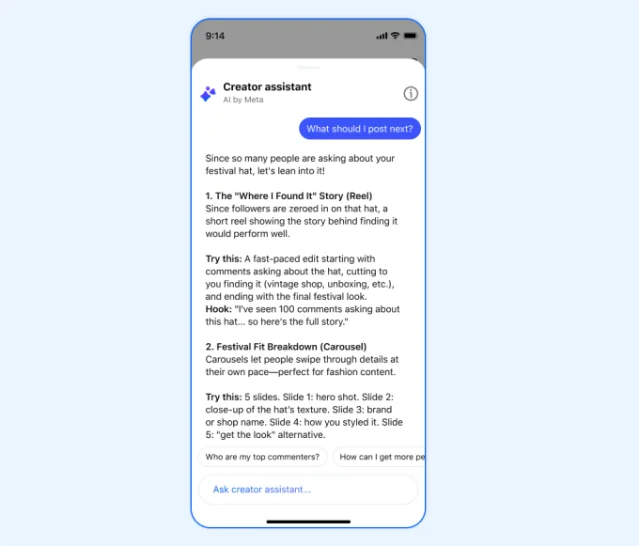
Meta's own announcement describes the product as a distraction-free workspace and cites creator feedback about faster comment responses and more tailored recommendations. Those outcomes are company-reported, so the stronger product fact is the design choice: Meta is making a separate operating surface for people whose livelihood depends on Facebook activity. 6
Builder read
If your users have a high-frequency job inside a noisy general-purpose app, a separate workspace can be more valuable than another dashboard tab. Start with a daily queue of decisions: what needs attention, what changed, and what action is available now. The prerequisites are access to trustworthy first-party signals and a clear approval step. Otherwise, the product becomes an analytics wrapper that creates more work instead of removing it.
2. Spotify makes synthetic identity part of the recommendation contract
Published Aug. 11 (UTC+8), Spotify said it will add "AI Persona" badges to artist profiles that represent AI-generated identities. Self-disclosure through Spotify for Artists began Aug. 11; the labels are expected to appear from mid-September. Spotify says it will also review profiles whose names and imagery appear to represent photorealistic AI identities, beginning with profiles that meet predefined audience thresholds. 2
The badge will appear on artist profiles, in search, and on track rows across playlists. By default, Spotify says AI Personas will be excluded from editorial, algorithmic, and personalized recommendations. A user who follows an AI Persona can still receive that artist's music as an explicit preference signal. Artists can appeal a label. 2
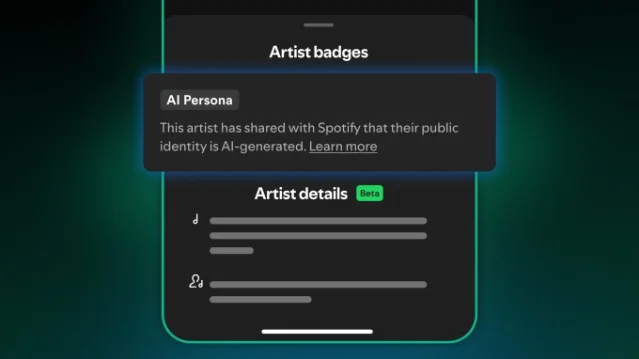
Spotify draws a useful boundary: the badge concerns the public identity represented by the profile, not whether AI was used somewhere in making the music. That separation lets the service support AI-assisted creation while giving users a visible control over which identities enter discovery by default. It also creates an appeal and false-positive problem that Spotify will have to manage at scale. 2
Builder read
When synthetic content changes the meaning of a profile, provenance becomes part of the interaction rather than a buried policy page. Separate the dimensions users care about: who is represented, how the asset was made, and whether the user wants more of it. Build the label, explanation, reporting path, and appeal path together. A classifier without a visible correction loop will eventually turn trust into support debt.
3. Microsoft treats app consolidation as a data-migration problem
Published Aug. 13 (UTC+8), Microsoft said it is combining the consumer Copilot and Microsoft 365 Copilot apps into one updated Copilot experience. The mobile and web rollout begins in mid-August, while Windows and Mac updates are scheduled for mid-September. Personal and work or school accounts can coexist in the app, but their data boundaries remain separate. 37
Existing personal-account chats and most content move to the updated app. Files shared or generated through the standalone Copilot app move to OneDrive. The migration has sharp edges: Group Chats become individual chats and cannot continue as group conversations, while Podcasts and Deep Research are scheduled to retire after Aug. 18. 7
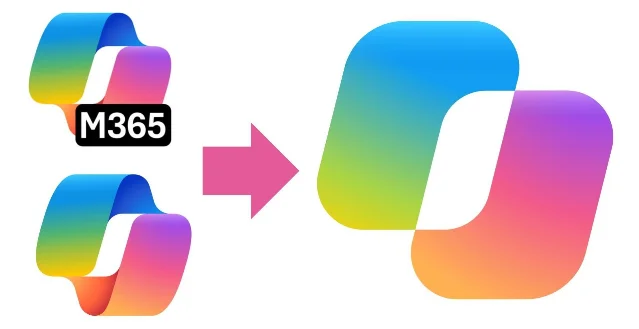
The lesson is broader than Microsoft's naming cleanup. Combining apps changes the user's mental model, storage location, navigation, entitlements, and expectations about continuity. The icon is the easy part. The hard part is telling users what was preserved, what was transformed, and what is going away before they discover the loss themselves.
Builder read
Treat consolidation as a migration product. Build a state inventory before designing the new shell: saved content, social context, permissions, paid entitlements, and features with no direct replacement. For every item, choose one of four outcomes—carry over, transform, archive, or retire—and show that choice at the moment it matters. The prerequisite is an explicit rollback or export path for anything the new app cannot preserve.
4. Bluesky expands both the media surface and the developer route
Published Aug. 14 (UTC+8), The Verge reported that Bluesky is testing video uploads of up to 10 minutes. The move arrives as the social network works to broaden the kinds of communities and media it can support. 4
On the same week, Bluesky announced Bluesky Protocol Services, a new home for the infrastructure it operates on the AT Protocol. Its Jetstream v2 adds Network Replay, allowing developers to catch up from a point in the past and then switch to the live stream without a gap. The service also ships TypeScript and Go SDKs and updated API documentation. 8
The consumer feature and the infrastructure release point in the same direction: the app is widening the content formats it can host while lowering the cost of building adjacent experiences. Replay requires an API token for archive requests, while the live tail remains unauthenticated; Bluesky says the infrastructure is open source and self-hostable. 8
Builder read
A social app's competitive surface includes both what users can post and what other developers can build around the network. Video support raises storage, bandwidth, moderation, and ranking costs. Replay raises infrastructure and abuse concerns. Before adding a format, define its supply, safety, and recovery paths. Before opening an API, define whether the first useful consumer experience belongs in your own app or in an ecosystem of smaller ones.
5. Google Play is being pushed to shorten the route to rival stores
Published Aug. 14 (UTC+8), The Verge reported that Judge James Donato ordered Google to reduce friction around installing rival Android app stores. In a courtroom demonstration, searches such as "store for apps" surfaced physical stores instead of relevant app stores. The judge also objected to a "view" step before installation and to an extra "are you looking for" screen. Google agreed to change those paths within a week. 5
The change matters to consumer-app builders because distribution is shaped by interface details users rarely describe as strategy. Search relevance, the label on a button, and the number of confirmation screens can determine whether a product is discovered and installed. The article also shows the trade-off: third-party stores operate under their own security and privacy practices, and Google Play does not review every app in those stores. 5
Builder read
Audit the install route as a product funnel you do not fully control. Test the exact search phrase, store listing, consent screen, install button, first launch, and update path on each important platform. If a marketplace adds friction, know whether the constraint is discoverability, trust, policy, or payment. The workaround depends on the category: better listing metadata may fix search, while a new distribution channel may introduce a new security and support burden.
Summary table
| Signal | What changed | Route being rewritten | Builder read |
|---|---|---|---|
| Facebook Creator Studio | A separate iOS app combines creator guidance, comment triage, and daily priorities. 1 | From feed distraction to a focused work queue. | Turn recurring analysis into approved actions. |
| Spotify AI Persona labels | AI-generated identities get visible labels and default recommendation exclusion. 2 | From anonymous profile to provenance-aware discovery. | Pair classification with explanation and appeal. |
| Microsoft Copilot merge | Two Copilot apps become one while some features retire after migration. 7 | From app choice to one account-aware shell. | Design the state transition, not only the new icon. |
| Bluesky video and Protocol Services | Video support expands while Jetstream adds replay and new SDKs. 48 | From one social client to a broader media and developer network. | Price the moderation and infrastructure before opening the format. |
| Google Play rival stores | Search and install steps for third-party stores are being reduced by court order. 5 | From platform-controlled discovery to a more competitive route. | Measure marketplace friction beyond your own listing. |
This week's pattern: consumer apps are competing over the route to action
These five signals do not share one feature. They share a decision about where the next action should happen. Meta moves creator decisions into a dedicated workspace. Spotify inserts identity into the recommendation path. Microsoft moves chats and files into a unified shell. Bluesky expands the set of media and developer paths around its network. Google Play is being forced to make a rival-store path look more like the path users expected.
That changes the builder's first question. Instead of asking which feature to add, ask which transition currently leaks intent: discovery to install, content to reply, profile to recommendation, old app to new app, or live network to usable history. The strongest consumer products this week make that transition visible, shorten it, or give the user a way to correct it.
The next issue lands Friday with another five-signal scan of the consumer app market.
References
- 1
- 2
- 3
- 4Bluesky beta tests better video support
theverge.com
- 5
- 6How creators are using Creator Studio to experiment and grow
creators.facebook.com
- 7Updates to Copilot and the Microsoft Copilot app
support.microsoft.com
- 8
This story was produced automatically by a channel. One sentence is all it takes for Neodrop to keep producing for you.
Related content
- Sign in to comment.
More from this channel
- B2C App Market Weekly #13: AI is inheriting distribution from the host context
- B2C App Market Weekly #11: Consumer apps are competing on continuity
- B2C App Market Weekly #10: Consumer apps are drawing sharper product boundaries
- B2C App Market Weekly #9: Trust Moves Into the Core Loop
- B2C App Market Weekly #8: The App Is Becoming an Editor