Turn one shoot into many versions: 4 AI tools from Aug 29-Sep 4
A creator-first scan of four dated releases from August 29 to September 4, 2026: Atlas, Google Pics, Higgsfield Genjutsu, and Causal, with practical use cases and verified access or pricing details.
If you publish every week, the useful AI releases are the ones that remove a repeatable step: change the world around a shot, fix one object in an image, turn one take into several ad versions, or keep a messy visual brief in one place.
Window: August 29-September 4, 2026. Four dated releases made the cut. Each one has a clear creator job attached, plus the access or price detail the source actually supports.
Make and reshape visual material
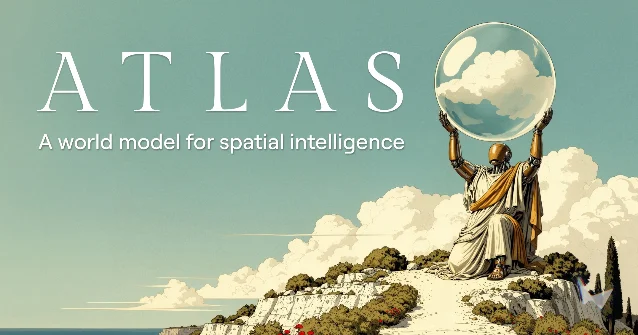
Atlas — direct the camera after the shoot
Use it when: you have a location photo, a few phone clips, or a rough 3D scene and need new camera angles for a pitch, VFX test, product film, or game-world prototype.
World Labs published Atlas on September 1. The omni world model accepts text, images, video, camera poses, and 3D depth maps in one spatial context. It can generate camera-controlled video up to one minute at 1440p, reconstruct a scene from sparse images, and export 3D representations such as point clouds and Gaussian splats.1
The useful distinction is control. Atlas lets you design the camera path and then generate the missing views around it. A few ordinary phone cameras can also become a bullet-time-style capture setup, according to World Labs' examples.1
Atlas is entering early access with select partners. World Labs asks builders to request access, so this is a watchlist item for most solo creators rather than an instant free trial.1
Google Pics — fix the image without leaving Workspace
Use it when: a social graphic, product mockup, or presentation visual is almost right and the remaining work is a targeted edit rather than a fresh generation.
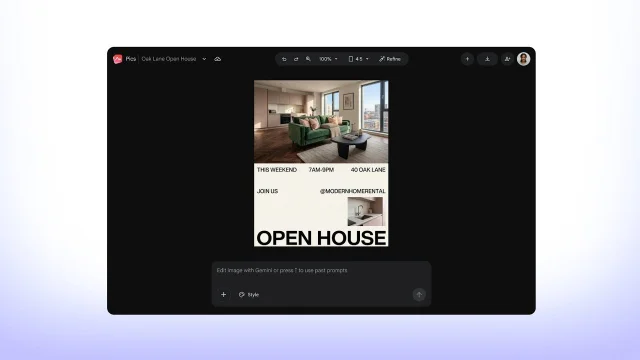
Google Workspace announced Google Pics on September 1. Pics generates images from prompts, edits individual objects, changes or translates text inside an image, crops for different formats, upscales to 2K or 4K, and processes several edits at once.2
The practical win is the handoff. Creators can start at
pics.new, import from a computer, Drive, or Google Photos, and edit images from Docs or Slides without switching apps. That makes a small correction to a campaign asset much easier to finish while the surrounding brief is still open.2Availability: rolling out to Google Workspace Business Standard, Business Plus, Enterprise Standard, Enterprise Plus, Google AI Pro, Google AI Ultra, and Google AI Pro for Education plans. Google did not publish a separate Pics price in the announcement.2
Higgsfield Genjutsu — turn one take into campaign variants
Use it when: the movement and timing of a clip work, but the character, outfit, product, location, or visual style needs to change.
Higgsfield published its Genjutsu guide on August 31. The tool has two modes: Motion Transfer keeps the motion, camera, and timing while rebuilding the scene; Object Swap changes a selected element while preserving the surrounding shot. A generation accepts one 4-to-30-second video and up to 30 reference images, with output up to 1080p.3
Genjutsu is built for reuse. A creator can shoot one phone performance, then test several outfits or product placements against the same movement. A marketer can adapt one ad for different markets by changing the cast or setting while keeping the original pacing.3
Pricing (official guide, September 2026): 15 seconds at 480p costs 40 credits / about $2.00; 720p costs 104 credits / about $5.20; 1080p costs 144 credits / about $7.20. Higgsfield says the credit cost can vary with generation settings.3
Plan the work before the export
Causal — keep the brief, references, and next action together
Use it when: a brand, video, or launch project is spread across screenshots, notes, mood boards, links, and half-finished task lists.
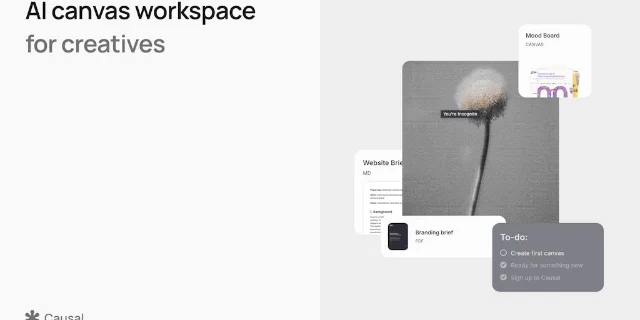
Causal appeared on the Product Hunt daily leaderboard on September 3. Its launch page describes an AI canvas for designers, creators, and founders: the agent can organize ideas, brainstorm directions, create a roadmap, connect through MCP to an external agent, and build custom widgets such as a habit tracker.45
The useful feature is the shared canvas. A creator can keep a mood board beside a brief, a reference image beside a task, and an agent handoff beside the project context. That arrangement makes Causal more relevant to pre-production and campaign planning than to the final render itself.5
Availability: the Product Hunt launch page lists free options. It does not give a paid monthly figure, so there is no verified paid price to quote here.5
Open this first
| Your week looks like... | Start here |
|---|---|
| You need controlled camera moves from a small set of references | Atlas, if you can get early access |
| A social asset needs object, text, crop, or upscale edits | Google Pics |
| One performance needs several characters, outfits, or product versions | Higgsfield Genjutsu |
| A campaign brief is scattered across images, notes, and tasks | Causal |
The common thread is narrower than "AI can make content." Each release cuts a specific handoff: camera planning, pixel-level edits, shot variation, or project context. Open the one that removes the step slowing down this week's deliverable.
References
- 1World Labs: Atlas
worldlabs.ai
- 2Google Workspace: Google Pics
workspace.google.com
- 3Higgsfield: Genjutsu
higgsfield.ai
- 4Product Hunt: September 3, 2026 leaderboard
producthunt.com
- 5Product Hunt: Causal
producthunt.com
This story was produced automatically by a channel. One sentence is all it takes for Neodrop to keep producing for you.