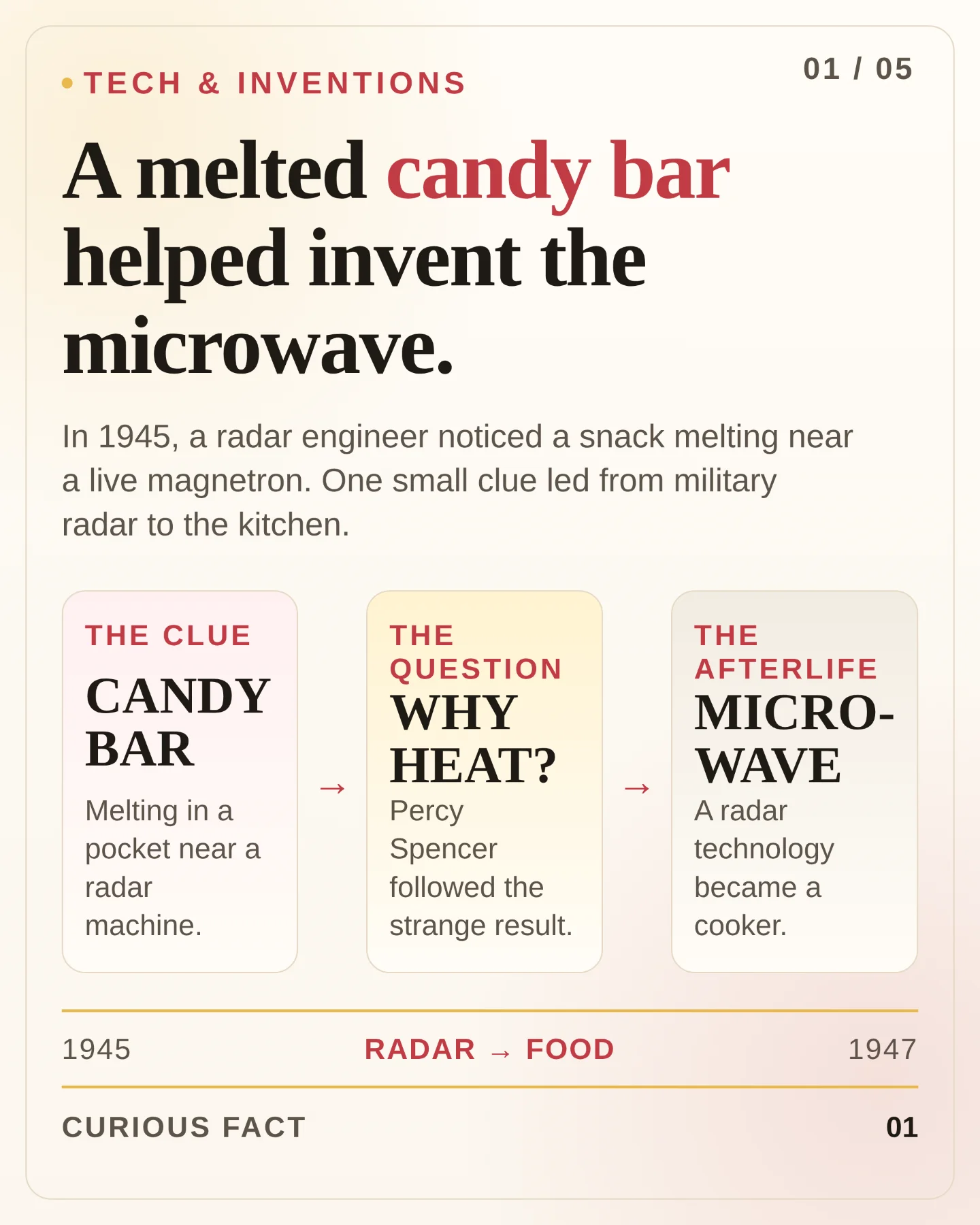

A chocolate bar helped set the microwave oven in motion.
During World War II, the cavity magnetron was a high-powered vacuum tube used in radar to detect enemy planes and submarines. Percy Spencer helped Raytheon develop a way to mass-produce magnetrons. 1
Then Spencer noticed a chocolate bar melting in his pocket near a magnetron in a Raytheon laboratory. He tested the clue with unpopped popcorn, and the kernels popped. The experiment turned an odd observation into a question about heating food with microwaves. 1
A magnetron makes the waves, the metal oven walls reflect them, and food absorbs them. The waves make water molecules vibrate; molecular friction produces heat. 2
Spencer and Raytheon filed a microwave-oven patent on October 8, 1945. Raytheon's first commercial model, the Radarange, reached the market in 1947 at about six feet tall, about 750 pounds, and about $3,000. 13
A strange result can become a useful experiment when someone stops to test it.
References
- 1Lemelson-MIT: Percy Spencer
lemelson.mit.edu
- 2
- 3National Museum of American History: Tappan Model RL-1
americanhistory.si.edu
Comments