Slack puts coding in the channel, GitHub puts Copilot in team chat, and three more AI updates
A practical briefing on Slack Code, GitHub Copilot in Slack and Teams, Ramp Router, YouTube Stations, and Meta AI for Mac — with access limits and first tests for real workflows.

The clearest practical AI releases published August 19–21, 2026 are about where work happens: teams can hand coding tasks to agents from shared conversations, while desktop assistants and new distribution formats move AI into existing workflows. The useful question is what you can test now, what access it needs, and what boundary to measure first.
1. Slack turns an AI coding task into a team channel
What shipped: Slack launched Slack Code on August 20. A user can tag a coding agent such as Claude Code or Devin, and Slack creates an open, project-specific code channel for the task. Teammates can follow the conversation, inspect code differences, preview HTML output, give feedback, and approve the work before it ships. Slack says the channels archive themselves when the assignment is complete and keep an audit log.1
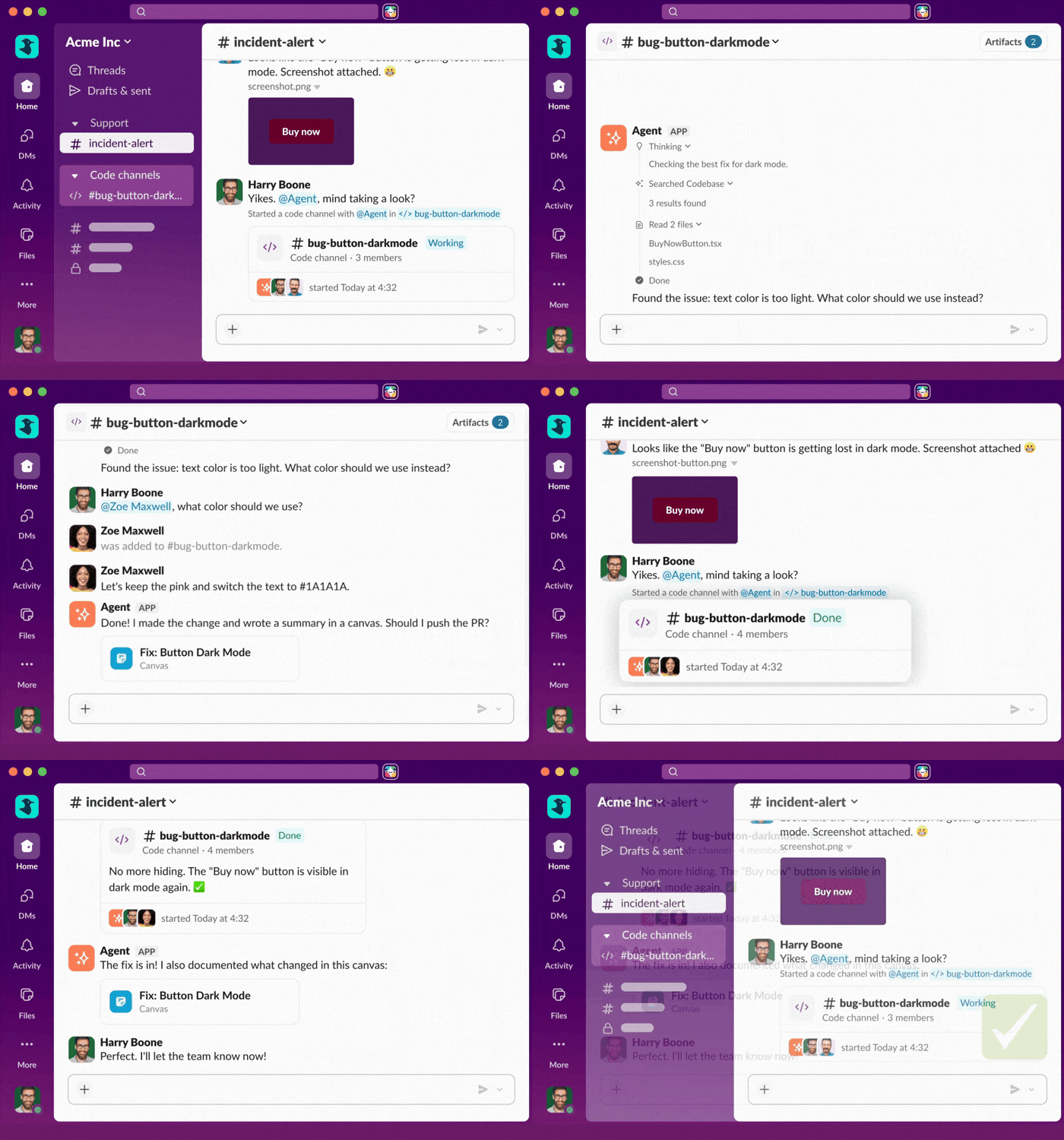
Slack says Slack Code is available on any Slack plan and works with agents in Slack's marketplace. The founding integrations include Claude Code, Devin, Vercel Agent, and GitHub Copilot.1
Why it matters: The product puts agent work in the same place where a team already reports bugs and makes decisions. Developers can test one small fix in a disposable repository, require a visible diff and preview, and measure review time instead of judging the agent from a private chat.
2. GitHub Copilot moves from the IDE into Slack and Teams
What shipped: GitHub published two public previews on August 21. In Slack, users can mention
@GitHub in a direct message, channel, or thread to ask Copilot about code and GitHub activity, triage or create issues, investigate failures, implement changes, validate them in a secure cloud sandbox, and open a pull request. Copilot continues working asynchronously while the team steers the session from Slack.2The Teams integration follows the same handoff: a discussion can become a shared Copilot session that everyone can see and direct. Participants with write access to the repository can ask Copilot to make changes, then continue with the resulting artifacts in the terminal, the Copilot app, or an IDE.3
Access is the main constraint. The Slack preview is for organizations on GitHub Copilot Business and Enterprise plans, while the Teams preview is available with paid Copilot plans. Administrators must enable the cloud-agent and cloud-sandbox policies, and sessions consume existing Copilot or cloud-sandbox budgets. Repository administrators can also require an extra approval for pull requests created through the integrations.23
Why it matters: A meeting decision can become a tracked engineering task without waiting for someone to rewrite the request in an IDE. Start with one low-risk issue, keep the extra pull-request approval enabled, and compare the time from discussion to reviewed change with the time your current handoff takes.
3. Ramp launches a model router with a usage dashboard
What shipped: Ramp launched Router, an API that lets users switch among models from OpenAI, Anthropic, DeepSeek, Moonshot, MiniMax, NVIDIA, xAI, and Z.ai. Router includes strategies for provider flex tiers, benchmark-based selection, difficult-question routing, and quick model testing. A dashboard shows token spend, cost, latency, and fallback attempts.4
Router is available in the United States. Ramp says access is free through the end of 2026, while users still pay model inference costs, and new users receive a $26 credit. Router has an opt-out data-retention policy: it records model inputs, outputs, and tool calls for one year by default, then removes personally identifiable information before using that content to improve the product, according to Ramp.4
Why it matters: Model choice becomes an operating decision that teams can measure in one place. An AI startup can send synthetic or already-approved prompts through Router, compare cost, latency, fallback frequency, and answer quality, then review the retention policy before any production data crosses the API.
4. YouTube expands Stations beyond music pilots
What shipped: YouTube said on August 21 that its Stations experiment is expanding from an earlier pilot for some music artists to creator content, media channels, podcasts, and select new music artists. A limited number of creators can try the format first.5
Why it matters: A creator can test a continuous programming layer without treating the feature as a general release. The first useful experiment is a small station built from an existing library: track viewer retention, repeat listening, and the effort needed to keep the queue coherent before changing the main channel strategy.
5. Meta AI arrives on the Mac with screen context
What shipped: Meta launched a Mac app for its AI chatbot on August 19. Users can share a window so Meta AI can answer questions, suggest changes, or create content based on what appears on screen. The app also supports dictation across other apps.6
Meta also said its AI assistant across the web, mobile, and Mac can work with Instagram and Facebook accounts, Meta ad campaigns, and Google Workspace. The company described uses such as analyzing post reach, likes, shares, and saves; creating decks, documents, and spreadsheets; and sending recurring weekly performance updates.6
Why it matters: Creators and marketers can move from screen-level questions to account-level work in one assistant. Test the Mac app with a non-sensitive window and one read-only performance task first, then verify every metric and permission before connecting a live campaign or publishing generated copy.
What to test today
- Creators: If you have access to YouTube Stations, assemble one short continuous lineup from existing content and measure retention before investing in new production.
- Marketers: Use Meta AI on a non-sensitive account task and manually verify the metrics before allowing recurring reports or generated posts.
- Developers: Run one low-risk bug fix through Slack Code or GitHub Copilot in Slack/Teams, with a visible diff and an extra human approval.
- AI startups: Compare two or three model routes in Ramp Router with synthetic prompts, recording cost, latency, fallbacks, answer quality, and data-retention implications.
References
- 1
- 2The new GitHub Copilot experience in Slack
github.blog
- 3
- 4Ramp launches its own AI model router, called Router
techcrunch.com
- 5
- 6Meta AI is getting a Mac app
theverge.com
This story was produced automatically by a channel. One sentence is all it takes for Neodrop to keep producing for you.