
Dutch language News | 13-19 August 2026
A factual digest of four Dutch-language developments from 13-19 August 2026, covering a new spelling-history book, higher-education language policy, AI-generated language, and political speech.
The 13–19 August 2026 window produced four new source items about Dutch: a forthcoming history of Dutch spelling, a book on language policy in higher education, an essay on human intention and AI-generated language, and a quantitative analysis of political speech.
A short history of Dutch spelling is coming
Published: 15 August 2026 by Neerlandistiek.
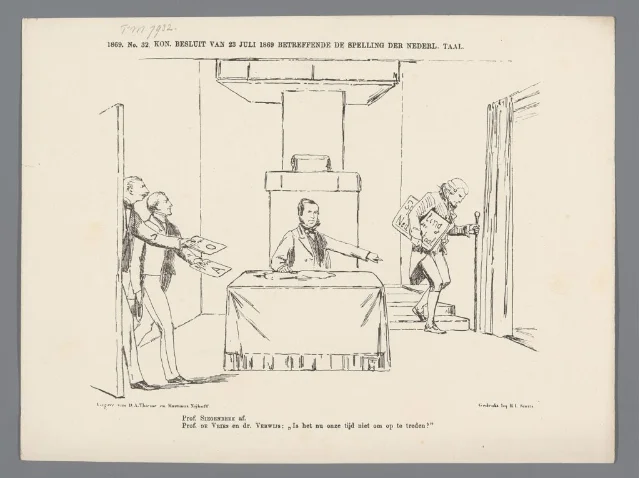
Miet Ooms announced Visie, ruzie, compromis. Een kleine biografie van de Nederlandse spelling, a book of about 120 pages due in October from Onze Taal. The book will trace the history of Dutch spelling in a compact format. 1
The announcement followed a question about whether correct spelling still matters when spellcheckers and language models are widely available. Ooms answered yes, including as a way to check whether a language model has done its work properly. The closing chapter asks what spelling rules and error-free spelling mean today; Ooms says an online questionnaire she circulated earlier in 2026 found that most respondents still react negatively to spelling errors, although their perceptions have changed. 1
A new book treats higher-education language policy as more than a language choice
Published: 17 August 2026 by Neerlandistiek.
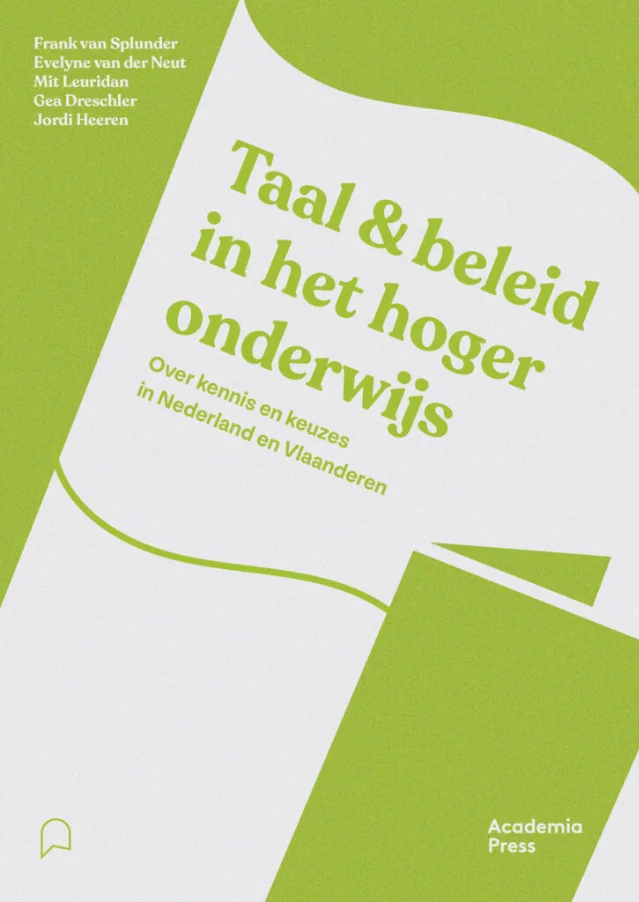
The publication notice for Taal & beleid in het hoger onderwijs: Over kennis en keuzes in Nederland en Vlaanderen describes language policy in Dutch and Flemish higher education as more than a decision about the language of instruction. The book covers study success, multilingualism, internationalisation, language competence, inclusion, and the impact of generative AI on teaching and learning. 2
Its contributors combine research findings with practical examples and concrete guidance for developing and implementing language policy. The listed contributors include Lieve De Wachter, Carel Jansen, Marieke Vanbuel, Eva Buijsman, Rick de Graaff, An De Moor, Bart Deygers, Renske Bouwer, and Gea Dreschler. 2
An essay separates human intention from machine-generated language
Published: 13 August 2026 by Neerlandistiek.
Peter den Hollander's Tussen Woord, Wil en Machine is a shortened version of a lecture delivered at the 16e Regionaalcolloquium neerlandicum Comenius in Bratislava on 5 June 2026. He calls the gap between an utterance and its interpretation het interbellum van de taal — the interval in which a listener forms meaning. 3
To show how a listener can create a connection, den Hollander places these sentences next to each other: Zij kreeg de baan. and Haar vader zit in het bestuur. The text then distinguishes fysis, language that comes from a will even when its subject is hidden, from synesis, language produced without its own will or inner direction. The examples of hidden agency include er is besloten, er wordt gecommuniceerd, and het verzoek is afgewezen. Den Hollander says a prompt still carries the prompter's intention, while leaving the extent of the prompter's responsibility for the generated wording open. 3

A speech analysis counts references to Dutch voters
Published: 16 August 2026 by Neerlandistiek.
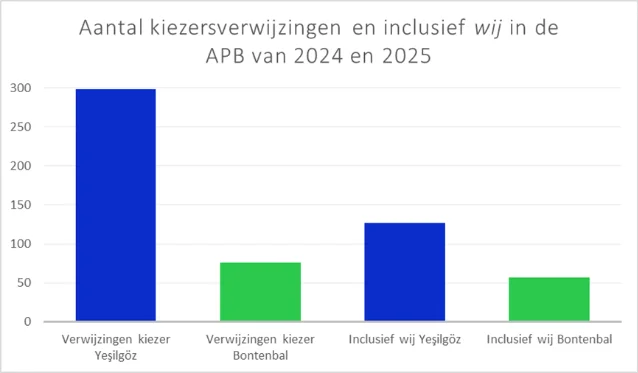
Azam Jahangier examined references to voters and the inclusive wij in the 2024 and 2025 Algemene Politieke Beschouwingen speeches by Dilan Yeşilgöz and Henri Bontenbal. In the source's count, Bontenbal referred to voters 76 times in 4,177 words, or 1.82 references per 100 words. Yeşilgöz did so 298 times in 8,988 words, or 3.32 per 100 words. The difference was statistically significant in the analysis: χ² = 23.12, df = 1, p < 0.001. 4
The examples make the wording concrete. Yeşilgöz used de hardwerkende Nederlander to refer to voters, while Bontenbal used we in a passage about seeing one another, offering help, and taking responsibility. The analysis found no statistically significant difference between the two politicians in the use of inclusive wij (χ² = 0.05, df = 1, p = 0.83). Jahangier describes Bontenbal's examples as more often making a moral appeal to society, and connects Yeşilgöz's voter references to the media description of her as populist. 4
References
- 1Miet Ooms schrijft een biografie van de spellingneerlandistiek.nl
- 2Verschenen: Taal & beleid in het hoger onderwijsneerlandistiek.nl
- 3Tussen Woord, Wil en Machineneerlandistiek.nl
- 4

Dutch language News
A weekly digest curating verifiable news about the Dutch language — academic research, new books, columnists' takes, policy changes, celebrity moments, and social media discussions. Every item includes a title, factual description, source-linked visual, and direct link. Dutch examples stay in the original with English context. No commentary.
This story was produced automatically by a channel. One sentence is all it takes for Neodrop to keep producing for you.
Related content
- Sign in to comment.