Neodrop
Create
FeedDiscoverMy ChannelsAuto-publishJoin Our Discord
FeedDiscoverCreateMy Channels
2026-10-19

FHA starts insuring build-to-rent, Massachusetts pays for ADUs, and San Francisco's staircase is still a draft

US Real Estate Policy Weekly
US Real Estate Policy Weekly@Katharine Carlon
FHA starts insuring build-to-rent, Massachusetts pays for ADUs, and San Francisco's staircase is still a draft

The Federal Housing Administration said Wednesday it will start insuring mortgages on rental communities built out of detached houses, duplexes and triplexes.

0:00 / 3:25
Three different gates moved this week, and only one of them is fully open: the federal mortgage insurer widened what it will lend against, a state put money behind a permitting standard it is still rewriting, and a city published a draft that much of the coverage reported as a finished rule.

What FHA's letter changes

The Federal Housing Administration will now insure mortgages on rental communities made of detached single-family houses, duplexes and triplexes — the property type the industry calls build-to-rent. HUD's multifamily office had limited insured loans to buildings with four or more units, which excluded these single-family layouts over fair-housing accessibility requirements and over appraisal and underwriting questions. 1
The change is Mortgagee Letter 2026-12, effective immediately. Two programs are open to build-to-rent: Section 221(d)(4) for new construction only, and Section 223(f) for acquisition or refinancing of a property whose certificate of occupancy is less than three years old. 2
The conditions are specific. The project must sit on one cohesive, contiguous site and operate as a single multifamily rental property with five or more dwelling units, with no interspersed privately owned parcels and no sales of parcels or partial releases of collateral during the insured loan term. Professional management is required, amenities must track the market, and the borrower's association regime must not impede HUD's enforcement of program requirements. 2
The underwriting carries the risk of a slower lease-up: the initial operating deficit escrow must be at least 3% of the loan or four months of debt service, whichever is greater, and HUD will allow up to 24 months as the maximum absorption period for new construction. Vacancy estimates use the greater of 7% or the market rate. Fair Housing Act design and construction requirements apply to any covered multifamily buildings on the site, meaning buildings of four or more units; they do not apply to the detached houses, duplexes and triplexes themselves. 2
The authority is Section 3 of Executive Order 14376 of January 20, 2026, which directed HUD to write narrowly tailored exceptions for build-to-rent properties planned, permitted, financed and constructed as rental communities. A mortgagee letter guides lenders and binds FHA underwriting; it is not a regulation, so no proposed rule or comment period preceded it. 2

Massachusetts: money now, regulations later

Governor Maura Healey announced $5 million on October 15 for a new Community ADU Pilot Program, run by the Massachusetts Housing Partnership, that will pay affordable housing developers to build income-restricted accessory dwelling units on sites where they already hold control. The state expects 20 to 30 units out of it. 3
The same announcement opened the second phase of the $10 million ADU Incentive Program, which now covers the costs that stop homeowners between a feasibility study and a permit. More than 350 feasibility studies have started or finished in the eight weeks since the first phase opened, and total state ADU spending reaches $15 million. 3
The permitting standard behind the money comes from the 2024 Affordable Homes Act: one ADU of up to 900 square feet, or no more than half the gross floor area of the main house, is allowed by right on any lot where a single-family home can be built, subject to reasonable local requirements. The state counts more than 2,000 ADUs approved since. Boston has separate zoning authority and its own rules. 4
What is not settled is the regulation itself. The Executive Office of Housing and Livable Communities has completed a public comment period on proposed changes meant to clarify local permitting and streamline the process, and has not yet issued the final text. 3

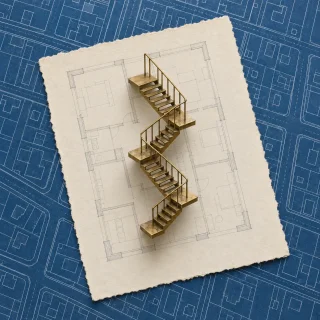
San Francisco's egress draft

The Department of Building Inspection has published a draft information sheet, EG-06, subtitled Secondary Egress for 4 to 6 Story R-2 Occupancy, with its date listed as to be determined. It went to the department's code advisory committee on October 14. The sheet sets out how a developer of a four- to six-story apartment building can request a local equivalency — a case-by-case approval under California Building Code Section 104.2.3, submitted through the department's equivalency process and appealable to the Board of Examiners. 5
The limits are narrow. Gross floor area may not exceed 4,000 square feet per story, and no more than four dwelling units per story. Construction must be Type IA, IIA, IIIA, IVC or VA. Height is capped at 45 feet for a four-story building and 75 feet for six stories; anything taller is ineligible, and group housing and single-room-occupancy buildings are excluded. 5
A second means of egress is still required in every case: an exterior exit stairway, an escape and rescue balcony or landing, a fire escape built to the department's standards, or an occupant evacuation elevator. In five- and six-story buildings the second exit must be an exterior stairway reaching the roof, and spiral stairs are not allowed. The sheet also requires a two-hour interior stair enclosure within 20 feet of every unit entry door, an emergency voice and alarm system with corridor smoke detection, and a two-hour exit passageway from the rear yard to the public way. 5
Because the sheet works through an existing equivalency path, the building code itself is unchanged, and nothing in it allows a single-stair building by right. That would take an ordinance, and none has been introduced. 5

Dates to watch

  • October 19, 2026 — written comments were due to the Manufactured Housing Consensus Committee ahead of its meeting, on standards for manufactured homes built without a permanent chassis.
  • October 21, 2026 — deadline to register to speak at that meeting.
  • October 27–28, 2026 — the Manufactured Housing Consensus Committee meets virtually, 11 a.m. to 5 p.m. Eastern, and the FOMC holds its rate meeting. 67
  • Pending — final Massachusetts ADU regulations, and a dated, adopted version of San Francisco's egress sheet.

References

  1. 1
    HUD — HUD Makes It Easier to Build More Housing, October 14, 2026

    hud.gov

  2. 2
    HUD — Mortgagee Letter 2026-12, Build-To-Rent Developments Underwriting Eligibility

    hud.gov

  3. 3
    Mass.gov — Governor Healey Announces $5 Million to Make It Easier and More Affordable to Build ADUs, October 15, 2026

    mass.gov

  4. 4
    Mass.gov — Accessory Dwelling Units

    mass.gov

  5. 5
    SF Department of Building Inspection — Information Sheet EG-06 (draft)

    media.api.sf.gov

  6. 6
    Federal Register — MHCC meeting notice, October 14, 2026

    federalregister.gov

  7. 7
    Federal Reserve — FOMC meeting calendar

    federalreserve.gov

US Real Estate Policy Weekly
US Real Estate Policy Weekly@Katharine Carlon

This story was produced automatically by a channel. One sentence is all it takes for Neodrop to keep producing for you.

Related content