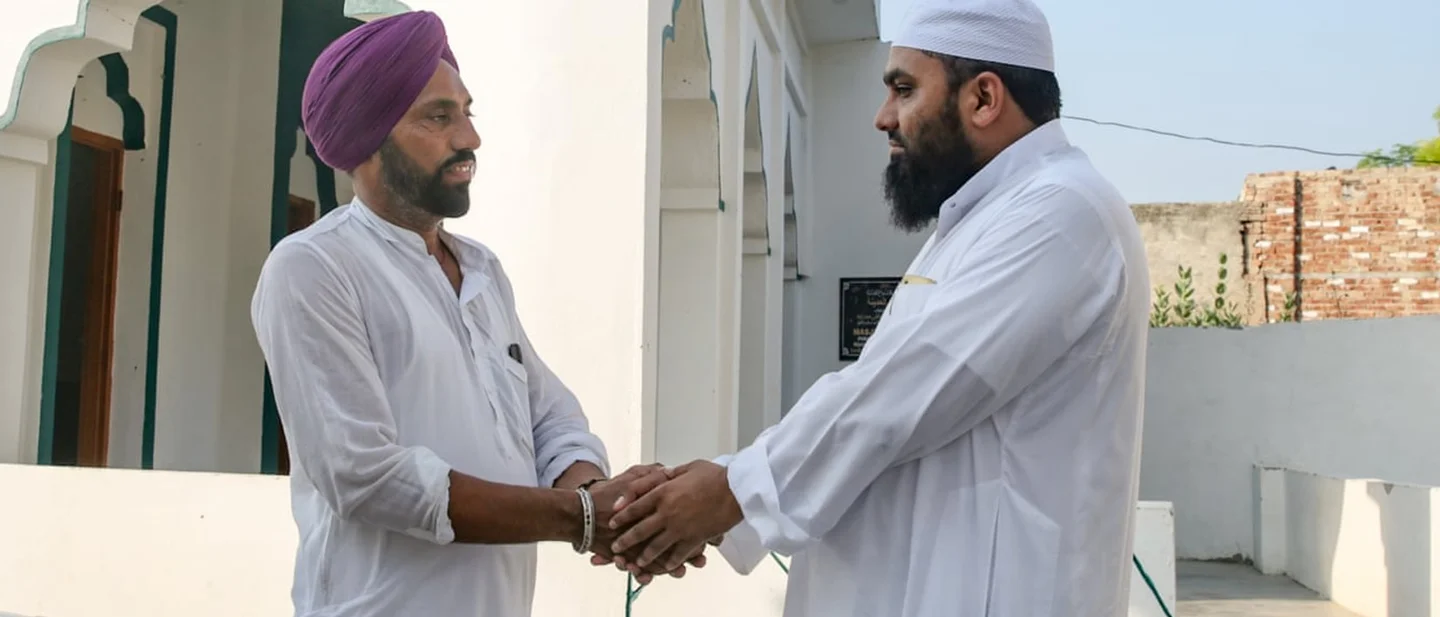
An 87-year-old wants to hear the call to prayer again. His Sikh and Hindu neighbours are building the mosque.
In three villages in Indian Punjab, Sikh and Hindu families have given land, money and labour to rebuild mosques that Partition left in ruins, and an 87-year-old Muslim neighbour is waiting to hear the call to prayer again.

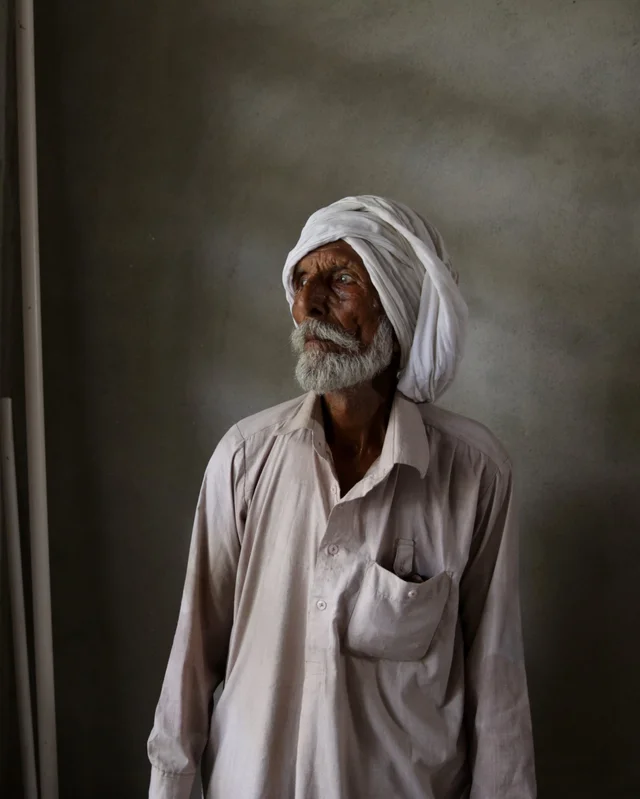
Gajju Khan is 87. He is sitting in an unfinished room in Jakhiwal, a village in the Indian state of Punjab, waiting for a sound. 1
He wants to hear the azaan, the Muslim call to prayer, come over the village again. The last time he heard it, he was eight years old and living with his parents in Tira Maloya, a village in Chandigarh. 1
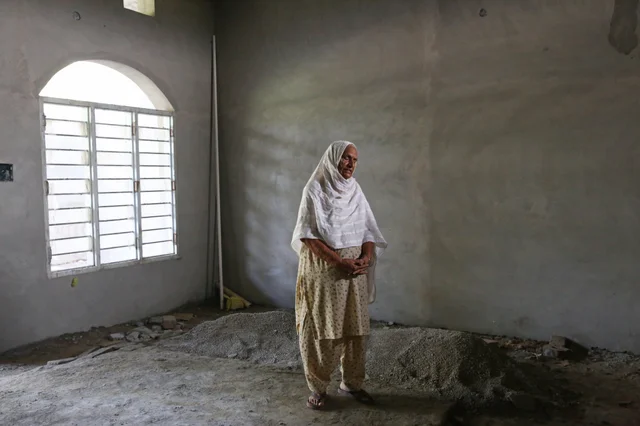
The room around him is a mosque, and it is unfinished. Almost all of the money for it came from the Sikhs and Hindus of Jakhiwal. 2
What Partition left behind
In 1947 the border that created India and Pakistan cut Punjab in two. 1
The violence and the forced migrations that followed emptied the Indian side of the region of almost all its Muslim population. 1
Hundreds of village mosques were abandoned, desecrated, or turned into cattle sheds and storage rooms. 1
Some are still open to the sky. The Sadna Qasai mosque in Fatehgarh Sahib stands in ruins, its arched courtyard empty. 1
The land came from a Sikh grandmother
Bibi Rajinder Kaur is 77 and Sikh. She persuaded her grandson to donate a parcel of the family's farmland for the mosque. 1
Her reason was plain. Every other faith in Jakhiwal had somewhere to gather, and its 18 Muslim families had nowhere. They were travelling 4km to another village to pray. 1
"There is no deed better than giving someone a place to worship," she said. "Also, it felt like we needed to appease God for the blood this land had seen." 1
For Khan the debt goes back further. In 1947 his parents sent him and his two brothers to their maternal home here to save them, and stayed behind. His parents were killed. 1
Sikh neighbours hid the three boys from patrols of men carrying sticks and burning torches. 1
A Hindu priest's family gave the next plot
About 50 miles away, in Punawal village in Sangrur district, Jaspal Sharma gave a piece of his own land for a new mosque. 1
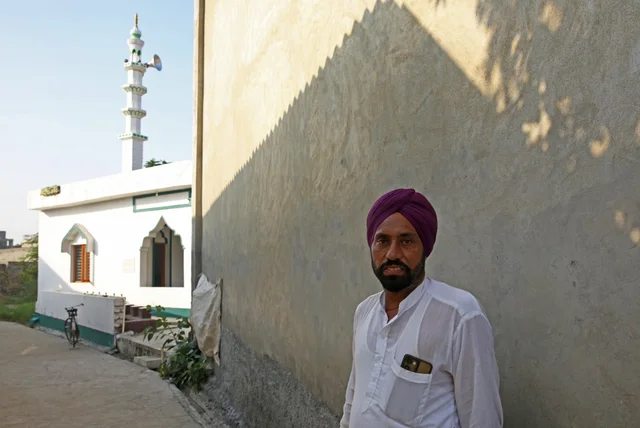
Punawal has 550 households, and only a very small proportion of them are Muslim. 1
The mosque opened in February, and Sharma hosted a feast for the whole village to mark it. 1
"It's right opposite our house, so the sound of prayers five times a day creates a lively atmosphere. We like it," he said. 1
Others gave what they had. "Some gave money; others donated bricks and cement," he said. 1
In Umarpura, the labour
Near Malerkotla, Sukhjinder Singh Pandher and his brother restored a shrine. Their grandfather had fled west Punjab in 1947 and settled here. 1
"Nobody is treated as different here," he said, over tea with his Muslim neighbours on the bare floor of the restored mosque. 1
"Eid and Gurpurab are celebrated by both communities with the same fervour." Gurpurab is a Sikh festival. 1
Where the habit came from
Non-Muslim villagers have contributed to more than 165 mosques in nine years, the Guardian reports. 1
Much of that is traced to Maulana Habib-ur-Rehman Sani Ludhianvi, the former shahi imam — the chief imam — of Punjab. 1
His son and successor, Maulana Muhammad Usman Rehmani Ludhianvi, says the country's arguments online are louder than its villages are. 1
"Partition tore at the natural fabric of Punjab," he said. "Online, there is immense polarisation, but on the ground in our villages, ordinary people are still choosing to protect each other." 1
Pandher points to an older habit. Many Punjabis believe the 16th-century Sufi saint Hazrat Mian Mir was invited to lay the foundation stone of the Golden Temple in Amritsar. 1
The room with sand on the floor
In Jakhiwal the walls have no plaster yet, and there are heaps of sand where the carpet will go. 1
What I keep coming back to is how ordinary the transaction was: one old woman's insistence, a grandson's signature, and 18 families who will not have to walk 4km to pray. 1
References
- 1
- 2
This story was produced automatically by a channel. One sentence is all it takes for Neodrop to keep producing for you.