
AI application-layer startup radar: August 12–19, 2026
Eight application-layer financing disclosures totaled $315.3M in dollar rounds and €26.83M in euro rounds, while agent control, domain context, and workflow distribution formed the week's clearest diligence signals.
The week's most useful signal is not another general-purpose assistant. It is the growing number of application companies trying to own the context around a consequential workflow — and, increasingly, the control point where an AI system is allowed to act.
The collection window is 00:00 on August 12 through 09:00 on August 19, 2026, in the channel's UTC-08 timezone. It produced eight financing disclosures: $315.3M across four dollar-denominated rounds and €26.83M across four euro-denominated rounds. The dollar total is dominated by Wispr's $280M Series B; the smaller early-stage set is more revealing about where new application wedges are forming.
Executive read
Three application patterns stand out:
- Context is becoming the product. Aisel Health turns a psychiatric record into a usable clinical brief; Aisot turns market, portfolio, and news data into investment decisions; Prevalent AI turns fragmented security systems into a live knowledge graph. These companies are not selling an extra chat window. They are selling a better operating view of a domain. 123
- Control is moving inside the application. Kyvvu evaluates an agent's next action against its prior actions and fixed policies. Clerq puts citation-backed patent analysis under attorney sign-off. Hypercubic's wedge is not code translation alone; it is proving that a modern replacement preserves the behavior of a legacy system. 456
- Distribution still decides who gets the data. Medly has a student-facing usage signal, Flip is extending software to deskless workers, and Wispr is moving from dictation into meetings, mobile, and hardware. The product surface may be AI-native, but the durable advantage will depend on whether the company can keep its place in the user's daily workflow. 789
Quick scan
The table separates early-stage or newly surfaced signals from mature-company financing. A mature follow-on is still relevant to the funding map, but it is not evidence that the company newly emerged this week.
| Company / source | Sector / status | Window event | Lead investor(s) | Product wedge | Founding-team evidence | Traction or early signal | Publication date |
|---|---|---|---|---|---|---|---|
| Hypercubic — SiliconANGLE | Vertical SaaS / AI agents; early-stage | $5.3M seed | CIV; YC, Afore, Pioneer Fund and others participated | HyperLoop maps, documents, and rewrites COBOL systems | Sai Gurrapu and Aayush Narik, both former Apple engineers | Company says it is working with a major Latin American bank and a Caribbean retailer serving 50M+ customers annually | Aug 18, 2026 |
| Medly AI — Tech.eu | Consumer AI / edtech; early-stage | $8M seed | Felix Capital; Eka Ventures and Ada Ventures participated | Personalized exam tutoring using seven LLMs, learning science, and handwriting input | Dr Paul Jung and Dr Kavi Samra, UCL medicine graduates | Company reports 400,000+ UK users; its GCSE outcome trial with 1,000+ students is still being evaluated | Aug 19, 2026 |
| Kyvvu — Brabant Development Agency | AI agents / security; early-stage | €1M pre-seed | Volta Ventures and Brabant Development Agency | Agent Security Kernel checks each action against prior actions and versioned policy | Jeroen Ghijsen, co-founder and CEO; team grew from Jheronimus Academy of Data Science | Company says the kernel is running at financial, insurance, and healthcare organizations in the Netherlands | Aug 18, 2026 |
| Aisel Health — EU-Startups | Vertical SaaS / healthcare; early-stage | €1.7M pre-seed | Caesar Ventures; Nordic Web Ventures, LifeX, Angel Invest, Rockstart and EIFO participated | Psychiatric-care operating system that retrieves and structures patient context | Augusta Klingsten Peytz and Christian Houen; founded in 2024 | Company says it is converting an active private-psychiatry pipeline and plans UK entry; no independent outcome data disclosed | Aug 19, 2026 |
| Aisot Technologies — EU-Startups | Vertical SaaS / fintech; newly surfaced financing | €2.13M seed extension | Lead not publicly disclosed; Felix Haldner joined as a new investor | Agentic portfolio intelligence spanning strategy, backtesting, rebalancing, and monitoring | Stefan Klauser, co-founder and CEO; ETH Zurich spin-off founded in 2021 | Company combines quantitative finance, ML, and LLM-based news sentiment; customer or revenue metrics not disclosed | Aug 14, 2026 |
| Clerq (formerly NLPatent) — SiliconANGLE | Vertical SaaS / legal; product checkpoint | Rebrand and launch; no new financing disclosed | Not applicable to this week's event; prior $3M round had Draper Associates and Mighty Capital as leads | Patentability workflows produce cited analysis in about 10 minutes, with attorney sign-off | Stephanie Curcio and James Stonehill founded the company in 2021; prior affiliations not disclosed in the article | RPX and Park IP integrations announced; private-cloud deployment and no training on customer data are company statements | Aug 18, 2026 |
| Wispr — TechCrunch | Consumer AI / voice interface; mature financing | $280M Series B at a $2B valuation | Menlo Ventures; existing and new investors also participated | Dictation expanding into meeting notes, Android, hardware, and the Canto speech model | Founding team not publicly disclosed in the source | TechCrunch reports Android, meeting-notetaker, hardware-partnership, and new-model expansion; customer count not disclosed here | Aug 17, 2026 |
| Flip — EU-Startups | Vertical SaaS / frontline work; mature financing | €22M growth round | Lead not publicly disclosed; Notion Capital and HV Capital increased stakes, L-Bank joined | Communication, identity, workflows, and custom AI apps for deskless workers | Benedikt Brand, co-founder and CEO; other founder background not disclosed in the article | Company cites Bosch, REWE Group, SIXT and others; it says a prior pilot reached 85% adoption and 74% weekly active users | Aug 19, 2026 |
| Prevalent AI — SiliconANGLE | Vertical SaaS / cybersecurity; mature financing | $22M growth investment | Integrity Growth Partners | Data fabric rebuilds fragmented enterprise security data into a current, sovereign knowledge graph | Paul Stokes, co-founder and CEO; other founding-team background not publicly disclosed | Company reports profitability since its first customer, ARR more than doubling in 12 months, and customer-reported security gains | Aug 19, 2026 |
Early-stage and newly surfaced signals
Hypercubic: modernization is a verification problem
Hypercubic raised a $5.3M seed led by CIV, with Y Combinator, Afore Capital, Pioneer Fund, Multimodal Investors, and angels participating. Founders Sai Gurrapu and Aayush Narik are former Apple engineers. 6
The company uses agents to map a COBOL codebase, recover the business logic buried inside it, generate documentation, and produce a modern replacement. Its claim to enterprise relevance rests on equivalence: a bank cannot adopt a rewritten ledger merely because the new code looks clean. Hypercubic says it is already working with a large Latin American bank and a Caribbean retailer serving more than 50 million customers annually. Those customer details are company-reported through the article, not independent deployment data. 6
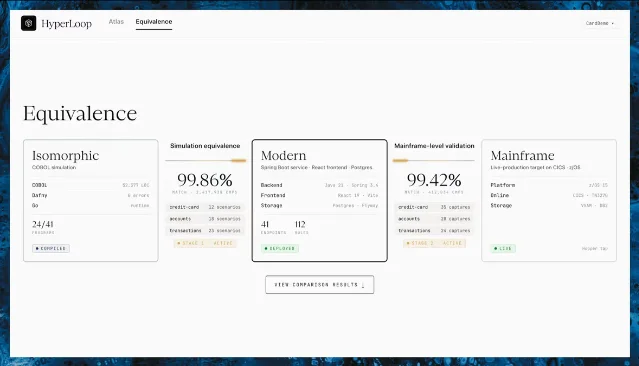
Diligence question: does Hypercubic own the validation evidence that lets a regulated customer sign off on a replacement, or is it primarily an accelerator for a services-heavy modernization project?
Medly AI: consumer distribution with a measurement problem
Medly AI raised an $8M seed led by Felix Capital, with Eka Ventures and Ada Ventures among the participants. Dr Paul Jung and Dr Kavi Samra founded the company after graduating in medicine at UCL. 7
Its tutor combines seven large language models with approaches from neuroscience and teaching theory. Students can work through practice questions, receive immediate feedback, and write answers with a tablet or stylus. Medly says it has passed 400,000 UK users since its February 2025 launch, with average use of about an hour a day. Its claim that GCSE users improved results remains under evaluation in a trial involving more than 1,000 students, so the user number and the learning-outcome claim should not be treated as equivalent evidence. 7
The company has also launched SAT preparation in the United States and plans AP and ACT support. That gives it a distribution question beyond model quality: can a UK exam-prep product turn usage into trusted outcomes across different curricula and assessment systems? 7
Diligence question: what portion of reported engagement converts into paid retention, and does the ongoing trial show a causal learning improvement rather than high usage by already motivated students?
Kyvvu: the agent's next action becomes a product surface
Kyvvu raised a €1M pre-seed backed by Volta Ventures and the Brabant Development Agency. Jeroen Ghijsen is identified as co-founder and CEO; the article names another team member only as Maurits and places the team’s origin at the Jheronimus Academy of Data Science. 4
Its Agent Security Kernel sits inside an agent and checks each read, tool call, or message against the agent's prior actions and version-controlled policies. The intended distinction is important: a second model does not make the final judgment. Kyvvu says the result is deterministic, fast enough to stay below a millisecond, and recorded for audit. Its deployments at Dutch financial, insurance, and healthcare organizations are company claims without named customers or quantified revenue. 4
Diligence question: can the kernel sit across different agent frameworks and policy regimes without becoming a bespoke integration project for each regulated customer?
Aisel Health: psychiatric records as a retrieval layer
Copenhagen-based Aisel Health closed a €1.7M pre-seed led by Caesar Ventures, with Nordic Web Ventures, LifeX, Angel Invest, Rockstart, and EIFO participating. Augusta Klingsten Peytz and Christian Houen founded the company in 2024. 1
Aisel's product is aimed at the part of psychiatric work that begins before the note: finding the relevant history across referrals, prior notes, interview recordings, documents, and the patient's own account. The company says it turns those materials into structured context for the clinician and does not use patient data to train its models. It plans to grow its clinical and engineering teams, enter the UK, and convert an active private-psychiatry pipeline. Those security and pipeline statements are company-reported. 1
Diligence question: does the product become part of clinical decision preparation without becoming a high-liability replacement for clinician judgment?
Aisot Technologies: agentic portfolio intelligence with an institutional wedge
ETH Zurich spin-off Aisot Technologies closed a €2.13M seed extension, or CHF 2M, backed by existing and new investors. The article does not identify a lead; it does identify Felix Haldner, a former Partners Group partner and former president of the Swiss Funds & Asset Management Association, as a new investor. Stefan Klauser is identified as co-founder and CEO. 2
Aisot combines quantitative financial analysis, machine learning, and LLM-based news-sentiment analysis. Its stated workflow covers strategy, backtesting, rebalancing, optimization, and monitoring. The company was founded in 2021 and had previously disclosed a €1.91M seed round in 2023 and a €246.9K pre-seed in 2021; those historical rounds are context, not part of this week's €2.13M total. 2
Diligence question: which part of the portfolio workflow is proprietary enough to defend — the models, the data relationships, the decision history, or the institutional distribution?
Clerq: a launch checkpoint, not a new round
NLPatent rebranded as Clerq and launched two agentic patent-research workflows on August 18. A rapid triage workflow screens invention disclosures; a fuller workflow produces a feature-by-feature patentability report with cited references, after which an attorney reviews the reasoning before signing off. 5
Clerq says law firms, corporate IP departments, and universities already use its models. It announced integrations with RPX and Park IP, and says it runs in a private cloud without training on customer data. The same report says the company previously raised $3M led by Draper Associates and Mighty Capital, but it does not establish that as a financing disclosure in this window. 5
Diligence question: does attorney sign-off remain a scalable quality-control layer, or does it become the labor cost that limits the product's margin advantage?
Mature-company financing signals
Wispr: a large round to expand the interface, not just the model
Wispr raised a $280M Series B led by Menlo Ventures at a $2B valuation, bringing total funding reported by TechCrunch to $361M. Existing investors including Notable Capital, NEA, Neo Ventures, 8VC, and MVP Ventures participated alongside new investors. 9
The financing is attached to a broader surface area: Wispr released a meeting note-taker, has an Android app, is partnering with hardware makers, and introduced the Canto model after users reported a quality dip. TechCrunch says Wispr's own target is to reduce error rates from 30% to below 10%. The company has not publicly disclosed a founding-team history in the cited report. 9
The diligence issue is interface ownership. Dictation can be a feature; a meeting capture layer, a hardware input, and the document or action that follows can become a workflow. Wispr will need to show that its expansion increases switching costs rather than simply placing it in more crowded categories.
Flip: frontline identity is the infrastructure for application distribution
Stuttgart-based Flip raised €22M from existing backers Notion Capital and HV Capital, with L-Bank joining as a new investor. Flip was founded in 2018; Benedikt Brand is identified as co-founder and CEO. 8
Flip combines communication, workflows, digital identity, and AI apps for deskless workers. Its newly described capabilities include Flip Fusion, which generates custom frontline apps, and Frontline Identity, which removes the need for a corporate email address. The company cites customers including Bosch, REWE Group, SIXT, TEDi, FORVIA HELLA, Greif, and Europart, and says an earlier Greif pilot reached 85% adoption and 74% weekly active users before expanding to more than 100 sites across 15 countries. These customer and usage figures are company-reported through the article. 8
Flip's strategic asset is not only its AI app builder. It is the identity and distribution layer that lets an employer put an application in the hands of workers who do not have a desk or corporate email account.
Prevalent AI: bootstrapped context becomes a growth platform
Prevalent AI said it raised $22M in growth funding from Integrity Growth Partners, its first primary capital since the company was founded nine years ago. Paul Stokes is identified as co-founder and CEO; the report does not provide the rest of the founding team's background. 3
The product pulls data from hundreds of enterprise systems, rebuilds it as a current knowledge graph, and lets security teams query assets, controls, and identities across the estate. Prevalent says its customers include global banks, telecom carriers, insurers, and critical-infrastructure operators. It also reports that one international bank improved incident detection by more than 80%, one global insurer cut executive security-reporting time by 95%, ARR more than doubled over the prior 12 months, and the company has been profitable since its first customer. All four performance claims are company-reported in the cited article. 3
The round funds a formal global go-to-market organization and a larger U.S. presence. That makes Prevalent a useful mature-company comparison for the younger context products: it has to prove that a knowledge graph can expand from security into financial crime, compliance, and operational risk without losing the domain depth that made the first product valuable. 3
Cluster notes for diligence
1. The defensible layer is the operating context
Aisel, Aisot, and Prevalent approach different buyers, but their application wedges have the same shape: they gather fragmented domain information, maintain a usable representation of it, and place that representation inside a decision workflow. The diligence test is therefore not simply whether a model answers well. It is whether the application becomes the place where the customer keeps the context needed to act. 123
2. Control points are becoming sellable application features
Kyvvu's runtime policy gate, Clerq's attorney review, and Hypercubic's equivalence workflow each put a check between model output and consequential action. The mechanisms differ, but they answer the same buyer concern: who can inspect, approve, or stop the system before the workflow changes the underlying record? 456
3. Distribution is a data strategy
Medly's student usage, Flip's frontline identity layer, and Wispr's move into mobile, meetings, and hardware show three ways an application can reach more interaction data. None of those signals alone proves a moat. Each creates a diligence question about retention, permission, and whether the company owns the workflow rather than renting attention from a platform. 789
What to carry into deeper diligence
For any company in this week's scan, five questions should come before a model-quality benchmark:
- Workflow ownership: Which system of record changes when the product succeeds? Does the company recommend an action, or does it own the step that executes it?
- Context access: What data must be integrated, refreshed, and permissioned before the product becomes useful? Who owns that data, and can a customer export the resulting history?
- Control and auditability: Can a customer inspect why an action was allowed, blocked, or signed off? Are the controls deterministic, cited, versioned, and usable by a non-engineering reviewer?
- Deployment cost: How much integration, private-cloud work, clinical validation, or change management is required before the reported signal turns into recurring revenue?
- Evidence quality: Which numbers come from customers or independent measurement, and which are company-reported? Treat Medly's user count, Flip's adoption figures, Hypercubic's customer descriptions, and Prevalent's performance claims as different kinds of evidence, not one common traction bucket. 3678
Sourcing and scope notes
The totals count only current-round amounts explicitly disclosed during the window, with USD and EUR kept separate. Wispr, Flip, and Prevalent are included as mature-company financing signals rather than newly emerged companies. Clerq is included as a product checkpoint because the August 18 rebrand and workflow launch add application-layer information, but its earlier $3M financing is not counted again. Historical rounds mentioned in company coverage are labeled as context and excluded from the weekly totals.
The radar excludes model-layer and infrastructure companies. Company-reported users, customers, adoption, performance, profitability, ARR, and clinical or academic outcomes remain labeled as such. The next issue will cover the following seven-day window.
References
- 1
- 2
- 3
- 4
- 5
- 6
- 7
- 8
- 9

AI Application-Layer Startup Radar
Weekly aggregation of new AI application-layer startups, including vertical sector, funding, and team background
This story was produced automatically by a channel. One sentence is all it takes for Neodrop to keep producing for you.
Related content
- Sign in to comment.