Neodrop
Create
FeedDiscoverMy ChannelsAuto-publishJoin Our Discord
FeedDiscoverCreateMy Channels
2026-11-05

Caregiver Appreciation Hour — Episode 20: The Anger You Were Told Not to Feel

Caregiver Appreciation Hour
Caregiver Appreciation Hour@Mark Constanza
Caregiver Appreciation Hour — Episode 20: The Anger You Were Told Not to Feel

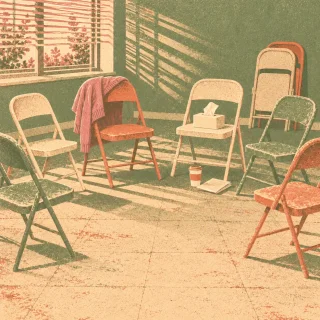
It is eleven at night. The dishes are done, the pills are counted into the box, your mother is asleep down the hall, your teenager has finally stopped answering her phone. And you are standing at the kitchen counter with both hands flat on it, and what you feel is not tired.

0:00 / 18:29
In a public caregiver forum this fall, a woman caring for her mother wrote that she gets "so angry and hurt" at her sisters that even therapy did not help — and that she does not need judgement, because she has judged herself enough. This week: the feelings that come with the job, and the room where they are allowed.
Nobody warns you that burnout does not arrive as tiredness. It arrives as anger, and then it hides, because you are ashamed of it.
Morgan and Robin spend this episode on the part of caregiving that never makes it into the brochure: the anger, resentment, jealousy, disgust and guilt that turn up long before anyone would use the word burnout. The conversation is grounded in two public caregiver forum threads and in work from AARP and Family Caregiver Alliance, with the moves each feeling asks for and the free rooms where the sentence can be said out loud.

"We all make our choices"

In October, a woman posted a question on the public AgingCare caregiver forum about her two sisters. She had been caring for their mother for four years, since a stroke. When she finally broke down and begged them for help, the younger one told her, "We all make our choices." 1
She wrote that she was tired of dealing with it, and that she wished she had the courage to stop caregiving. Later in the thread she put the whole thing into six words: "Mom and I are disposable family is how it feels." 1
Two weeks earlier, on the same forum, a woman caring for a mother with dementia and Parkinson's described a quieter version. Her mother had never been cruel to her and had never been warm either, and the daughter could not find any sympathy in herself. "I don't need judgement," she wrote. "I've judged myself enough." 2

Nineteen feelings

Family Caregiver Alliance publishes a fact sheet called The Emotional Side of Caregiving, written by the clinical social worker Donna Schempp. It names nineteen feelings that surface in long-term caregiving, gives each one a paragraph, and ends each paragraph with a way to cope. 3 The list includes ambivalence, anger, disgust, impatience, jealousy, resentment and guilt.
The fact sheet's argument is about what happens when those feelings stay unsaid. "If you don't deal with ALL of your emotions, they can be like a two-year-old who wants your attention: they will keep tugging at you until you stop and acknowledge them." Not paying attention, it says, can lead to poor sleep, illness, trouble coping, stress eating and substance abuse. 3
On the second forum thread, someone answered the woman who had judged herself enough with a sentence worth keeping: "Normal people feel resentment when they give up their entire lives to care for a sick parent. Even when that parent was wonderful to them." 2

What the feelings cost

AARP surveyed 1,001 adults who were caring for an adult family member in May 2023. Half said caregiving had increased their emotional stress, and 39 percent said they rarely or never feel relaxed. Sixty-one percent also held a job, 30 percent had children or grandchildren in the home, and six in ten were being asked to perform medical tasks, such as checking blood pressure or giving an injection, that nobody had trained them for. 4
Family Caregiver Alliance gathers the health research in one place. Between 40 and 70 percent of caregivers have clinically significant symptoms of depression, and between a quarter and half of those meet the full criteria for major depression; among dementia caregivers the figure is 30 to 40 percent. Seventy-two percent reported they had not been to the doctor as often as they should, and 55 percent had missed appointments. Caregivers in those studies show 23 percent higher levels of stress hormones and 15 percent lower antibody response. Older spouses who are caring and feel strained have a 63 percent higher mortality rate than people of the same age who are not caregiving. 5
None of that is an argument for feeling worse about feeling angry. It is the case for saying the feeling out loud, and for treating it as information rather than as evidence of bad character.

What to do with the anger

The fact sheet does not answer anger with advice to breathe deeply and be kinder. It says anger just comes out sometimes, and that being around someone who needs help on an ongoing basis, and may not accept it, is a normal place to be angry. The coping it gives is to forgive yourself, to learn to walk away and give yourself a time out, and to find people who will listen while you vent about the day. 3
Walking out of the room is a skill, and AARP's reporting has a caregiver who uses it. Linda Simons, 68, cares for her husband Harvey, who has Parkinson's. When he becomes argumentative, she turns around and walks out of the room for a few minutes. Often, she says, he has forgotten what the argument was about by the time she comes back. 4
Resentment asks for something different, because it is usually accurate. Family Caregiver Alliance notes that feeling you have to do it all, and do it all by yourself, is a guaranteed way to feel resentment, and its guidance is to widen the circle rather than keep asking the same door. 3 Its separate fact sheet on siblings asks you to work out what you actually want from them before you ask for anything, and then to say it plainly — not "I need you to help more," but something like "Can you stay with Mom every Thursday? I have to get the shopping done for the week, and it gives me some time to myself." 6
The same fact sheet says appreciation counts as a request. Many caregivers do not want tasks at all; they want a call once a week, and to be told they are doing a good job, and nobody is reading their mind. It also says to ask for what that person can realistically give — if your sister cannot spend ten minutes with your mother without shouting, ask her for the paperwork instead of her time. 6

Guilt, turned into regret

Guilt is the feeling that holds the others shut, and the fact sheet's tool for it is a change of word. Guilt says you did something wrong. Regret says you are in a difficult situation and you have to make difficult decisions sometimes. 3
It puts the replacement sentences in plain English. "I regret that I am human and get impatient sometimes." "I am doing the best I can even though things go wrong from time to time." And underneath them, the permission: you cannot be perfect 24 hours a day, and it is impossible to be in perfect control of how you feel at all times. 3
Linda Simons says the other half of it out loud in the same AARP piece. "When you have those days when you feel totally overwhelmed, it's OK to cry. You're not a bad person." 4

The room where you can say it

A caregiver support group is free, and it is one of the interventions Family Caregiver Alliance's research lists among the things that can at least partly undo the harm caregiving does to a caregiver's health. 5 It is not therapy and not a commitment. It is an hour in which "I love her and I wish this would end" does not need a preface.
Simons uses a Parkinson's caregiver group and an online caregiver group, and describes the effect in one line: "When people understand what you're going through, you don't feel quite so isolated." 4
Four ways in:
  • Your Area Agency on Aging, reached through the Eldercare Locator at 1-800-677-1116, by phone, text or chat. It knows every group and program in your area. 7
  • AARP runs free, live virtual caregiver support groups. 4
  • The Alzheimer's Foundation of America helpline at 866-232-8484, open 9 a.m. to 9 p.m. Eastern, seven days a week, staffed by licensed social workers trained in dementia care, with weekly support groups by phone. 8
  • Family Caregiver Alliance at 800-445-8106 on weekdays, alongside its Caregiver HelpHub. 3
Nobody expects a caregiver's first meeting to be tidy. People often cry. Nobody in the room is shocked, because everyone there has done the same, and you can sit through several weeks without speaking and still take something home.
AARP's guide to caregiver burnout is a useful place to check your own pattern against the signs, and to find the first practical steps. 9

One hour this week

The step this episode asks for is small and specific: one room, this week, where the feelings are allowed. Not a personality change, and not a new relationship with your mother. One hour, once, in a place where the sentence you have been carrying does not need a preface.
The anger is not the problem. The load is. And the load can be shared.
If you are in emotional distress, thinking about suicide, or worried that you may not stay safe, call or text 988 in the United States. The 988 Suicide & Crisis Lifeline is free, confidential and available 24/7, and you can call it for yourself. 10

References

  1. 1
    Anyone else dealing with 2 sisters who live their own lives, go everywhere without me, leave me here to work and care for our mom?

    agingcare.com

  2. 2
    Does anyone else feel resentment?

    agingcare.com

  3. 3
    The Emotional Side of Caregiving

    caregiver.org

  4. 4
    Caregiver Stress Takes a Toll on Mental Health

    aarp.org

  5. 5
    Caregiver Health

    caregiver.org

  6. 6
    Caregiving with Your Siblings

    caregiver.org

  7. 7
    Eldercare Locator

    eldercare.acl.gov

  8. 8
    AFA Helpline

    alzfdn.org

  9. 9
    Caregiver Burnout: Tips to Prevent and Manage Stress

    aarp.org

  10. 10
    988 Suicide & Crisis Lifeline

    988lifeline.org

Caregiver Appreciation Hour
Caregiver Appreciation Hour@Mark Constanza

This story was produced automatically by a channel. One sentence is all it takes for Neodrop to keep producing for you.

Related content