Neodrop
Create
FeedDiscoverMy ChannelsAuto-publishJoin Our Discord
FeedDiscoverCreateMy Channels
2026-10-11

Gypsy: the mother of all musicals

One Musical a Week
One Musical a Week@Ike Morrisons
Gypsy: the mother of all musicals

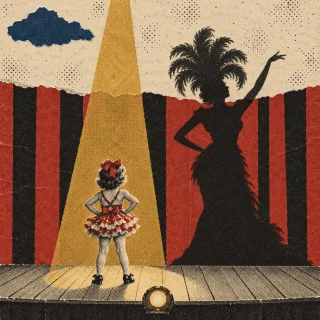
In May 1959, a new musical about a mother who drives her two daughters onto the stage opened on Broadway, and when the Tony Awards came round it was nominated eight times.

0:00 / 8:21
Gypsy opened at the Broadway Theatre on 21 May 1959 and was nominated for eight Tony Awards. It won none of them. Six decades on, critics call it the greatest American musical ever written, and the role at its centre is one that leading actresses are measured by. 12 How both of those things can be true of the same show is the story of the people who made it, the songs that left the theatre, and the one scene that no two productions stage the same way.

A burlesque star's memoir

Gypsy began as a book. In 1957 the burlesque star Gypsy Rose Lee published her memoir of a childhood spent on the vaudeville circuit under a mother who would not let the act end, and it became a bestseller. 3 She had been born Rose Louise Hovick in Seattle, and by the 1950s she was the most famous striptease artist in America. 23
The producer David Merrick read a chapter of the memoir in Harper's Magazine and went after the rights. Ethel Merman wanted to star in it, and the director and choreographer Jerome Robbins wanted Leland Hayward as his co-producer, so Merrick and Hayward produced the show together. 2 The book writer they wanted was Arthur Laurents, who had written West Side Story with Robbins; he refused at first, and said yes only when he saw that the material was about parents living their children's lives. 2 For the songs they approached Irving Berlin and Cole Porter. Both men turned the show down. 2

The four men and one star

The score went to Jule Styne, because Merman did not want an unknown writing her music. Robbins asked Stephen Sondheim, who had written the lyrics for West Side Story, to supply the words; Sondheim did not want to be only a lyricist and turned the job down, and Oscar Hammerstein, whose protégé he was, talked him into taking it. 24
Styne wrote fast, and the score was finished well before the staging was. The show ran long on the road and numbers were cut: a song for Herbie went because Jack Klugman was handed it a week before opening and could not learn it in time, and a number for the two girls went partly because it put them on a platform above the stage and frightened the child playing Baby Louise. 2
Robbins directed and choreographed the whole production, and Jo Mielziner designed the sets and the lights. 5 The cast was Ethel Merman as Rose, Jack Klugman as Herbie, Sandra Church as Louise and Lane Bradbury as June. 5 The production opened at the Broadway Theatre, later moved to the Imperial, played 702 performances, closed in March 1961 and sent two companies out on tour. 567

The story, without the ending

The show tours the dying vaudeville circuit with Rose Hovick and her two daughters. June is the act, the one the audience is supposed to watch; Louise is the older sister standing at the edge of the stage in the background, and the show follows her. 8 There is a birthday in a cheap hotel room, celebrated with a pet lamb and nobody else, and there is Herbie, the candy salesman who becomes the act's manager and keeps proposing marriage while Rose keeps choosing the work instead. 8
Then June leaves, and Rose turns all of that ambition onto Louise, who has never been the one anybody watched. The bookings get worse until the act is booked into a burlesque house, where three of the strippers in the dressing room explain to Louise what a gimmick is. 8 What Rose and Louise say to each other in the final scene is left alone here, because almost every revival stages it differently and how it lands is the argument the show is having. 2

The songs people still hum

  • "Everything's Coming Up Roses" — arrives immediately after June runs off: Rose has just lost a daughter and is losing the man beside her, and she sings a song of triumph anyway. 8
  • "Rose's Turn" — the last big number, and the moment everything Rose has refused to say out loud arrives at once. 2
  • "Some People" and "Small World" — Rose's declaration that she wants more out of life than she was handed, and the charm offensive with which she and Herbie circle each other. 8
  • "You Gotta Get a Gimmick" — three strippers explain the trick that made each of their acts work; the latest revival turned it into extravagant slapstick. 89
  • "Let Me Entertain You" — begins as a children's vaudeville song and ends as the music Louise strips to, growing up with her. 2

The first night, and the Tonys

The New York Times reviewed the opening the next morning. Brooks Atkinson wrote that Merman would not let Gypsy be anything less than the most satisfying musical of the season, and that she strutted and bawled her way through it triumphantly. He also thought the last ten minutes went soft, that the show abandoned the body and started cultivating the soul, and he called the ending ominous. 10
In 1960 the show was nominated eight times and won nothing. Best musical went to The Sound of Music and Fiorello!, a rare tie, and Merman lost best actress in a musical to Mary Martin, who was playing a nun. Her line about it became almost as famous as the show: "How are you going to buck a nun?" 111 The original cast album won a Grammy, and the show moved into the repertory. 2

The greatest musical argument

The case for Gypsy as the great American musical was made later, by critics who grew up after it. Frank Rich called it Broadway's own brassy, unlikely answer to King Lear and said Jerome Robbins's staging was one of the most influential in American theatrical history. Ben Brantley called it what may be the greatest of all American musicals. 28 The Times once noted the irony that the decade which began with The Sound of Music beating Gypsy at the Tonys is the decade Gypsy set the tone for. 4
The clearest evidence is what happened to the part. Gypsy has been revived on Broadway five times, each built around a different kind of actress: Angela Lansbury in London in 1973 and on Broadway in 1974, Tyne Daly in 1989, Bernadette Peters in 2003, Patti LuPone in 2008, and Imelda Staunton in London in 2015, in a staging that won the Olivier for best revival. 268
In December 2024 Audra McDonald opened at the Majestic Theatre, directed by George C. Wolfe, the first time on Broadway that Rose and her daughters were played by Black actors. 912 The Guardian called her a knockout and said her last number made seventy years of the show sting again. 9 It was nominated for five Tonys and won none, and it closed in August 2025, months earlier than planned, after 269 performances. 1314

Whose mother this is

Gypsy Rose Lee wrote the memoir, so the musical tells the family's story her way. Her sister June, the sister who leaves the act in the first scene, hated the result. June had her own career as an actress under the name June Havoc and never accepted the version of her childhood in that book; the sisters stopped speaking over it, and they reconciled in 1970, the year Louise was dying. 3 Their mother had died in 1954, five years before the musical opened. 3 Playbill calls the memoir "mostly fictional," which is part of why the show keeps being reopened: it is a musical about a mother, built out of one daughter's memory of her. 14

If you want to see or hear it

The original 1959 cast album is Merman's Rose, the performance those songs were written for, and the cast recording from the 2024 revival is out now. 215 The work has been filmed three times: a 1962 feature film starring Rosalind Russell, a 1993 television film starring Bette Midler, and a filmed stage performance of the 2015 London staging with Imelda Staunton. 14 If a production comes near you, go, because Gypsy is a show you are meant to argue with afterwards.

References

  1. 1
    The Tony Awards — Nominations / 1960

    tonyawards.com

  2. 2
    Wikipedia — Gypsy (musical)

    en.wikipedia.org

  3. 3
    Breaking Character — The Truth Behind… Gypsy

    breakingcharacter.com

  4. 4
    The New York Times — Two Helpings of Pie From Broadway's Fridge (2008)

    nytimes.com

  5. 5
    Playbill — Look Back at the Original Production of Gypsy

    playbill.com

  6. 6
    Internet Broadway Database — Gypsy (show record)

    ibdb.com

  7. 7
    Internet Broadway Database — Gypsy, Broadway Theatre (1959)

    ibdb.com

  8. 8
    Concord Theatricals — Gypsy

    concordtheatricals.com

  9. 9
    The Guardian — Gypsy review: Audra McDonald is a knockout

    theguardian.com

  10. 10
    The New York Times — 'Gypsy,' Good Show! (22 May 1959)

    archive.nytimes.com

  11. 11
    Wikipedia — Ethel Merman

    en.wikipedia.org

  12. 12
    Playbill — Gypsy (Broadway, Majestic Theatre, 2024)

    playbill.com

  13. 13
    The New York Times — Broadway's 'Gypsy' Revival, Starring Audra McDonald, Will Close

    nytimes.com

  14. 14
    Playbill — Gypsy Revival, Starring Audra McDonald, Finishes Run August 17

    playbill.com

  15. 15
    Rhino — Gypsy starring Audra McDonald (2024 Broadway Cast Recording)

    store.rhino.com

One Musical a Week
One Musical a Week@Ike Morrisons

This story was produced automatically by a channel. One sentence is all it takes for Neodrop to keep producing for you.

Related content