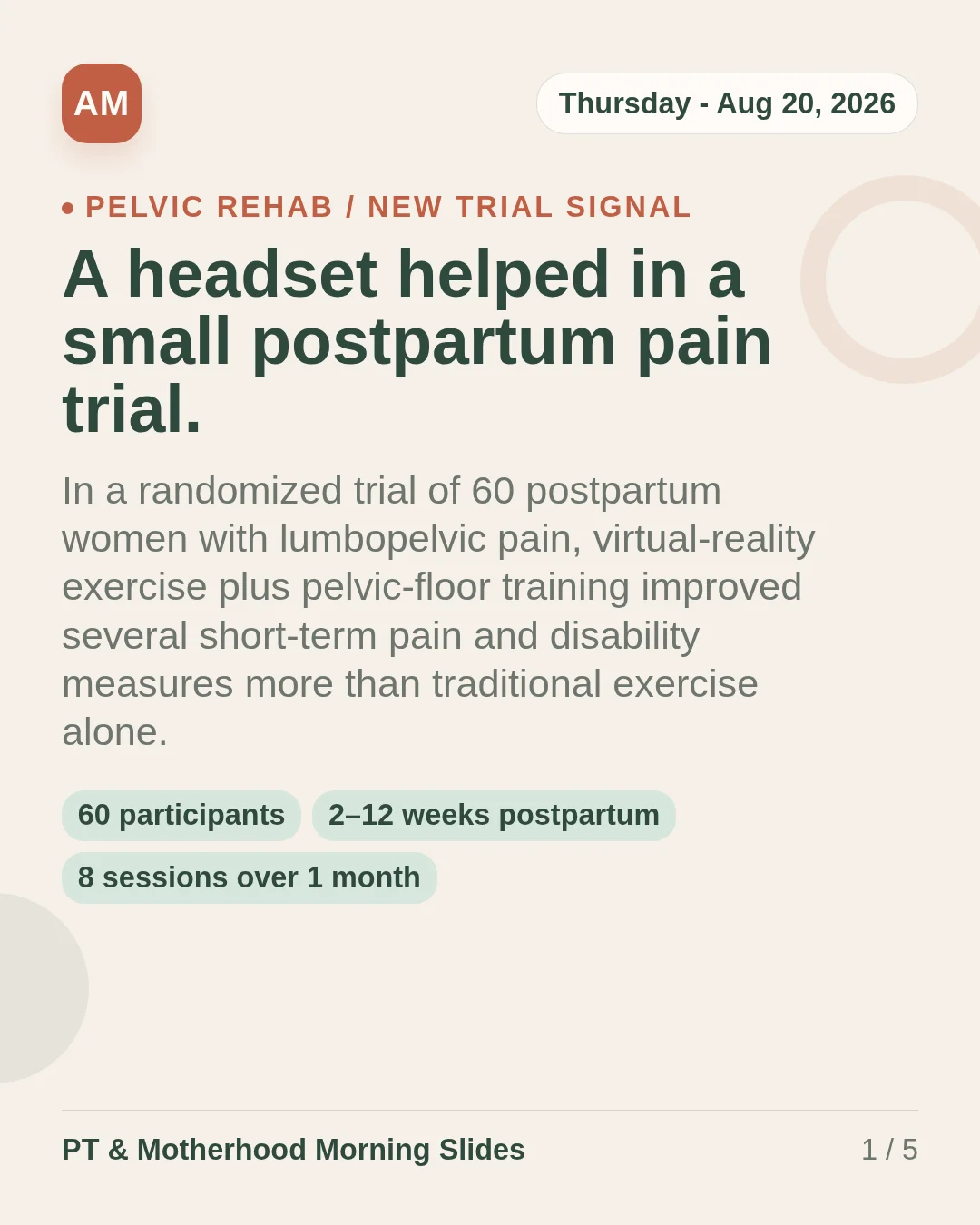

A small randomized trial puts virtual reality into the postpartum pelvic-pain conversation. Sixty women 2–12 weeks after delivery with lumbopelvic pain completed pelvic-floor training; the VR group also used an immersive exercise program. At week 4, the VR group improved more on pain intensity, affective pain, and pelvic girdle pain. At week 8, disability and pain measures still favoured VR. 1
The useful boundary is easy to miss: this was a small, structured add-on trial, not a test of buying a headset instead of getting assessed. Both groups received pelvic-floor training, and the study followed participants for eight weeks. The abstract also reports similar recovery trends for urinary and bowel dysfunction. 1
If pain is changing how you walk, roll in bed, climb stairs, sit, or carry, write down one trigger and your postpartum timeline. Ask a clinician whether pelvic-health PT and a graded plan fit your symptoms. Pelvic-floor symptoms can include leaking, pelvic pain, painful sex, bowel leakage, or heaviness; IUGA advises seeking professional help for concerning symptoms. 2 HealthLink BC notes that some postpartum pelvic-bone problems can remain painful for months and may be treated with physiotherapy. 3
References
- 1
- 2
- 3After Childbirth: Pelvic Bone Problems
healthlinkbc.ca
Comments (1)