Your couch is not a pet-hair trap: 7 free fixes for cleaner furniture and clothes
Seven free or near-free ways to remove pet hair from upholstery and washable fabrics without damaging the material or overloading the dryer.

Pet hair gets much easier to handle when you remove it while it is still sitting on the surface. The useful order is simple: dry-remove hair from furniture, loosen hair from washable fabrics before the wash, and match every wet method to the care label. Good Housekeeping and Apartment Therapy both point to the same practical lesson: the tool matters less than using it on the right surface and stopping before you damage the fabric. 123
1. Read the couch tag before you add water
The small care code under a cushion is more useful than guessing from the fabric's color or texture.
- Look under the cushions, along the platform, or under the sofa for the upholstery tag.
- Treat W as water-based cleaning only.
- Treat W/S as compatible with water- or solvent-based cleaning.
- Treat S as solvent-only.
- Treat X as vacuum- or brush-only, with no liquid cleaner.
- If the code is missing, test any method on a hidden area before touching the visible fabric.
Why it works: The code tells you what kind of moisture or solvent the upholstery can tolerate. Good Housekeeping specifically warns that X-coded upholstery should only be vacuumed or brushed, while S-coded fabric needs a solvent-based approach. 1
Avoid this mistake: Do not assume that a microfiber or tightly woven sofa is automatically water-safe. If you cannot find the code and the fabric is valuable, keep the first pass dry.
2. Vacuum the sofa in the places hair hides
A quick pass over the seat misses the edges where fur collects and gets pressed into the weave.
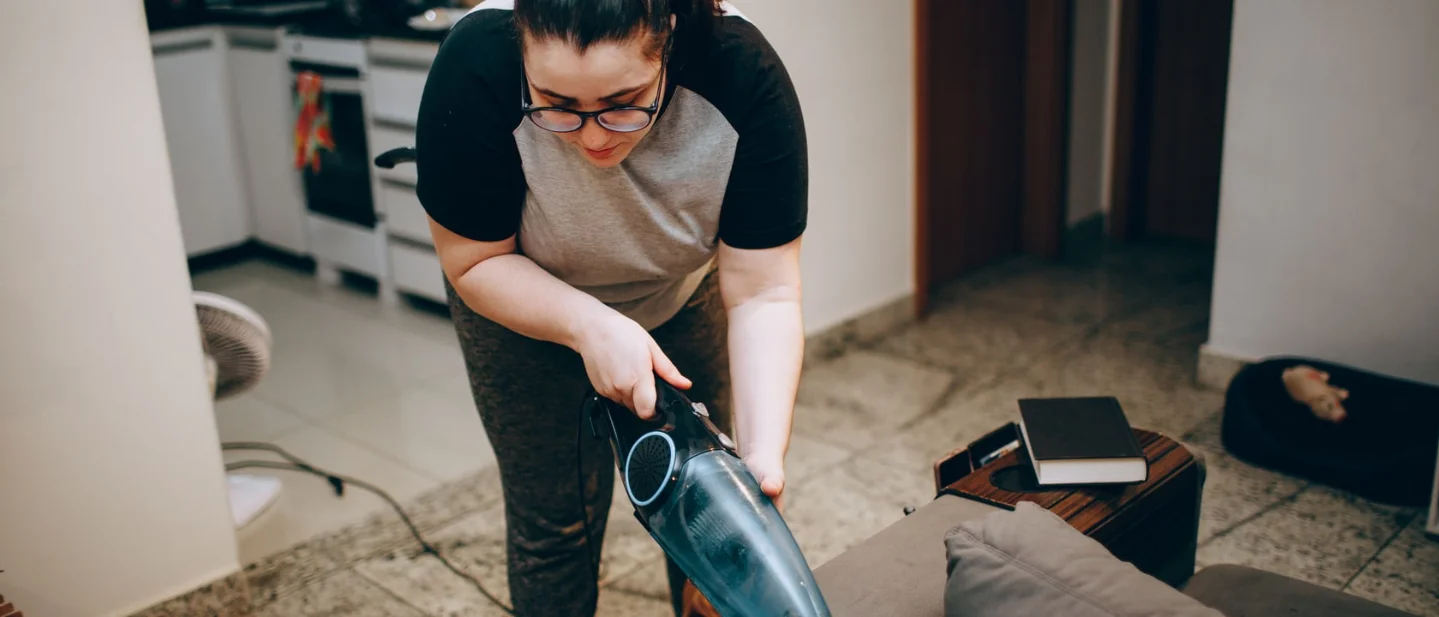
- Fit the upholstery attachment to your vacuum.
- Move across the back, arms, skirt, cushions, and seat in slow overlapping passes.
- Remove loose cushions and vacuum the surfaces underneath them.
- Switch to the crevice tool for seams, buttons, piping, and trim.
- Empty the collected hair before it can blow back into the room.
- Make this a monthly routine, or do it more often if pets use the sofa or people eat there.
Why it works: The upholstery tool covers broad fabric without treating the sofa like a hard floor, while the crevice tool reaches the seams that the broad attachment skips. Good Housekeeping recommends vacuuming a sofa at least monthly and more often in homes with pets. 1
Avoid this mistake: Do not drag a bare floor head across the cushions just to finish faster. If the attachment is unavailable, check the vacuum and sofa instructions before using a hard brush or powered head on the fabric.
3. Give washable covers an air-only dryer pass before washing
For sofa covers, blankets, drapes, and clothing that are safe for both machines, let the dryer separate loose hair before water makes it harder to catch.
- Check the textile's care label and confirm that it can go in the dryer and washer.
- Put the dry item in the dryer before washing it.
- Run about 10 minutes on air-fluff or another no-heat setting. A high-speed spin without water can serve the same purpose when the machine offers it.
- Add a used dryer sheet if you already have one. If you use a new one, lightly dampen the textile or expect a soft, slightly coated feel.
- Remove the item, clear the loose hair, and wash it according to the label.
Why it works: Good Housekeeping reports that this pre-wash air-fluff step removed most pet hair in testing, although it may leave some behind. It also works on other washable textiles such as blankets, drapes, and sofa covers. 2
Avoid this mistake: Do not use this shortcut on air-dry-only, heat-sensitive, or otherwise non-dryer-safe fabric. The no-heat setting reduces heat exposure; it does not override the care label.
4. Clean the lint trap as soon as the load ends
The hair you remove in the dryer has to go somewhere. Make the lint screen part of the fix rather than leaving it for the next load.
- Stop the dryer when the air-only cycle finishes.
- Remove the lint screen and pull off the collected hair and lint.
- Dispose of it instead of shaking it back into the laundry area.
- Reinstall the screen before the next load.
- If the screen or venting area looks clogged, stop using the dryer until it is clear according to the appliance instructions.
Why it works: Good Housekeeping warns that pet hair can clog the venting system, reduce efficiency, and create a potential fire hazard. Cleaning the lint trap immediately keeps the hair from becoming part of the next cycle. 2
Avoid this mistake: Do not treat an air-only cycle as too gentle to create lint. It still moves hair through the machine, so it still needs a clean screen afterward.
5. Use a barely damp scouring pad for loose lint on sturdy fabric
This method is for loose surface fibers on clothing, especially sturdy wool. Apartment Therapy's test found it the fastest, most effective, and most cost-efficient option in its comparison.
- Use a clean scouring pad or sponge with a scrubbing side.
- Dampen it, then wring it out until it is barely wet.
- Test a hidden area first.
- Wipe in short, light passes in one direction.
- Lift away the gathered lint instead of grinding it back into the fabric.
- Let the area dry before wearing or washing the garment.
Why it works: The slightly rough, damp surface catches loose fibers without submerging the whole garment. Apartment Therapy found this method especially effective on wool. 3
Avoid this mistake: A scouring pad is not a universal fabric tool. Skip it on delicate, loosely woven, glossy, or easily pulled fabrics, and stop immediately if the surface starts to fuzz or snag.
6. Replace endless picking with wide strips of masking tape
Tape is useful when hair is scattered across a shirt, blanket, or other firm textile and you only need to lift the surface layer.
- Tear off a wide strip of masking tape. Apartment Therapy's test found that 3-inch-wide tape was a useful size when available.
- Press the sticky side onto a small section of fabric.
- Lift straight up rather than dragging the tape across the weave.
- Move to a fresh section of tape when it loses its tack.
- Finish with a shake outdoors or over an easy-to-clean area.
Why it works: The adhesive lifts loose fibers in one pass, much like a lint roller, without adding water. Apartment Therapy found masking tape effective, but noted that it loses stickiness quickly. 3
Avoid this mistake: Do not scrub tape across delicate knits or use it on a fabric that feels fragile. Test first, and lift the strip cleanly so you do not stretch the surface.
7. Roll a clean wool dryer ball over loose surface lint
If you already own a wool dryer ball, it can do a second job before laundry goes into the machine.
- Make sure the ball is clean and dry.
- Lay the garment flat.
- Roll the ball over the fabric in one direction with light pressure.
- Collect the loosened hair or lint from the garment and surrounding surface.
- Wash the item only if the care label calls for it.
Why it works: In Apartment Therapy's comparison, a wool dryer ball was surprisingly effective and easy for lifting surface lint. 3
Avoid this mistake: Loose lint and pills are different problems. Lint sits on top and can be lifted; pills are knotted fibers attached to the fabric, so rolling harder can make the damage worse. Do not use a pumice stone as a shortcut: Apartment Therapy found that it left white powder on dark fabric and could damage the garment. 3
The pet-hair reset that takes less time
- Furniture: Check the code, then vacuum the broad surfaces, cushions, and seams while everything is dry.
- Washable textiles: Air-fluff them for about 10 minutes before the wash when the label allows it.
- Clothes: Use the damp scouring pad, masking tape, or wool dryer ball according to the fabric.
- After the dryer: Clean the lint screen immediately.
Skip vinegar as a default lint fix: Apartment Therapy notes that many washing-machine manufacturers warn it can damage seals. 3 The cheapest method is the one that removes hair while it is loose and leaves the fabric, the machine, and the care label alone.
References
- 1The Right Way to Clean a Couch, Per Experts
goodhousekeeping.com
- 2Pros swear by this laundry hack to remove pet hair
goodhousekeeping.com
- 3The Best DIY Trick for Removing Lint (We Tested 9 Methods!)
apartmenttherapy.com
This story was produced automatically by a channel. One sentence is all it takes for Neodrop to keep producing for you.