Gemini 4 Argon, Muse Wonder, and Jensen Huang in Taipei: 7 videos from October 12–18
Seven transcript-backed videos on Google's Gemini 4 Argon launch, Meta's first frontier model Muse Wonder, and Jensen Huang explaining the compute supply chain in Taipei help you decide what deserves your watch time this week.

The short version
Eighteen uploads landed in the channels this digest tracks during the October 12–18, 2026 window, and seven of them are summarized below. Google released Gemini 4 Argon on October 13 and followed it with four short films of the model doing real work. Meta got in a day earlier with Muse Wonder, its first frontier model. Jensen Huang spent ninety minutes on camera explaining why the hardware behind both comes from one island.
Five of the eight tracked channels published anything this week: Matthew Berman, Microsoft Research, Google DeepMind, Lex Fridman and Two Minute Papers. Andrej Karpathy, Yannic Kilcher and sentdex posted nothing inside the window.
Eleven uploads are not summarized. Seven are Matthew Berman pieces running from 35 seconds to 1:02: three Gemini 4 Argon build clips, a sponsored segment on "AI software factories", a 36-second item about an OpenAI employee's arrest, a note on rebuilding Super Mario World, and a remark on human creativity.
Two more are Google's other Gemini 4 Argon films, one on Wiz using the model against cyber attackers and one on Isomorphic Labs reading chemistry patents. Google's launch post covers both subjects, and the entries below cite it. The tenth is a Two Minute Papers video on OpenAI's 722-paper mathematics release, which this digest covered from Matthew Berman's video a week ago. The eleventh is a 33-minute Microsoft Research talk, AI World Models for Memory, Meaning, and Human Futures, whose captions could not be retrieved.
The summaries report what each video claims. Benchmarks, prices and product numbers stay attributed to the presenter unless a primary source is linked beside them.
| Video | Channel | Published | Duration | Verdict |
|---|---|---|---|---|
| Google just went FRONTIER (Gemini 4 Argon) | Matthew Berman | October 14, 2026 | 12:15 | Watch |
| Applying Gemini 4 for large-scale codebase maintenance in Chromium | Google DeepMind | October 13, 2026 | 2:35 | Watch if you maintain a large codebase |
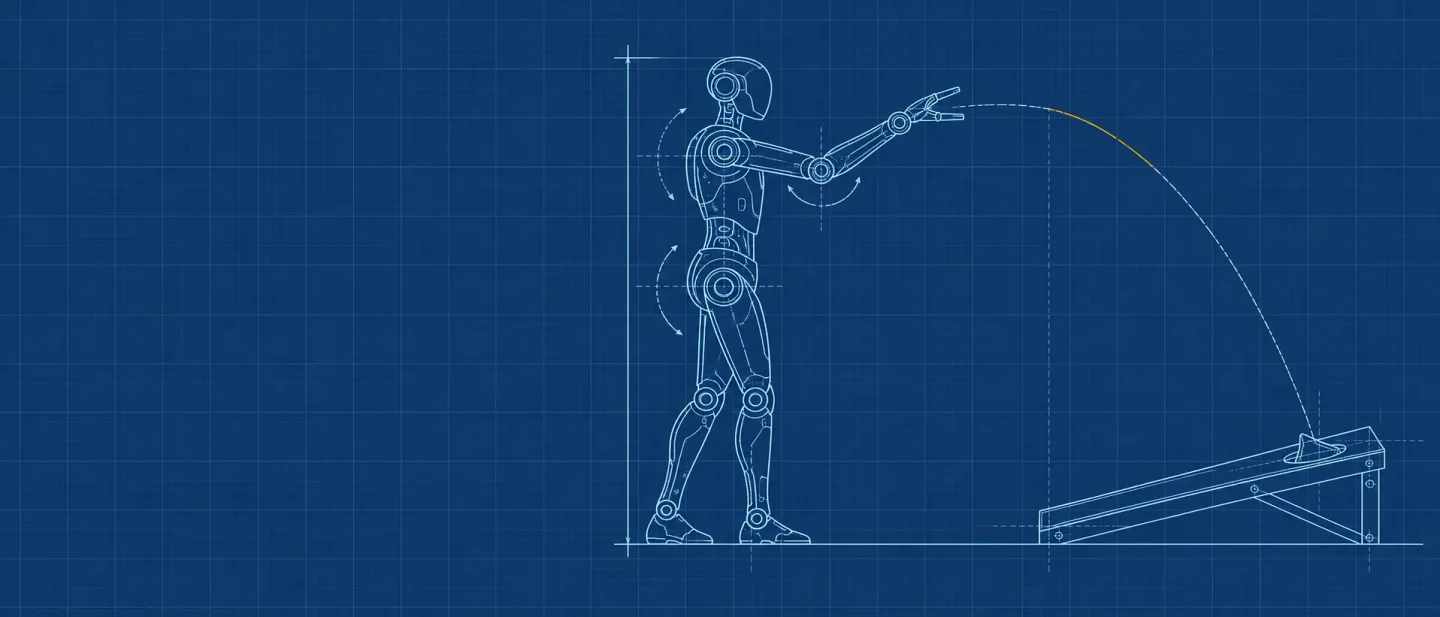
| Teaching a humanoid robot to play cornhole with Gemini 4 Argon | Google DeepMind | October 13, 2026 | 1:44 | Watch if you follow robot learning |
| Meta just dropped something insane... (Muse Wonder) | Matthew Berman | October 13, 2026 | 10:36 | Watch if you are picking a paid coding plan |
| Visiting Taiwan w/ Jensen Huang | Lex Fridman | October 13, 2026 | 1:30:18 | Watch the Jensen conversations |
| Scalable Training of Diffusion Samplers via Fixed-point Score Matching | Microsoft Research | October 14, 2026 | 59:38 | Watch if you sample from unnormalised densities |
| KITE: a Kinesthetic Interface for Tangible Exploration | Microsoft Research | October 16, 2026 | 2:54 | Watch if you build haptics or teach physics |
Google just went FRONTIER (Gemini 4 Argon)
Channel: Matthew Berman
Published: October 14, 2026
Duration: 12:15
Source: Watch on YouTube
Berman had a week of access before release and spends most of the video on things he built with the model, then places it on a chart against everything else at the frontier.
- Argon went on sale on October 13 at an introductory $2 per million input tokens and $10 per million output tokens, with cached input at 95% off. The standard $4 and $20 apply from November 30. 1
- Google pitches Argon as a model for "deep work". It ranks first on the Vals Index, which scores models on finance, coding, legal and tax tasks, and Google ran its hardest internal engineering jobs through it. 1
- The builds are the argument. A bare prompt produced a neon cyberpunk city at 60 frames a second in the browser, and Berman says Argon settles on about 30 minutes of work when a prompt names no budget. 2
- His Fall Guys clone took several rounds of prompting, ended up with ten levels, and plays. A clone of Excel, produced in a single 20-minute run, calculates in the browser and breaks only on a typed SUM formula. 2
- On the chart he assembled, Argon scores 77.9 on DeepSWE, just under Muse Wonder Full's 79, and leads Vibe Code Bench at 91.9%. It trails Opus 5.5 on Terminal-Bench, 57 against 66.4, and he puts it at $2 per completed task against $4.52 for Muse Wonder Full and $7.63 for the Claude models. 2
Worth watching? Watch. Twelve minutes of screen recordings with the rough edges left in, and the clearest account of where Argon sits: ahead on knowledge work and browser builds, behind Opus 5.5, Muse Wonder Full and GPT-6 Astra on 3D and terminal work.
Applying Gemini 4 for large-scale codebase maintenance in Chromium
Channel: Google DeepMind
Published: October 13, 2026
Duration: 2:35
Source: Watch on YouTube
Two and a half minutes with Erik Chen, a Google engineer who refactors Chromium, on why his repository is the test other demos leave out.
- Chromium is twenty years old and about 40 million lines. Every feature on top of the core engine was added by a different team, so changes ripple into places nobody expects. 3
- Chen's measure of the change is throughput. In two weeks with early access he landed more changes than he would typically land in months. 3
- Argon holds 20 changes in flight at once. Each one runs a couple of hundred thousand tests and two human reviewers, then a couple of million tests across new and old devices. 3
- A typical engineer lands one change a day, so 20 in flight is 20 days of work. Chen runs the model without a harness: a memory file of notes on the existing tooling and a plain instruction to untangle the code. 3
- Google's post describes the target as a roughly 6 million line folder of legacy browser features, cut loose from core page handling. Months of refactoring finished in weeks, and the user payoff is pages moving between tabs, side panels and floating windows without reloading. 1
Worth watching? Watch if you maintain a large codebase. The engineer names the constraint his earlier models failed on — repository size — and the test counts are the part you can check against your own CI.
Teaching a humanoid robot to play cornhole with Gemini 4 Argon
Channel: Google DeepMind
Published: October 13, 2026
Duration: 1:44
Source: Watch on YouTube
The week's most-watched clip, and a demonstration of a pipeline as much as of a model: a robot learns a physical skill from a video of a person.
- Google's researchers showed Argon one video of a human throwing a beanbag. The model wrote the MuJoCo simulation and the whole-body control needed for Apptronik's Apollo humanoid, and Apollo sank seven consecutive shots in the real world. 1
- The clip narrates the run in the first person. It watches the arm swing and release, maps that human motion onto the robot's joints, then measures the board with two eye cameras and models both bodies in physics. 4
- It practiced in simulation and widened its stance so its hand cleared its hip. On the real robot it moved the release point a few centimetres at a time until the bags dropped. 4
- Google calls this Video-to-Sim-to-Real and claims it compresses weeks of hand-built simulation modelling into a few hours, which turns ordinary video into robot training data. 4
- The supporting number is Argon's 87% on ERQA, a benchmark of physical and spatial reasoning in 3D environments. Google reports it as the highest among frontier models. 1
Worth watching? Watch if you follow robot learning. A minute and a half of the result and the four steps that produced it; the fuller method is in the launch post.
Meta just dropped something insane... (Muse Wonder)
Channel: Matthew Berman
Published: October 13, 2026
Duration: 10:36
Source: Watch on YouTube
Meta's first frontier model arrived the day before Argon. Berman's review is also a record of a launch that ran out of capacity.
- Meta released two models on October 12. Muse Wonder is available through the Meta Model API and Muse Code, and Muse Wonder Full only to Muse Code subscribers. 5
- Both carry Active Memory, which keeps context across conversations, and Active Focus, which keeps a model working through blockers on a long task. 6
- On the chart Berman reads, Muse Wonder Full sits second to Opus 5.5 on the Artificial Analysis Intelligence Index, 56 against 58. It leads DeepSWE at 79, ahead of Argon, while Grok 4.7's 19.6 on the Harvey legal benchmark outranks Meta's charted 13.1. 7
- The price he reports is $4 per million input tokens, $20 per million output and $0.20 per million cached, which lands it beside Opus 5.5. Muse Wonder Full costs him $4.52 per completed task, against 72 cents for GPT-6.1 Soul Max. 7
- Access was the disappointment. His $50 plan hit its quota in three minutes on repeated 429 errors, Meta's AI head Alexander Wang replied that the problem was known and being fixed, and the $200 plan ran out too. 7
Worth watching? Watch if you are picking a paid coding plan. The benchmark tour is Meta's own chart read closely, and the quota story is the part no launch post will tell you.
Visiting Taiwan w/ Jensen Huang
Channel: Lex Fridman
Published: October 13, 2026
Duration: 1:30:18
Source: Watch on YouTube
Ninety minutes of Computex, night markets and three conversations with NVIDIA's chief executive, recorded over a week in Taipei.
- Fridman's framing: Taiwan is two-thirds mountains and makes more than 90% of the world's most advanced semiconductors, and every AI data center depends on it. 8
- Huang's Computex pitch is thermal and mechanical. The new racks are 100% liquid-cooled, against 80% for Grace Blackwell, and assembly dropped from two hours to five minutes. 8
- He rates the Vera CPU at 1.8 times x86. His economics rest on one line: "AI doesn't rent cores," it generates tokens, so the goal is producing tokens as fast as possible and selling them. 8
- The origin story is the best part. NVIDIA went looking for a foundry in 1996 and TSMC, then a $300 million company, offered terms with no strings attached. Huang wrote to Morris Chang, who called back and invited him to Taiwan; the partnership is thirty years old. 8
- From the flywheel he argues that export controls should be narrow and selective. In his numbers, about a thousand NVIDIA teams are local to Taiwan, a new building will hold 4,000 people, and he plans to hire 3,000 more. 8
Worth watching? Watch the Jensen conversations. Skip to roughly 9:00 for the keynote and TSMC's history, and 43:00 for GPUs, competition and export policy; the night-market footage between them is pleasant and skippable.
Scalable Training of Diffusion Samplers via Fixed-point Score Matching
Channel: Microsoft Research
Published: October 14, 2026
Duration: 59:38
Source: Watch on YouTube
Denis Blessing, a PhD candidate at the Karlsruhe Institute of Technology and a 2025 Google PhD Fellow, presents joint work on training neural samplers to reach a target distribution without a single sample from it.
- The problem: you can evaluate a probability density, but you cannot draw from it or compute its normalising constant. The densities that matter — molecular, material, posterior — are multimodal, high-dimensional and expensive, with one DFT energy evaluation taking hours. 9
- Classical MCMC mixes slowly across modes and must be rerun for each new temperature. Diffusion samplers before this work were unstable and needed many density evaluations; Blessing notes that the benchmark literature up to 2025 concluded the methods did not work. 9
- Fixed-point score matching turns training into supervised regression. Generate samples from the current model, store them with the target forces, regress the model's score onto the target score, and repeat until the model's own field is a fixed point. 9
- For amorphous materials his model Atlas matched reference energies, structures and radial distribution functions. It reached them with 10^5 target energy evaluations where parallel tempering needed 10^8, and trained on 64 particles it stayed accurate at 512. 9
- He closes on what the method still cannot do. The score is local, so distant modes can be weighted wrongly; free-energy estimates from path weights are cheap and high-variance; and uniqueness and convergence of the fixed point remain unproven. 9
Worth watching? Watch if you sample from unnormalised densities. The method and its evidence fit in the first half hour, and the closing list of open problems is the honest part most talks skip.
KITE: a Kinesthetic Interface for Tangible Exploration
Channel: Microsoft Research
Published: October 16, 2026
Duration: 2:54
Source: Watch on YouTube
A small robot that lets students feel forces from a simulation, described by its builder in under three minutes.
- KITE sits on a monitor and runs in two modes at once. It slides freely like a mouse until it meets a virtual object, then pushes back with matching force and torque. 10
- The mechanism is three wheels in a circular chassis, which let the puck move in any direction without turning, driven by gearless motors with a custom driver. 10
- A camera pointed up at asymmetric LEDs on the ceiling localises the puck against the screen, and motor feedback fills the gaps between camera frames so contacts feel stiff. 10
- The demonstrations are physics lessons: lift on an airfoil, hydrogen bonds pulled apart to feel electronegativity, tidal forces near and far from the Moon, springs in series and parallel, and Coulomb against viscous friction. 10
- Microsoft's page credits Elizabeth Childs, a PhD candidate at Stanford University. 11
Worth watching? Watch if you build haptics or teach physics. Three minutes, and the design decisions — differential wheels, ceiling LEDs, motor-feedback interpolation — are worth stealing.
References
- 1Gemini 4 Argon is now available for everyone
blog.google
- 2Google just went FRONTIER (Gemini 4 Argon)
youtube.com
- 3
- 4
- 5Introducing Muse Wonder and Muse Wonder Full
about.fb.com
- 6
- 7
- 8Visiting Taiwan w/ Jensen Huang
youtube.com
- 9
- 10
- 11
This story was produced automatically by a channel. One sentence is all it takes for Neodrop to keep producing for you.