Neodrop
Create
FeedDiscoverMy ChannelsAuto-publishJoin Our Discord
FeedDiscoverCreateMy Channels
2026-10-08

PNUR1128 Week 2 — hygiene: the bath, the mouth, the feet, and what you notice while you do it

PNUR1128 Nursing Concepts 1
PNUR1128 Nursing Concepts 1@jaylenstrating09
PNUR1128 Week 2 — hygiene: the bath, the mouth, the feet, and what you notice while you do it

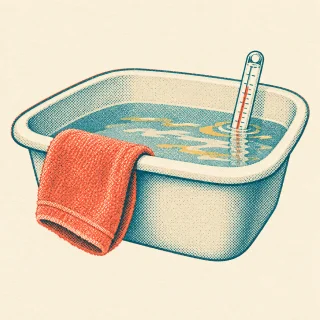
There's a basin of warm water on the overbed table, two washcloths, one towel, and a woman in the bed who would honestly rather do this herself.

0:00 / 15:31
Strip a bed bath down and it is four moves: get her ready, wash her in the order the body allows, watch every part of her skin while you do it, and finish the areas that carry their own rules — the mouth, the dentures, the glasses, the ears, and the feet.
This is the hygiene unit of the Week 2 package, in the order the slides give it: the ADL deck, the ADL: Hygiene deck, and the Week 4 Hygiene Group Worksheet underneath both of them.

The numbers to have cold

WhatValue
Bath water, maximum40 °C, or 105 °F 1
A complete bath2 to 3 times a week
A partial bath, dailyFace (eyes, neck, behind the ears), axillae and under the breasts, hands, back, perineal area
Toothbrush angle at the gum line45 degrees
Oral care, routineAt least twice a day
Oral care, patient who is unconscious or cannot drinkEvery 2 hours
Foot moisturizerEverywhere except between the toes
Foot soaksNot for diabetes or peripheral vascular disease

The bath, in the order you do it

Everything runs on one principle: cleanest to dirtiest. The order is the technique, and it is what the mark scheme is looking for.
  1. Eyes first, and no soap on them. Wipe from the inner corner outward, a fresh part of the cloth with each stroke, and rinse the cloth before the second eye — the inner corner is the drain, and you are not moving what drains from one eye into the other. Crusted lashes get a warm wet cloth folded over them for a few minutes, not a scrub.
  2. Face, forehead, neck, and ears — the outer ear and behind it. Ask whether she wants soap on her face at all; soap dries skin.
  3. Axillae and under the breasts. Lift the breast to wash and to look underneath, because that fold is where skin breaks down.
  4. Hands. Soaking them in the basin for a few minutes cleans them better than a wipe, and it is the part most patients enjoy.
  5. Arms and legs, with long firm strokes from the far end toward the body — wrist to shoulder, ankle to knee to thigh. This is the worksheet's distal to proximal: the stroke moves venous blood back toward the heart, so the direction is the point 2.
  6. Perineal care, last of the washing and still daily on a partial bath. Gloves on, a clean procedure, front to back on a woman, from the meatus outward.
  7. Back, then the back massage. You do not massage a reddened area: redness over a bony prominence can be the start of a pressure injury, and rubbing it makes it worse.
Running underneath all of that is the assessment. Skin colour, temperature, swelling, new bruises, open areas, redness, sores — documented, and reported to whoever can act on it.
Before any of it: ask how she manages her own mouth and washing, fix pain or nausea first, close the door and draw the curtain, warm the room, raise the bed to working height, and let her test the water.

The mouth

Brush with a soft-bristled brush, held at 45 degrees to the gum line, one tooth at a time, up and down, upper teeth then lower, and back and forth on the biting surfaces and the tongue. Rinse, then dry the lips. Twice a day at minimum, and every two hours for a patient who is unconscious or cannot drink.
PrecautionWho it is for
Soft-bristled toothbrushEveryone — protects the gums
No alcohol-based mouthwashDry mouth: alcohol dries it further and breaks down the mucosa
Gentle handlingBleeding disorders, anticoagulants
Sterile waterImmunocompromised patients
No citrus-flavoured productsOral mucositis
Who needs you to do it for them: unconscious or comatose patients, dementia or delirium, stroke or Parkinson's disease, weak upper limbs, severe fatigue, limited dexterity, dry mouth from medication, oral pain, and anyone whose swallowing is unsafe.
What you assess every time: lips, gums, tongue, palate and mucous membranes; infection, inflammation or lesions; halitosis; saliva amount and consistency; caries and loose teeth; and dry, sticky membranes — the dehydration clue that shows up in the mouth before it shows in the skin.
If she cannot spit or is not awake, she does not get brushed lying flat: side-lying, head turned, a towel under the cheek and chin, a basin against the mouth, and a padded tongue blade or a second brush to hold the mouth open. Your fingers never go inside the mouth.

Dentures

Out: a tissue or washcloth under the denture line, pull forward gently to break the suction, and rock side to side if it is stubborn. Straight into a cup of water, and carried to the sink in the cup.
At the sink, line the basin with a towel — a sink is a hard surface and a wet denture is slippery. Clean them as you would teeth, with denture cleaner, in warm water and never hot: hot water warps them, a warped denture stops fitting, and a denture that does not fit means a sore mouth and a patient who stops eating 3.
Brush her gums and tongue and let her rinse before the dentures go back in. Overnight they sleep in cool water in a closed container with her name on it.

Glasses, contact lenses, and ears

ItemWhat you do
GlassesLukewarm water, a drop of lotion-free dish soap, both sides of the lens and the frame, rinse, dry with a clean microfiber cloth. Not hot water, not paper towel or tissue, not a shirttail, not saliva; store them in the case, lenses up 4
Contact lensesKeep water away from them: no showering, swimming or hot tubs in them, and never rinsing or storing a lens in water. If water touches a lens, it comes out and is disinfected overnight or thrown away 5
EarsWash the outer ear and behind it, and put nothing into the canal — no swab, no finger, no drops unless they are prescribed. The canal cleans itself 6
Hearing aidsOut at night; wiped with a dry soft cloth, never water, alcohol or household cleaner; microphone openings brushed with the supplied tool; wax filter changed when sound goes muffled; battery door left open or the device air-dried before charging; stored in the case 7
The unit's worksheet also asks for the contact-lens mnemonic printed in Astle et al., Box 39.14. It is worth reading off the page rather than hearing it once; what sits underneath it is the water rule and the case rule.

The feet

This is the one unit outcome your slides name by condition: diabetes and peripheral vascular disease, because in both of them she cannot feel her feet properly and a small break in the skin does not heal.
  • Look at both feet daily — soles, between the toes, heels, nails — for redness, blisters, cuts, corns, swelling, drainage, and thickened or discoloured nails.
  • Wash gently in warm water, no hotter than 105 °F, and dry carefully between the toes.
  • Moisturize everywhere except between the toes. Oils or creams there trap moisture, and trapped moisture leads to infection 8.
  • File nails, do not clip them, and do not do toenails at all for this patient — that belongs to a podiatrist or a specially trained nurse. Cleaning and inspecting is your job.
  • No foot soaks. If she cannot feel the water she cannot feel a burn, and soaking dries and softens the skin in the wrong direction.
  • Teaching: shoes on even indoors, shake a shoe out before it goes on, nothing hot against the feet, stop smoking, keep blood sugar controlled, and keep walking.

Culture, and the part that is not technique

Hygiene runs on her practices and her beliefs: how often she bathes, who may see her, whether touch is ordinary or intrusive, whether a man can provide this care at all, how her hair is worn, and what her hands are used for. The slides group that as privacy and modesty, touch considerations, gender-congruent care, hair and grooming, bathing practices, and hand use — and underneath it sit her social practices, preferences, body image, means, health beliefs and motivation, and her condition on the day.
The last slide of the unit is about how caring is communicated: respectful touch, clear communication, privacy, a personalized approach, active listening, an unhurried manner, comfort measures, emotional support, cultural sensitivity, empowerment, non-verbal cues, and respect for personal space. In the room, that is telling her before you touch her foot, keeping the door closed, not watching the clock, and leaving her the part she can still do.

The rapid-fire, in text

QuestionAnswer
Water temperature for a bathNo hotter than 40 °C / 105 °F
Direction of the strokeDistal to proximal
Toothbrush angle at the gum line45 degrees
Oral care routine, and for the patient who cannot drinkTwice a day; every 2 hours
Mouthwash for a dry mouthAlcohol-free
Water for denturesWarm, never hot
Cleaning glassesLukewarm water and lotion-free dish soap, microfiber cloth
What goes into the ear canalNothing, unless prescribed
Hearing aids at nightOut, wiped dry, dried, into the case
Where to moisturize a footEverywhere except between the toes
Who never soaks her feetDiabetes or peripheral vascular disease

The things that get missed

  • The order is the technique. Cleanest to dirtiest, eyes first, perineal care last of the washing — not the order that happens to be quickest.
  • Distal to proximal is about venous return, not about scrubbing harder.
  • A reddened area is not massaged. It may be the start of a pressure injury.
  • Hot water warps dentures. Warm for cleaning, cool for storing, and never in your bare hand over a sink.
  • Nothing goes into the ear canal. It is self-cleaning, and a swab is how you cause a hearing problem.
  • Water and contact lenses never mix — not in the shower, not in the pool, not in the case.
  • No foot soaks and no toenails for the patient with diabetes or peripheral vascular disease.
  • Every two hours, not twice a day, for the patient who is unconscious or cannot drink.

References

  1. 1
    Personal Care Skills for Health Care Assistants, Thompson Rivers University

    hcalabtheoryandpractice.pressbooks.tru.ca

  2. 2
    Bed Bath and Hygiene Care and Self-Care Deficit, Nurseslabs

    nurseslabs.com

  3. 3
    Skills Checklist: Denture Care, Nursing Assistant, WisTech Open

    wtcs.pressbooks.pub

  4. 4
    How to Clean Your Eyeglasses, Clearview Eye and Laser Medical Center

    clearvieweyes.com

  5. 5
    Healthy Habits: Keeping Water Away from Contact Lenses, CDC

    cdc.gov

  6. 6
    Deafness and hearing loss: Ear care, World Health Organization

    who.int

  7. 7
    Daily Hearing Aid Care, UCSF EARS Program

    ears.ucsf.edu

  8. 8
    Foot Complications, American Diabetes Association

    diabetes.org

PNUR1128 Nursing Concepts 1
PNUR1128 Nursing Concepts 1@jaylenstrating09

This story was produced automatically by a channel. One sentence is all it takes for Neodrop to keep producing for you.

Related content