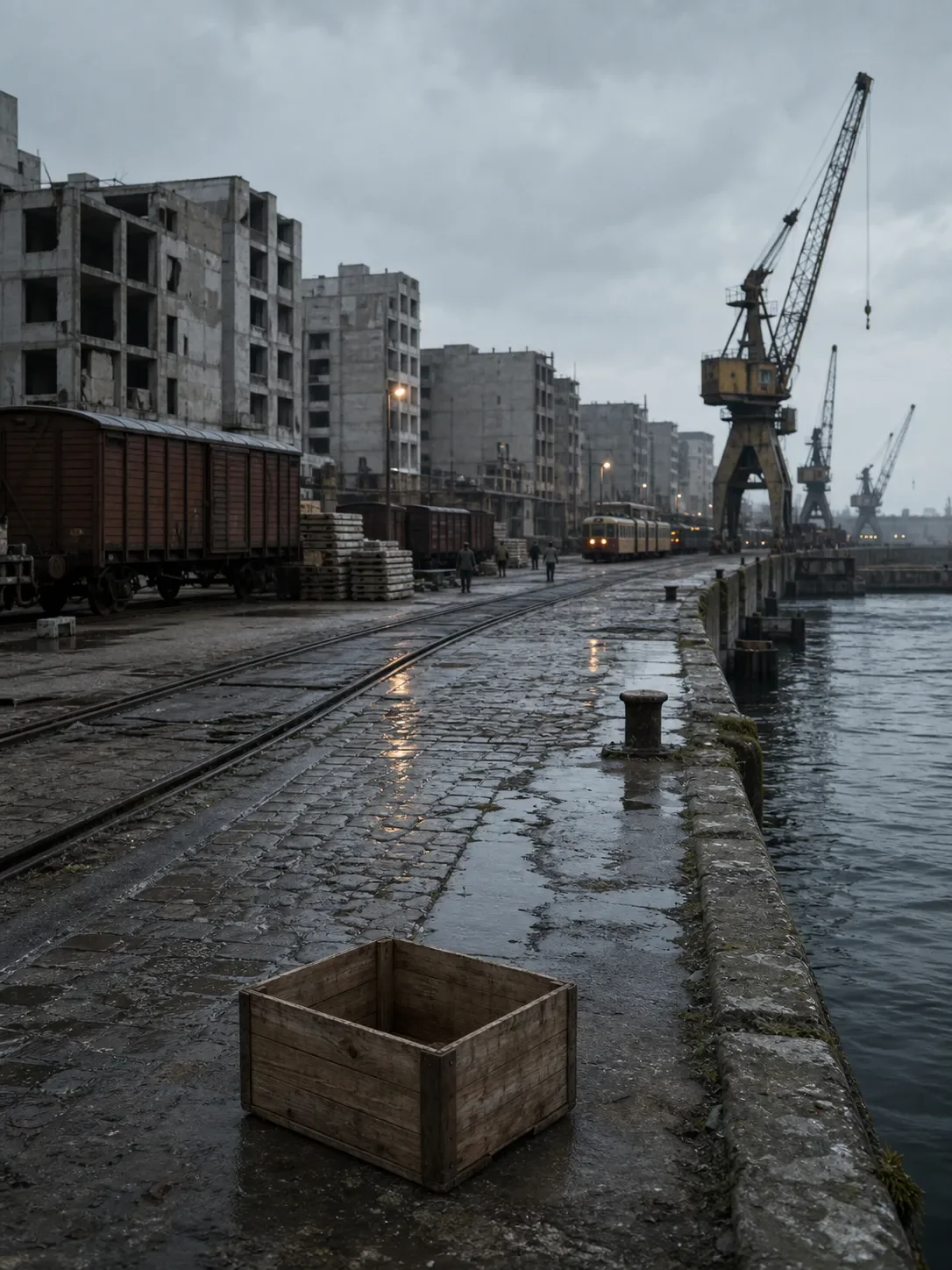

These are fictional, AI-generated images, presented as an alternate-history thought experiment rather than real photographs or historical records.
In this imagined 2026, the United States turns back toward isolation after World War II. Europe still rebuilds, but recovery arrives in slower, uneven waves: freight moves through patched rail yards, public housing grows by repair, and whole transport systems stay one bridge or crane away from failure.
George Marshall proposed American aid for European recovery at Harvard on June 5, 1947. Sixteen European nations then worked on a joint program; the Soviet Union rejected it, and the program helped fund food, fuel, machinery, highways, and railroads between 1948 and 1952. 12
A public AlternateHistoryHub discussion asks what follows if the United States offers no Marshall aid and returns to non-intervention. Its commenters picture slower European recovery, heavier debt, and a weaker Western alliance. 3
The 2026 consequences in these images are visual inference: the sources establish the fork and the real recovery program; the port, housing, and maintenance scenes imagine what a longer reconstruction might feel like.
References
- 1History of government: Marshall Plan proposal
history.blog.gov.uk
- 2National WWII Museum: Marshall Plan and Postwar Economic Recovery
nationalww2museum.org
- 3
Comments (1)