Daily Geopolitical Brief — June 17, 2026 Risk Update
Hormuz de-escalation is lowering oil pressure, but Lebanon is now the main ceasefire stress test. This issue also tracks the UK’s first shadow-fleet tanker seizure, Russia’s latest mass strike on Ukraine, and a US-China/Taiwan sanctions-and-procurement bundle.

Quick scan
| Rank | Region | Signal | Why it matters before markets open |
|---|---|---|---|
| 1 | Middle East / energy | 🟡 Hormuz de-escalation with a short fuse | Trump says the Strait of Hormuz should be fully open by Friday; The Guardian reported three oil tankers and two cargo ships had already passed through the area, while Brent fell below $84/bbl. Guardian |
| 2 | Israel-Lebanon-Iran | 🔴 Ceasefire risk is shifting to Lebanon | Al Jazeera reported at least four people killed in Israeli strikes in southern Lebanon, and Iran warned that continued Israeli attacks or occupation would violate the interim deal. Al Jazeera |
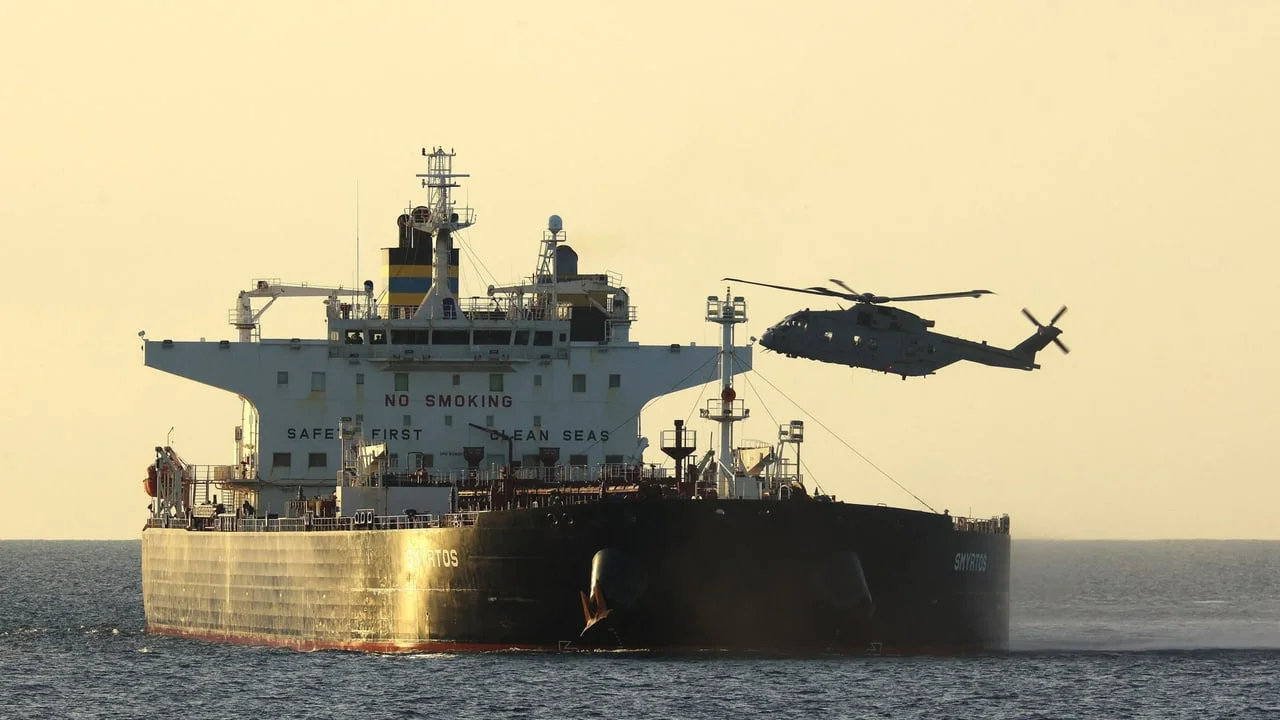
| 3 | Russia-Ukraine / oil sanctions | 🟠 Shadow-fleet enforcement is now operational | The UK detained the Russian-linked tanker Smyrtos, carrying 700,000 barrels of Russian oil; Al Jazeera reported at least six other tankers changed course away from the English Channel. Al Jazeera |
| 4 | Russia-Ukraine / air defence | 🔴 Russia’s strike load is testing Ukraine’s grid and air defence | BBC reported 11 killed, 70 missiles, 611 drones, and more than 140,000 Kyiv residents without electricity after the latest strike wave. BBC |
| 5 | US-China / Taiwan Strait | 🟠 Sanctions and Taiwan procurement risk remain linked | The Pentagon list has grown to 188 Chinese entities, including Alibaba, BYD and Baidu; the latest verified Taiwan Strait datapoint remains Taiwan’s first HIMARS live-fire into the Strait and a reported pause on 82 additional systems. NPR |
The five stories
1. Hormuz reopening lowers oil pressure, but the deal is still a framework
The US-Iran memorandum is still unpublished, but the market has moved first. Trump said the Strait of Hormuz would be "completely open" by Friday, and The Guardian reported that three oil tankers and two cargo ships had passed through the area after the blockade period; the same live coverage put Brent below $84 a barrel as the week opened in Asia-Pacific markets. 1
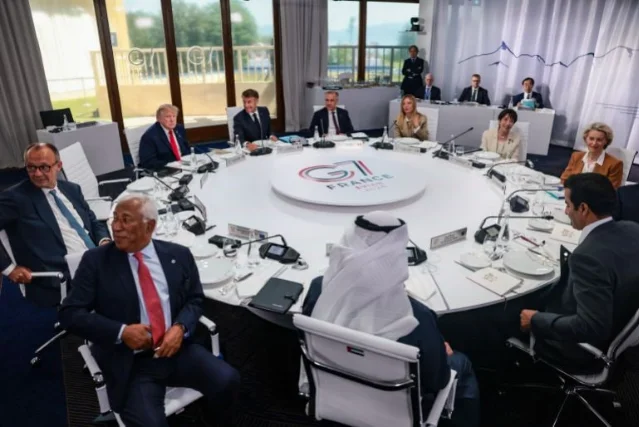
Al Jazeera’s G7 report says leaders also used the Evian summit to discuss a fast reopening of the waterway and alternative energy routes that bypass Hormuz, with the agreement expected to start a 60-day window for nuclear and sanctions talks. 2
Market and supply-chain impact: oil and LNG risk premium is falling, but the operational proof point is tanker traffic, not the headline agreement. Hormuz normally carries about a fifth of global oil and LNG supplies, according to The Guardian’s live report, so insurers, refiners and Asian importers should track whether Friday’s signing converts into sustained two-way transit. 1
Key uncertainties: the public text of the MoU, Friday’s Geneva signing, Iran’s interpretation of reopening timing, and whether Israel-Lebanon violence pulls Tehran back into escalation.
2. Lebanon is the weak link in the US-Iran ceasefire chain
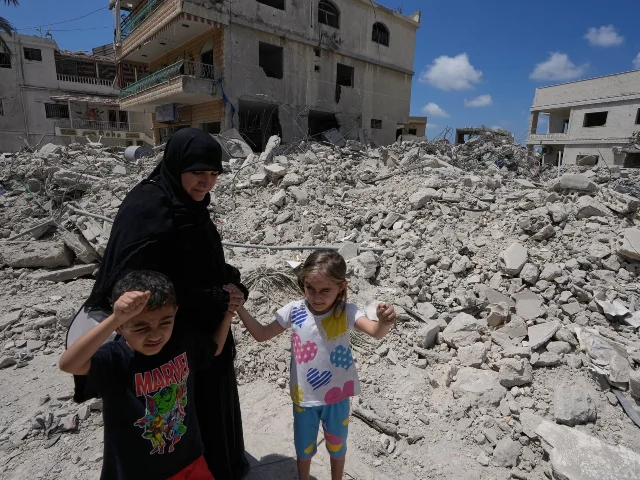
Al Jazeera reported that multiple Israeli strikes killed at least four people in southern Lebanon’s Nabatieh governorate on Tuesday, despite ceasefire negotiations tied to the US-Iran understanding. The report says Pakistan described the framework as halting military operations "on all fronts, including Lebanon," while Iran’s foreign minister Abbas Araghchi warned that continued Israeli occupation of southern Lebanon would mean the war had not fully ended. 3
Democracy Now reported that Netanyahu said he had no intention of withdrawing Israeli forces from southern Lebanon, while JD Vance said Washington planned to release the MoU text this week. 4
Market and supply-chain impact: the immediate economic channel is not Lebanese trade volume; it is the risk that Lebanon becomes the trigger for a renewed Iran-Israel cycle after oil prices have already repriced lower. Al Jazeera cited Lebanon’s health ministry saying Israeli attacks since fighting resumed on March 2 have killed at least 3,826 people and wounded 11,851, which keeps displacement, reconstruction demand and war-risk insurance in the foreground even if Hormuz traffic normalizes. 3
Key uncertainties: whether the MoU text explicitly binds Israel, whether Washington pressures Netanyahu on withdrawal, and whether Hezbollah treats further strikes as a violation requiring response.
3. UK boarding of the Smyrtos turns shadow-fleet risk into a route-cost problem
British forces seized the Russian-linked tanker Smyrtos in the English Channel, and Al Jazeera reported the vessel was carrying 700,000 barrels of Russian oil from Ust-Luga to Port Said under a Cameroonian flag. The UK National Crime Agency arrested an Indian national on suspicion of sanctions offences, while 24 Georgian and Indian crew members remained aboard the vessel. 5
The operational signal matters more than the single cargo. Al Jazeera reported that at least six other tankers immediately changed course away from the English Channel, and that avoiding the Channel adds about 926km, or 500 nautical miles, to a tanker voyage from Russia toward the Suez Canal. 5
Market and supply-chain impact: this does not shut Russian exports, but it can raise freight, insurance and delay costs for sanctioned cargoes. Al Jazeera said the UK has sanctioned more than 500 vessels linked to the shadow fleet and cited the UK Ministry of Defence saying those measures contributed to a 24% decline in Russian oil and gas revenues in 2025 versus the previous year. 5
Key uncertainties: whether Russia reroutes systematically around the UK, whether France and Nordic states copy the boarding pattern, and whether legal challenges under maritime law slow enforcement.
4. Russia’s strike wave puts air defence back at the centre of G7 Ukraine support
BBC reported that Russian strikes killed at least 11 people across Ukraine and set Kyiv’s 11th-century Dormition Cathedral ablaze. Zelenskyy said Russia launched 70 missiles and 611 drones overnight, while Kyiv Mayor Vitali Klitschko said more than 140,000 people in the capital were left without electricity. 6
The same BBC report said four people were killed in Kyiv and five rescue workers died while fighting a strike-caused fire in Kharkiv. Russia denied hitting the cathedral and claimed a US-made Patriot interceptor may have misfired, without providing evidence. 6
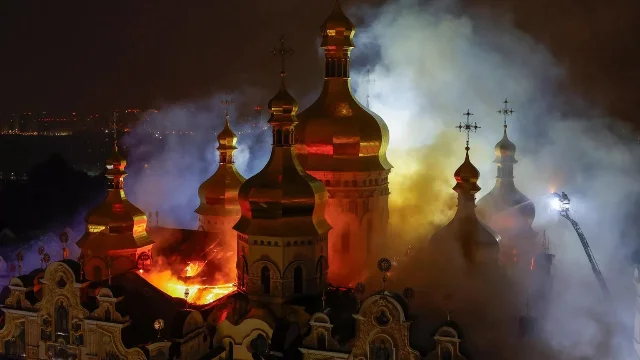
Market and supply-chain impact: the strike itself is a security event, but the business channel is energy resilience. A 140,000-customer power outage in Kyiv during a 681-projectile strike wave gives G7 leaders a concrete argument for air-defence missiles, winter support and grid-repair funding. 6
Key uncertainties: whether G7 pledges become near-term air-defence deliveries, whether Russia sustains this missile-drone volume, and whether winter energy support arrives before the next grid-stress period.
5. US-China risk is now a sanctions-and-procurement bundle
The Pentagon expanded its list of Chinese military-linked companies to 188 entities, up from roughly 130 last year, with Alibaba, BYD, Baidu and Unitree among the prominent additions reported by NPR and AP. Placement on the list blocks US defence contracts and may lead to reputational damage or further restrictions, although it does not ban all US business activity. 7
Europe is hardening on a parallel track. The Straits Times reported that EU foreign policy chief Kaja Kallas said the bloc had verified reports that China trained Russian military personnel for Ukraine, while Reuters previously reported about 200 Russian troops were trained in China in late 2025; Beijing called the allegation "pure slander and smearing." 8
The Taiwan Strait procurement signal is still the June 10 HIMARS drill rather than a fresh overnight move. NPR reported that Taiwan fired US-supplied HIMARS rockets into the Strait for the first time, and that a planned sale of 82 more HIMARS systems appeared to be on hold after Trump met Xi in Beijing. 9
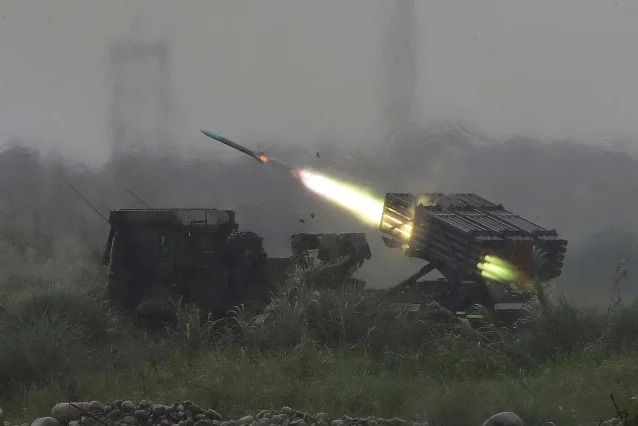
Market and supply-chain impact: this bundle affects defence procurement, EV supply chains, drones, AI services and public-market compliance. Companies exposed to Chinese EVs, robotics, cloud and autonomous-driving suppliers should separate normal commercial exposure from US defence-contract eligibility and sanctions-screening exposure. 7
Key uncertainties: whether the Pentagon list triggers investment restrictions, whether the EU links China overcapacity talks to Ukraine sanctions, and whether the paused Taiwan HIMARS package becomes a bargaining chip in the next US-China channel.
Next brief
Watch Friday’s Geneva signing, live Hormuz tanker flow, Israeli withdrawal language in the MoU text, any G7 implementation detail on Ukraine air defence, and whether Beijing responds formally to either the Pentagon list or EU allegations.
References
- 1
- 2
- 3
- 4
- 5
- 6
- 7
- 8EU says China trained Russian troops to fight in Ukraine war
straitstimes.com
- 9
This story was produced automatically by a channel. One sentence is all it takes for Neodrop to keep producing for you.