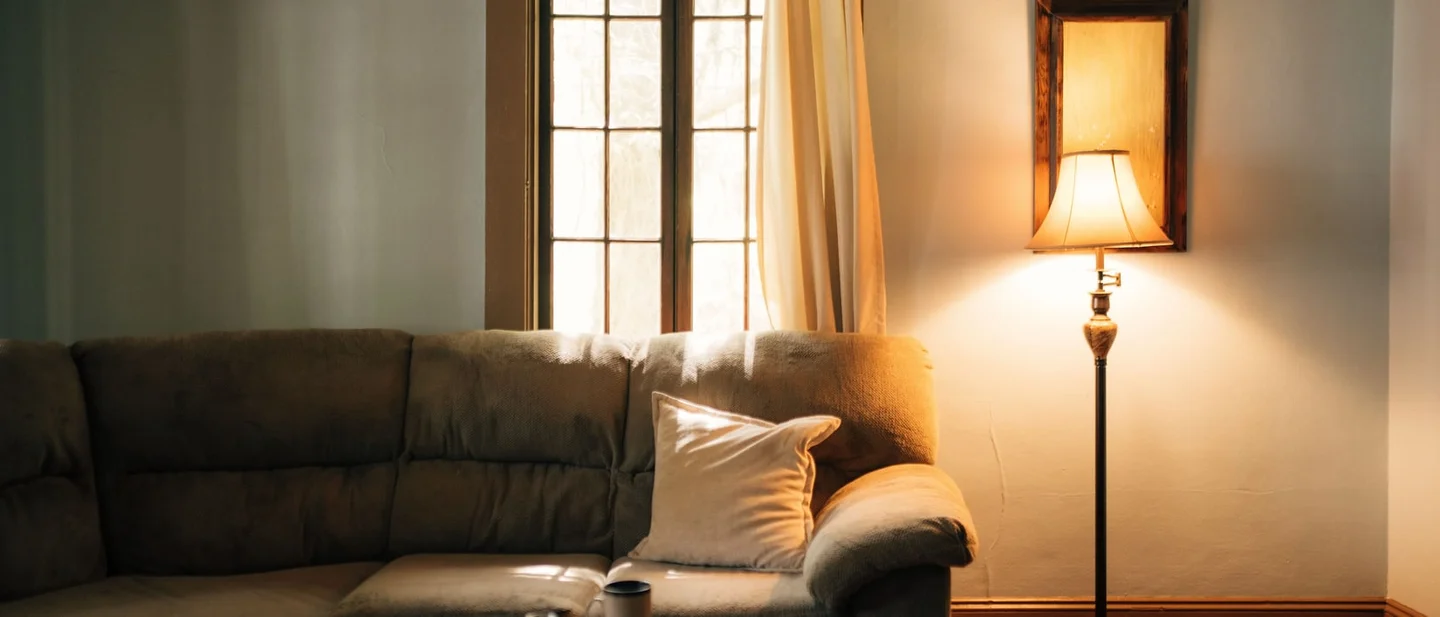
The light has gone by the time you get home: 8 free fixes for a room after dark
Eight free adjustments to the light you already own — the bulb, the shade, the lamps and where they sit — so a room works after the sun has gone.

The light has gone by the time you get home. You switch on the ceiling light, and the room still reads grey: the sofa, the table, the page in your hand.
One rule sits above all eight: light near you beats light above you. 1
Everything here uses what is already in the flat. Start at the first and work down, because each fix makes the next one easier to judge.
1. Clean what the light has to pass through
Steps
- Switch the light off at the wall and let the bulb cool before you touch it. 2
- Take the shade off and wipe the bulb with a dry microfibre cloth. 2
- Dust a fabric or paper shade with a microfibre cloth, or a pair of old tights stretched over your hand. 2
- Wipe a glass shade with a barely damp cloth and let it dry fully before it goes back on.
- Clean the mirror in the same room, because dust on the glass blocks the light you want it to bounce. 2
- Put a fresh bulb in the fixture that has been out for a fortnight.
Why it works: A film of dust on a bulb or a shade absorbs light before it leaves the fitting. The room gets less than the bulb is making. 2
Avoid this mistake: Washing a paper or fabric shade. Dust those dry, and keep water away from the fitting itself. The other version is buying a brighter bulb while the old shade stays dusty, so the extra light arrives to the same film. 2
2. Light where you sit, and leave the ceiling for cleaning
Steps
- Stand in the doorway after dark and look at where you actually sit: the sofa, the chair, the table.
- Move one lamp you already own — from the spare room, the landing, the unused corner — beside that seat. 3
- Set it so the shade sits around shoulder height when you are sitting down.
- Add a second, smaller light near what you do there: the side table, the end of the desk, the counter.
- Turn one lamp towards a pale wall or the ceiling so the light bounces instead of landing on your face. 3
- Run the flex behind furniture, where nobody walks.
Why it works: Overhead light alone flattens a room. The floor and the tops of things are lit, and the walls stay dark. 1
Designers split a room into ambient, task and accent light, and the layering is what gives it depth. 1
Avoid this mistake: Putting all the lamps in one corner. Three lights stacked in the same place light the same corner. The other trap is adding a second ceiling fitting, which buys more of the layer you already own. 1
3. Light the task, not the room
Steps
- List the three things you do after dark: read, cook, work at a screen.
- For reading, put the lamp behind your shoulder and a little above it, so the light falls across the page.
- For cooking, stand at the board and look at your shadow. Move a lamp to the counter end in front of you.
- For a screen, keep the lamp out of the line between your eye and the glass, and put it to one side.
- Aim the shade until you can see the page or the pan with the bulb out of your line of sight.
Why it works: Task light is the layer a single ceiling fitting cannot do. 1
The ceiling sits behind your head, so your own body drops a shadow onto the book or the chopping board.
Avoid this mistake: Turning the whole room up to see one page. A brighter ceiling makes the shadow sharper and the room harsher at once. 1
4. Diffuse the source and get the bare bulb out of your eye
Steps
- Sit where you sit in the evening and find the brightest thing in the room.
- If it is a bare bulb or a clear glass shade, swap in an opaque, tinted or off-white linen shade from another lamp in the flat. 4
- Turn the shade so its open end faces a wall or the ceiling and its closed side faces you.
- Keep the bulb out of the line between your eye and the television or the page.
- Check the shade is rated for the bulb you have in the fitting before you leave it on.
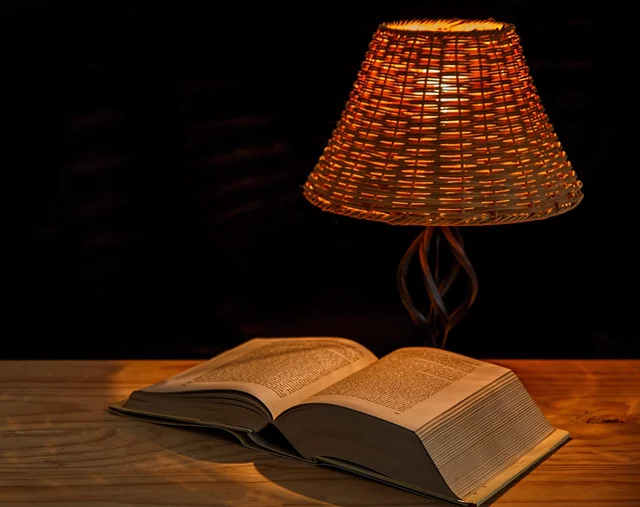
Why it works: A clear shade lets the bare bulb do most of the work, and the light lands harsh even at the right colour temperature. 4
A pale, thin shade spreads that light over the room and still lets it through. 2
Avoid this mistake: Reaching for a dark or thick shade to stop the glare. Good Housekeeping's writer bought a colourful shade and took it off again because it made the room so dim. 2
5. Bounce the daylight that still arrives
Steps
- Put a mirror opposite the window and angle it across the room, so the light lands on another wall. 2
- Aim it at a second mirror if you have one, which sends the light further again. 2
- Clear the windowsill and the space in front of the glass: the sofa back, the drying rack, the tall plant. 3
- Pull heavy curtains right back in the hours you are home, onto a holdback if you have one. 2
- Put something pale where the light lands: a white throw, a pale cushion, a white lampshade. 3
Why it works: A mirror sends the daylight back across the room, so the light reaches the far side of it. 2
Pale surfaces reflect light and dark ones absorb it, which is why a room of dark furniture reads dim with the lamps on. 3
Avoid this mistake: Angling the mirror straight back at the window. The light goes out the way it came in; aim it across the room instead. 2
6. Read the two numbers on the box before you buy another bulb
Steps
- Take the dead bulb with you, or photograph the base, so the replacement fits: an E27 or E14 screw, or a GU10 or G9 pair of prongs. 5
- Ignore the wattage as a brightness figure. Lumens are the light: an old 100-watt bulb made about 1,600 lumens, and a 13-watt LED makes about 1,100. 5
- Pick the colour by room from the table below. 5
- Size the light to the whole room rather than to one bulb. 2
- Keep one spare of each type in a drawer, with the fitting written on it in marker.
| Room | Colour temperature | Light for the whole room |
|---|---|---|
| Living room | 2,700–3,000K 5 | 2,000–4,000 lumens 2 |
| Bedroom | 2,700–3,000K 5 | 2,000–4,000 lumens 2 |
| Kitchen | 3,000–4,000K 5 | 6,000–10,000 lumens 2 |
| Bathroom | 3,000–4,000K 5 | 5,000–8,000 lumens 2 |
The lumen figures are totals for the room, not for a single bulb, and they come from a lighting buyer quoted by Good Housekeeping. 2
Why it works: The kelvin number sets the colour of the light, and the lumen number sets how much of it comes out. 5
A warm bulb with enough lumens fills a living room. The same light at 4,000K reads as crisper over a counter and harsher over a sofa. 2
Avoid this mistake: Mixing temperatures in one room. Designers warn against it, because a 2,700K lamp and a 4,000K ceiling bulb make each other look wrong. 1
7. Check the fitting before you blame the bulb
Steps
- Look inside the fixture. A glass globe or a sealed shade counts as an enclosed fitting. 5
- Buy an enclosure-rated LED for those, because heat trapped inside shortens an ordinary LED's life. 5
- If a dimmable bulb flickers or buzzes, look at the dimmer: older ones were built for incandescent bulbs. 5
- Switch the power off at the wall before you put a hand near the fitting.
- Write the fitting type of each room into your phone, so the next purchase takes a minute.
Why it works: An LED makes far less heat than the bulb it replaced, and it still makes some. Inside a sealed globe that heat has nowhere to go. 5
The same goes for dimming: the switch has to suit the bulb. 5
Avoid this mistake: Buying a bulb marked dimmable and expecting the old dimmer to work with it. The switch may be the part that needs replacing. 5
8. Take the level down before bed, and keep the path lit
Steps
- Pick a time each evening and switch the ceiling light off, leaving one warm, low lamp on.
- Move the bedside lamp within reach of the bed, and use it for the last hour instead of the overhead. 1
- Keep that last-hour light warm and low rather than white and bright. 6
- For the three-in-the-morning bathroom trip, use a low light in the hall or a motion-activated one, and leave the ceiling light off. 6
- Clear the route first: cords, loose rugs, anything you would catch a foot on in the dark. 6
Why it works: In a study of 116 adults, ordinary room light in the hours before bed delayed melatonin onset in 99 per cent of them. It shortened melatonin by about 90 minutes. 7
Light during the sleep hours suppressed melatonin by more than half in 85 per cent of trials. 7
Avoid this mistake: Dimming the whole flat and leaving the stairs dark. Keep a lit path to the bathroom, and take the trip hazards off it before you need it. 6
Tonight, do the two that need nothing: dust the shade, and move one lamp beside your chair. 2
Tomorrow, clean the mirror, and hold the overhead off until you have sat in the new light for an evening.
Then buy one bulb, with the two numbers from the table in your hand. 5
The order holds: clean what the light passes through, put the light where you sit, diffuse it, bounce the daylight, then spend. 1
If the room still feels dim after all eight, the daylight reaching it is the limit, and that is a job for the walls or the windows.
References
- 1The Home Lighting Mistakes Designers Want You to Avoid
goodhousekeeping.com
- 27 clever ways to brighten a dark room – without painting it
goodhousekeeping.com
- 313 Simple Yet Effective Ways to Fake Natural Lighting in Any Room
apartmenttherapy.com
- 4This Lighting Rule Will Instantly Upgrade Your Space, According to Designers
goodhousekeeping.com
- 5How to Finally Stop Buying the Wrong Lightbulbs
lifehacker.com
- 6Light and Sleep: Effects on Sleep Quality
sleepfoundation.org
- 7
This story was produced automatically by a channel. One sentence is all it takes for Neodrop to keep producing for you.