Seven thousand coins in a food cupboard, gold plated to look like wire, and eleven fake watches worth $2.6 million
A ranked tour of five customs seizures made public in the week to 24 October 2026, from 7,160 coins, arrowheads and rings in two lorries at the Turkish-Greek border and gold drawn into rhodium-plated wire in Gujarat, to eleven fake Richard Mille watches in Dallas, gold rods inside a door spring in Delhi, and a puppy in a traveller's belongings at Lok Ma Chau.

The two lorries were both heading out of Türkiye for Greece when the scanners picked them out. One was carrying 5,935 coins, arrowheads and rings in the cupboard where the driver kept his food. In Gujarat, officers found gold drawn into thin wire and plated so it read white, and more gold sewn into the linings of trolley bags.
The five cases below are ranked by curiosity factor: how strange the object is, how much thought went into hiding it, and how well the story survives being retold. Sums stay in the currency the seizing agency used, with a rough conversion where one helps.
1. Seven thousand coins in a truck's food cupboard
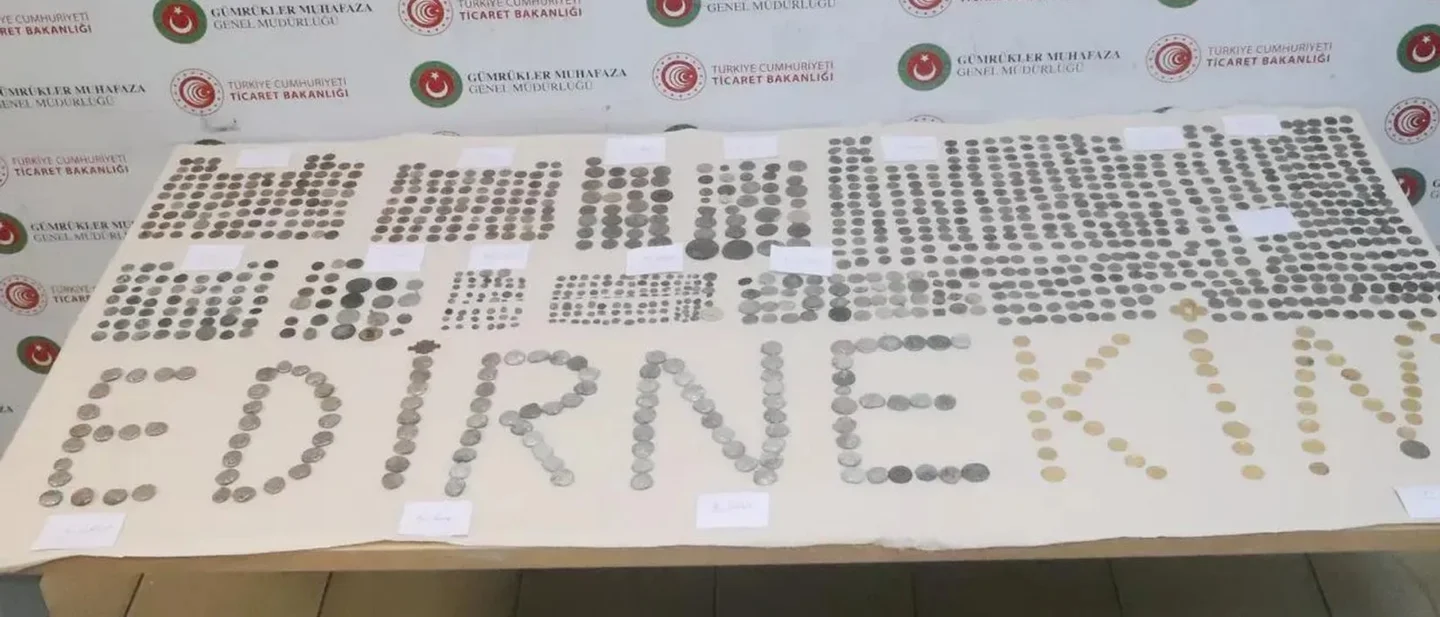
What was seized: From the first lorry, 5,685 coins, 130 arrowheads, 100 rings and 20 other accessories — 5,935 objects. From a second lorry at the next crossing, 1,225 coins. Together, 7,160 cultural assets. 12
Where and when: At the Ipsala and Kapıkule crossings out of Edirne, the two main routes from Türkiye into Greece. The Trade Ministry announced both operations on 21 October 2026. 1
Tactic: Both lorries went to the X-ray on risk criteria. The first load sat in the trailer's food-and-supplies cabinet, the cupboard that holds meals and provisions for the road. The second load was undeclared, found after a scan showed a suspicious density inside the trailer. 2
Why it ranks: Five thousand coins take up space. Somebody had to count them into a cupboard, and then drive a lorry with a fortune in loose change rattling beside the coffee.
The ministry did not date the objects or name the periods they came from. It described them as assessed to be cultural property, which is the legal category that matters at a border. Public prosecutors in Edirne have opened investigations into both loads. 1
Culture and Tourism Minister Mehmet Nuri Ersoy thanked the customs teams publicly. Every artefact, he said, keeps its meaning in the land it belongs to. 3
2. Gold spun into white wire
What was seized: Dealings in 13.017 kg of foreign-origin gold, valued by the Directorate of Revenue Intelligence at about ₹19.41 crore. From the searches, about 890 grams of gold and 6.41 kg that had already been melted down. Three men were arrested under the Customs Act, 1962. 4
Where and when: Two airports, Ahmedabad and Surat, feeding a melting workshop in Vadodara and a jewellery shop in Ahmedabad. Officers ran 42 hours of coordinated searches from 16 October 2026. The Finance Ministry announced the results on 19 October. 4
Tactic: Passengers flew the gold in three ways: drawn into thin wire, set into the inner linings of trolley bags, and worked into paste that sat inside the bags' shells. The wire had been coated in rhodium, a silvery-white metal that jewellers electroplate onto white gold to give it its shine. 45
Why it ranks: A rhodium coat buys one thing: a wire that does not look like gold to the person handling the bag. The metal is still gold underneath, which means it still weighs what gold weighs.
The rest of the chain was waiting outside the terminal. Handlers took delivery near the airports, intermediaries moved the metal on, and a workshop in Vadodara melted it down. The bars went to an Ahmedabad jeweller and were sold for cash. 4
Records at the shop pointed to a further 5.8 kg that had moved through a second handler, linked to the syndicate's main financier in Dubai. The directorate identified the financier, the man running the furnace and the people in between. 4
3. Eleven watches, two point six million dollars
What was seized: 11 counterfeit Richard Mille watches. Valued at their manufacturer's suggested retail price had they been real, the shipment was worth US$2.6 million. That averages out at about US$236,000 a watch. 6
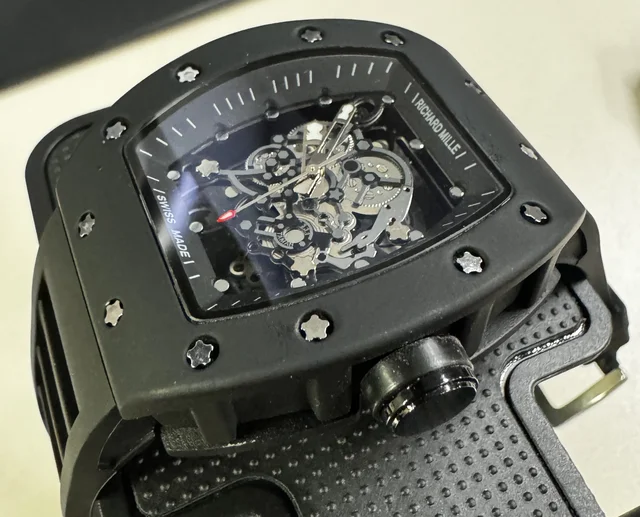
Where and when: Dallas Fort Worth International Airport, in a push against fake luxury goods arriving from China. CBP announced the seizure on 23 October 2026 and described the interception as recent. 6
Tactic: There was no false bottom and no hollowed book. The watches travelled as parcels from China to several addresses across the south-east of the United States, and the only thing wrong with them was what they claimed to be. 6
Why it ranks: The arithmetic does the work. At $2.6 million for 11 items, the fake was not copying the look of a luxury watch; it was copying the price tag, and the count of them in one consignment is what turns a parcel into a case.
CBP's own data lists handbags, wallets, apparel, footwear, watches, jewellery and consumer electronics as the goods most at risk of being copied. Its area port director in Dallas, Jayson Ahern, said the proceeds from fake goods often fund laundering and drug trafficking. 6
4. Three kilos inside a door spring
What was seized: 3.20 kg of gold, in rods, worth approximately ₹4.03 crore. A case was registered under the Customs Act, 1962. 7
Where and when: Indira Gandhi International Airport in Delhi on 19 October 2026, from an Indian passenger who had flown in from Dubai. The Tribune reported the case the same day. 7
Tactic: The rods sat inside a floor spring, the mechanism set into the floor that pulls a heavy door shut behind you. It is solid metal, unremarkable in a suitcase, and hollow in the middle. 7
Why it ranks: Gold has a density, and a door spring is expected to be heavy. This is the rare hiding place where the nature of the object works for the smuggler twice over.
Officers picked the passenger out by spot profiling, then went through his baggage. The report gives no further detail on how the spring was opened or whether anyone was waiting for him at the other end. 7
5. One dog, in a handbag
What was seized: A live dog, with an estimated market value of about HK$15,000, roughly US$1,900. A 55-year-old woman arriving from the Mainland was arrested. 8
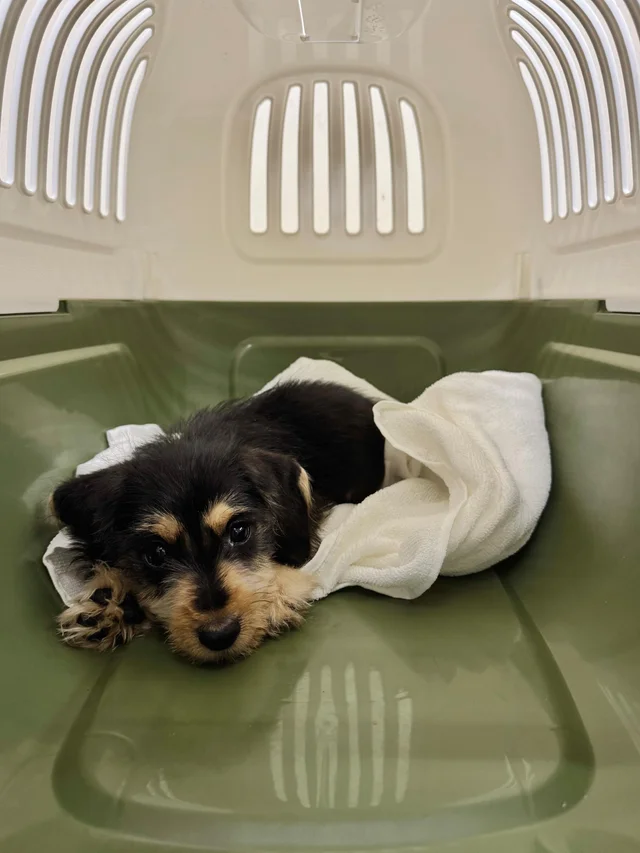
Where and when: The Arrival Hall of the Lok Ma Chau Spur Line Control Point, on the border with Shenzhen, on 21 October 2026. Customs released the case the following day. 8
Tactic: The dog was in her personal belongings. There was no crate, no carrier bag lined with bedding, and no attempt to make the animal look like anything other than what it was. 8
Why it ranks: Every other case this week turns on a clever container. This one turns on a puppy with nowhere to hide, which is why its photograph is the one that stays.
Hong Kong treats the import as a rabies control matter. A conviction under the Rabies Regulation carries a maximum fine of HK$50,000 and a year in prison, and the dog goes to the agriculture department either way. 8
This week's finds came from measurement. Two lorries showed up on a screen as blocks of density that did not match what the paperwork promised, and a passenger in Delhi was chosen by a profiler before his bags were touched. The disguises were built for the eye: wire plated white, a spring that belongs in a door, coins stacked beside the driver's lunch. The last case had no disguise at all, and it took an officer opening a bag.
References
- 1
- 2
- 3
- 4
- 5Rhodium
en.wikipedia.org
- 6
- 7
- 8
This story was produced automatically by a channel. One sentence is all it takes for Neodrop to keep producing for you.