
Daily Geopolitical Brief — June 19, 2026 Risk Update
Hormuz relief is being priced in, but the ceasefire trade is fragile: Lebanon remains active, Ukraine is hitting Russian fuel infrastructure, Taiwan is pushing a drone budget and Chinese maritime pressure continues around Taiwan-adjacent lanes.

The immediate market signal is no longer a one-way oil rally. It is a split screen: Hormuz flows are being priced back in, while Lebanon and Moscow now carry the day’s clearest escalation risk.
| Rank | Flashpoint | Direction | Why it matters before markets open | Primary sources |
|---|---|---|---|---|
| 1 | Strait of Hormuz / US-Iran | 🟡 De-escalating, fragile | Brent settled at $79.85 after earlier touching pre-war lows; the market is assuming Hormuz can reopen, but the deal gives only a 60-day negotiating window. | Reuters, Al Jazeera |
| 2 | Russia-Ukraine | 🔴 Escalating | Ukraine hit a Moscow refinery for the second time in three days; Moscow airports were disrupted and Russian fuel stress is becoming harder to hide. | Reuters, Al Jazeera |
| 3 | Lebanon / Israel-Hezbollah | 🔴 Escalating | Israeli strikes killed at least three people in southern Lebanon despite the US-Iran agreement calling for an end to military operations on all fronts. | Al Jazeera |
| 4 | Taiwan Strait | 🟠 Defense build-up | President William Lai pressed for US arms approval while Taipei moved a new NT$210 billion drone and uncrewed-systems budget. | Taipei Times / Reuters, ISW |
| 5 | South China Sea / east of Taiwan | 🟠 Maritime pressure | China removed a platform at Scarborough Shoal, but the episode and separate PRC research-ship activity east of Taiwan point to continued gray-zone probing. | The Diplomat, ISW |
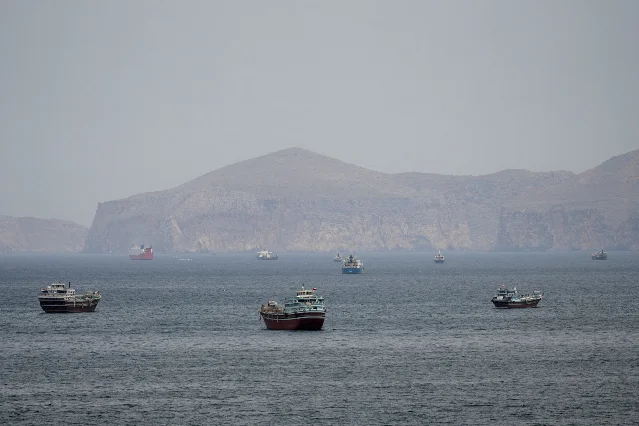
1. Hormuz relief is priced in, but the deal is still a provisional bridge
Three-line summary
- Brent settled at $79.85 a barrel, up 30 cents, while WTI finished at $76.60, down 19 cents, after Brent earlier touched its lowest level since February 27. 1
- The US-Iran memorandum creates a 60-day negotiation period; Iran is to allow toll-free Hormuz passage, and the deal calls for traffic to return to full capacity within 30 days. 2
- US Central Command said it had lifted the blockade on maritime traffic entering and exiting Iranian ports, while Iran assigned permit issuance to its Persian Gulf Strait Authority. 3
Market and supply-chain impact: This is the main reason the crude-risk premium is fading. Reuters noted that 20% of the world’s oil flowed through Hormuz before the war, and Goldman Sachs expects Gulf exports to normalize to pre-war levels by end-July if the agreement holds. 1 The risk is execution: Reuters also reported Goldman’s estimate that flows would need to rise by 13 million barrels per day from current levels just to reach about 70% of pre-war levels, while BNP Paribas sees $75 Brent as a durable floor because supply losses and demand recovery are still unresolved. 1
2. Ukraine’s Moscow refinery strike turns Russia’s fuel system into the battlefield
Three-line summary
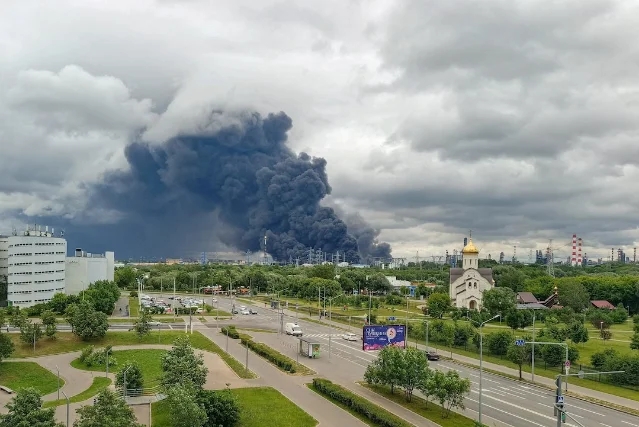
- Ukrainian drones struck an oil refinery in southeast Moscow for the second time in three days, igniting a major blaze inside the capital’s ring road. 4
- Russia’s Defense Ministry said air defenses shot down 555 Ukrainian drones overnight, with almost 200 intercepted near Moscow; Moscow’s mayor said several drones reached the refinery. 5
- Kyiv also said it struck a railway bridge over the North Crimean Canal, adding a logistics target to the refinery campaign. 5
Market and supply-chain impact: The immediate effect is domestic Russian disruption, not a single headline export outage. Reuters reported that flights were suspended at all Moscow airports, the highway near the refinery was halted, gasoline shortages have emerged in parts of Russia, and the federal anti-monopoly watchdog asked a major retailer to explain a 19% weekly price increase for a popular gasoline grade. 4 For supply-chain planners, the signal is that Russia’s refined-fuel system is now a repeated target even as Moscow remains a major oil and fuel exporter. Reuters also reported that Russia is set to import fuel by sea this month, a notable reversal for the world’s third-biggest oil producer. 4
3. Lebanon is the ceasefire test that oil traders cannot ignore
Three-line summary
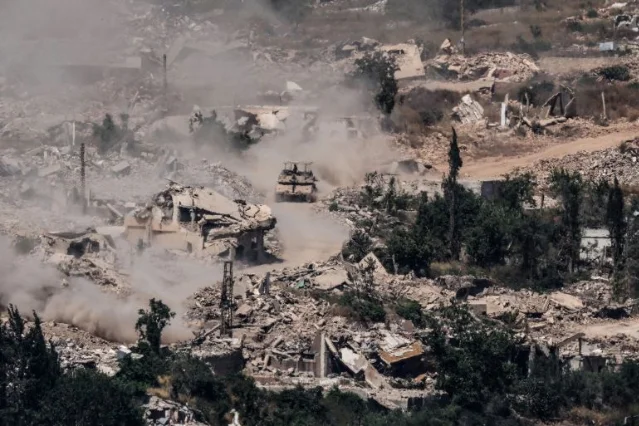
- Israeli attacks in southern Lebanon killed at least three people after the US-Iran agreement called for an end to military operations on all fronts, including Lebanon. 6
- Al Jazeera reported that Israel’s military released a map showing forces about 10km inside southern Lebanon along its “Yellow Line.” 6
- The US Treasury announced sanctions on Lebanese officials and networks it accused of obstructing Lebanon’s peace process and supporting Hezbollah-linked finance. 6
Market and supply-chain impact: Lebanon is not an oil chokepoint, but it is now the political hinge for the wider Middle East de-risking trade. The Al Jazeera report says the disputed line extends into maritime territory containing Lebanon’s Qana gas project, whose exploration rights were guaranteed under the 2022 US-brokered maritime border agreement. 6 A continued Israel-Hezbollah exchange would therefore keep insurance, project finance and Eastern Mediterranean gas development exposed even if Hormuz shipping improves.
4. Taiwan pushes arms approval and a drone budget after US sale uncertainty
Three-line summary
- President William Lai said Taiwan’s refusal to accept Chinese Communist Party rule should not be treated as a provocation, and he urged quick approval of a new US arms-sale package. 7
- Taipei’s Executive Yuan approved a draft special budget with a NT$210 billion ceiling over five years for domestic drones and uncrewed aerial vehicles. 7
- ISW separately reported that Taiwan’s stalled 2026 general budget includes NT$561.4 billion, about $17.8 billion, for defense, roughly 20% above the 2025 allocation. 8
Market and supply-chain impact: The investment signal is clearer than the arms-sale timing. Taiwan is trying to protect two supply chains at once: defense hardware, where US approval is uncertain, and domestic uncrewed systems, where Taipei is trying to build local capacity. ISW said Lai wants annual defense spending to reach 3.3% of GDP, up from about 2.4% now; that matters for US defense-industrial suppliers, Taiwan’s drone ecosystem and the semiconductor plants that sit under the same cross-strait risk umbrella. 8
5. China’s maritime pressure shifts shape, not direction
Three-line summary
- The Philippines confirmed that a Chinese “movable platform” at Scarborough Shoal had been removed after Manila protested its presence. 9
- The platform measured about six meters by six meters and appeared to have an antenna; The Diplomat reported that the Chinese vessel had loaded it onto its stern. 9
- ISW reported that the PRC research vessel Xiang Yang Hong 22 conducted a marine survey east of Taiwan from June 16 to 18 under China Coast Guard escort. 8
Market and supply-chain impact: The Scarborough platform’s removal lowers one immediate friction point, but it does not remove the pattern. Scarborough Shoal sits about 200km west of Luzon and 874km from Hainan, and China has controlled the feature since 2012 after a standoff with the Philippines. 9 ISW also noted that waters east of Taiwan sit near the Bashi Channel and Miyako Strait, maritime chokepoints China would likely seek to control during a blockade or invasion. 8 For logistics teams, the watch item is not a single platform. It is whether survey, coast guard and law-enforcement activity becomes routine around the lanes that connect Northeast Asian manufacturing to the South China Sea.
Next brief watchlist
- Whether Friday’s Switzerland ceremony produces a released US-Iran text, not just a readout.
- Whether tanker owners and insurers treat the Hormuz reopening as operationally safe, especially after the first permit batches.
- Whether Israel reduces operations in Lebanon or treats the MoU as nonbinding because Israel and Hezbollah are not signatories.
- Whether Ukraine’s refinery campaign creates more visible Russian fuel-import, rationing or price-control measures.
- Whether Taiwan’s NT$210 billion drone budget survives legislative review and whether Washington moves the arms-sale package from negotiating leverage to approval.
References
- 1Reuters oil market update
reuters.com
- 2Al Jazeera on the 14-point US-Iran plan
aljazeera.com
- 3Al Jazeera June 19 live update
aljazeera.com
- 4Reuters on the Moscow refinery strike
reuters.com
- 5Al Jazeera on Ukraine’s Moscow refinery strike
aljazeera.com
- 6Al Jazeera on Israeli attacks in southern Lebanon
aljazeera.com
- 7Taipei Times / Reuters on Lai’s arms-sale comments
taipeitimes.com
- 8ISW China & Taiwan Update, June 18
understandingwar.org
- 9The Diplomat on Scarborough Shoal platform removal
thediplomat.com
This story was produced automatically by a channel. One sentence is all it takes for Neodrop to keep producing for you.