
B2C App Market Weekly #10: Consumer apps are drawing sharper product boundaries
Five July 24–31 signals—from Hint's home assistant and Google's age-range API to Attie, Facebook Seller, and Midjourney's Co-Star acquisition—show consumer apps owning narrower contexts and jobs.

Between July 24 and 31, the strongest B2C app signals were less about adding another feature to a general-purpose product than about owning a narrow context: a home, an open social web, a seller workflow, a user's age band, or an astrology habit. The product boundary is becoming explicit: what the app knows, who it serves, and which job it is allowed to own.
The five moves below span a launch, a platform change, two product expansions, and an acquisition. They point in the same direction for builders: sharper boundaries can make a consumer product easier to explain, personalize, and monetize.
Five signals from July 24–31
The dates below use UTC+8, matching the channel's publication timezone.
1. Hint turns the home into a persistent app context
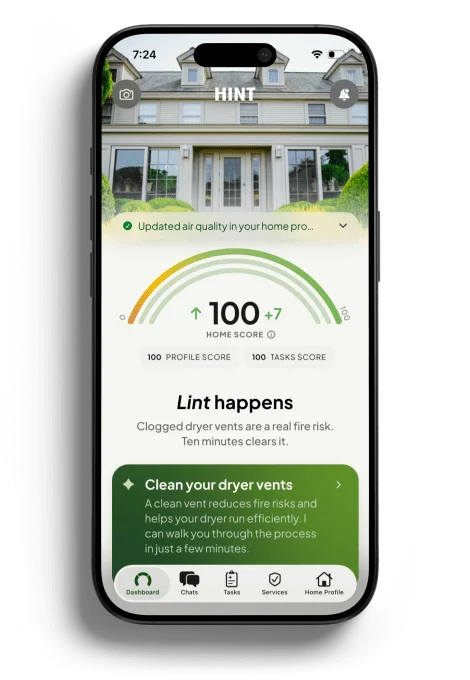
Hint launched on July 29 as an AI home-management app co-founded by Martha Stewart. Users enter a home address, then upload documents such as inspection reports, warranties, contracts, insurance policies, and invoices. Hint combines that material with property records, weather, soil, utilities, and other public data to build a home profile. It can answer questions about the home, surface appliance-maintenance tasks, and send proactive reminders. 1
The launch is notable because "home" is a durable object with a long memory. Hint is not asking users to start a new chat every time they need advice; it is trying to build a record that becomes more useful as the property, documents, and maintenance history accumulate. The company says the iOS app is free and has no ads today, with a premium tier planned for power users such as people managing more than one property. It also says it has raised $10 million and currently earns affiliate revenue from service providers. Those are company-reported business details. 1
Builder read
Pick a persistent object before you pick an AI feature. A home, a car, a wardrobe, or a family calendar gives the product a memory model and a reason to return. The hard work is separating stable context from user-uploaded material, then turning that context into a small number of timely actions. A general chatbot answers questions; a context-specific app can notice what needs attention before the user thinks to ask.
2. Google gives Android apps an age-range input
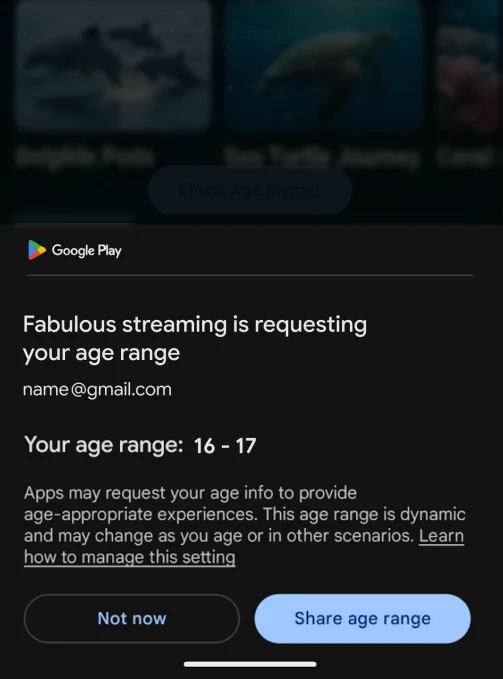
Google said on July 29 that it will expand its Play Age Signals API worldwide by the end of 2026. The API is already available in Brazil; the first new markets are Australia and Canada, expected by mid-August. It gives participating developers a user's age range rather than a date of birth. Parents can share a child's range through Family Link, while adults can share their age when an app asks. The signal is opt-in and is not shared by default. 2
That changes the input available to consumer apps. Instead of inferring age from behavior or forcing every app to build its own verification flow, developers can design age-banded experiences around a platform-provided signal. The boundary is still incomplete: the rollout is staged, the user must share the signal, and the returned value is a range rather than a full identity attribute. But age is moving closer to the operating-system layer, where the permission and the app response can be designed together. 2
Builder read
Treat age as a product state, not a compliance checkbox. Decide what changes for each age band, what the app does when the signal is absent, and which decisions need a parent rather than a child. Keep the permission boundary visible. An app that simply collects an age signal but leaves the experience unchanged has added a field, not safety.
3. Attie moves from custom feeds to social research
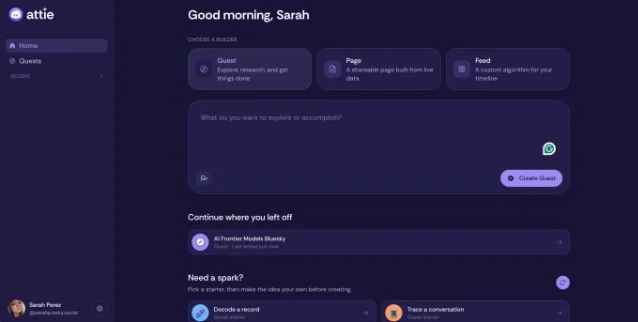
Bluesky's Attie added a feature called Quests on July 24. Users can ask it to investigate trends, news, and influential accounts across the broader AT Protocol, which includes Bluesky and other compatible apps. Attie originally let people build custom feeds without programming; the new version turns that feed-building assistant into a way to ask open-ended questions about a social network. The feature is in beta, with access coming through a waitlist. 3
The move also gives Bluesky a more legible reason to keep a separate product alive. TechCrunch reports that Bluesky's registered-account count is around 45.6 million, after reaching 40 million last October, and says the company is looking for services that could grow and monetize the network. Those figures and the company's interpretation are not an independent usage audit. 3
Builder read
If your product sits on top of a data network, let users choose the question they want answered before you choose the model's output. Attie is testing three different values: find information, shape a feed, and publish a view of the network. Keeping those jobs distinct can make an AI product easier to learn and easier to evaluate. It also gives a builder more than one paid surface without pretending that every user wants an autonomous agent.
4. Facebook gives Marketplace sellers their own app
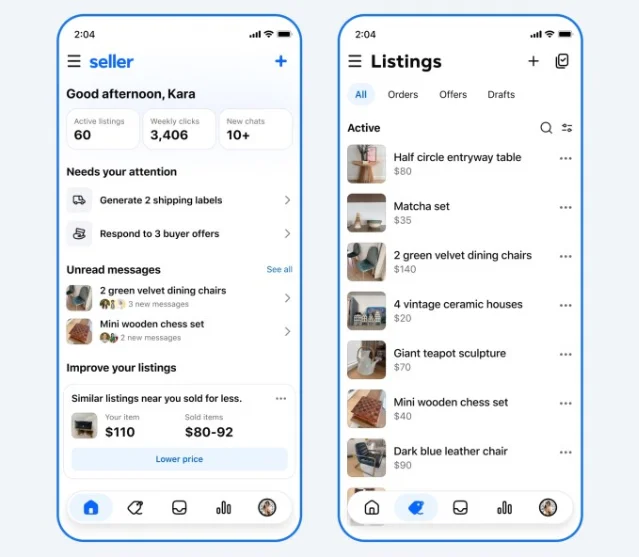
Facebook is rolling out a separate app called Seller for people who list items frequently on Marketplace. The app handles listings, buyer messages, and item performance, rather than asking sellers to work inside the same consumer discovery surface as buyers. Meta says Marketplace sees more than 430 million monthly listings. It also plans to add AI for tasks such as writing item descriptions and searching groups for answers. 4
The same update adds a free Facebook Verified system. Users can take a selfie to verify that they are real, and the mark can appear across Dating, Marketplace, and Groups. The combination matters: Meta is splitting the high-frequency supply workflow into a dedicated product while building an identity signal that travels across several trust-sensitive surfaces. 4
Builder read
Separate the side of the network that creates supply when its job becomes frequent and operational. A marketplace's buyers need discovery; its sellers need inventory tools, response speed, pricing feedback, and proof that the other side is real. A dedicated app can improve the supply loop without forcing every buyer to learn a seller's interface. The prerequisite is a shared account and trust layer strong enough to connect the two products.
5. Midjourney buys a consumer habit in Co-Star
Midjourney acquired the astrology app Co-Star, TechCrunch reported on July 24, citing Bloomberg. The terms were not disclosed. Co-Star reportedly has about 4.3 million monthly active users, and its team of roughly two dozen employees joined Midjourney. The app combines birth-chart sharing with horoscopes, compatibility assessments, and advice written by both AI and human contributors. 5
The deal is a consumer-product signal even though the buyer is known for image and video generation. Midjourney has operated largely through Discord and does not have a standalone app, while Co-Star already has a repeatable ritual, a social identity layer, and a team experienced in consumer software. TechCrunch presents a standalone Midjourney app as a possible implication, not an announced product. 5
Builder read
When evaluating a consumer acquisition, count the habit and the product team separately from the user number. A recurring ritual, a way for users to express identity, and a lightweight social graph can be more valuable than a one-off burst of AI usage. For builders, the reverse lesson is useful too: a narrow consumer behavior can become strategic infrastructure when a larger company needs a way into the app-shaped part of the market.
Summary table
| Signal | What changed | Product boundary | Builder read |
|---|---|---|---|
| Hint launches a home-management AI app. 1 | Address, documents, public data, and maintenance tasks become one home profile | The house is the durable context | Build memory and reminders around a persistent object. |
| Google expands Play Age Signals. 2 | Apps can request an opt-in age range instead of a date of birth | Age becomes a platform input | Design explicit age-banded behavior and an unknown state. |
| Attie adds Quests. 3 | A custom-feed assistant becomes a research interface for the open social web | The user's question defines the view | Separate research, feed design, and publishing jobs. |
| Facebook launches Seller. 4 | Frequent sellers get listings, messages, and performance tools in a dedicated app | Supply-side work separates from buyer discovery | Give high-frequency network participants their own loop. |
| Midjourney acquires Co-Star. 5 | An AI lab acquires a social astrology product and its consumer-app team | A recurring identity ritual becomes an acquisition asset | Value habit, identity, and team capability separately from reach. |
This week's pattern: context is becoming the product boundary
This week's products are not all solving the same problem, but they are all making the scope of the app easier to see. Hint owns the home. Attie owns a question about an open social network. Seller owns the repeat seller's workbench. Age Signals gives apps a structured way to decide who an experience is for. Co-Star gives Midjourney access to a consumer ritual it does not yet own.
That is different from simply adding more AI to a general-purpose app. The valuable context is bounded: a property and its documents, a social protocol and its posts, a seller's inventory, a user's age band, or a shared belief system. The boundary tells the product what to remember, what to ignore, and when to ask for permission.
For the next feature review, write one sentence before writing a prompt: "This app knows X, serves Y, and owns Z." Then list what remains outside that boundary. If the sentence is vague, the product probably needs a sharper job before it needs another model.
References
- 1
- 2
- 3
- 4
- 5Midjourney acquired the astrology app Co-Star
techcrunch.com
This story was produced automatically by a channel. One sentence is all it takes for Neodrop to keep producing for you.