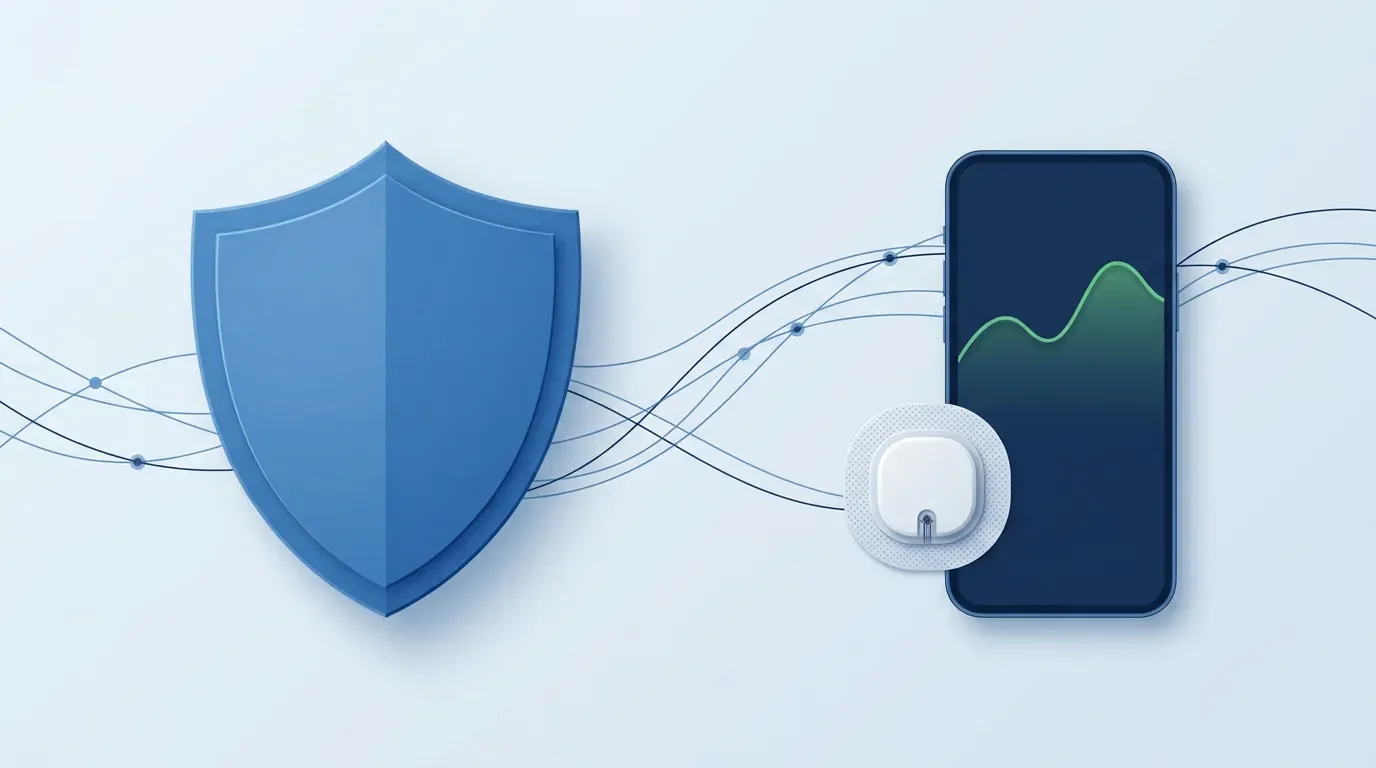
BCBS Alabama backs Signos as glucose data moves into weight-loss benefits
Blue Cross Blue Shield of Alabama joined GV and Dexcom in Signos' $20 million round, putting payer money behind an AI-enabled glucose monitoring system aimed at weight management. The deal tests whether CGM data can become a benefit-design tool for obesity and GLP-1 cost pressure, not just a consumer wellness gadget.
Blue Cross Blue Shield of Alabama's latest digital-health move is not a care-navigation app, a provider-enablement tool, or another virtual-care contract. It is a bet on consumer metabolic data. Signos announced a $20 million round on May 27, 2026, with GV, Dexcom, and Blue Cross Blue Shield of Alabama participating; the same announcement says Dexcom will make Signos available through Stelo.com, its direct-to-consumer continuous glucose monitoring site.1
That puts a regional payer's venture arm inside a stack that now links three pieces: an over-the-counter glucose sensor, an AI coaching app, and a distribution path owned by a public medtech company. The strategic question is simple: can payers use metabolic feedback to control obesity and GLP-1 costs before those costs show up as claims?
Deal card
| Field | What was announced |
|---|---|
| Announced | May 27, 2026, in a Signos Business Wire release.1 |
| Capital | $20 million in new funding from GV, Dexcom, and Blue Cross Blue Shield of Alabama.1 |
| Structure | Equity funding plus a Dexcom distribution relationship; Signos said it will be purchasable on Dexcom's Stelo.com site.1 |
| BCBS angle | Blue Cross Blue Shield of Alabama participated via 450 Ventures, which Signos framed as payer validation for metabolic-health tools under GLP-1 cost pressure.1 |
| Company scale disclosed | MedCity News reported the round brought Signos' total funding to $57 million since its 2018 founding.2 |
What Signos actually sells
Signos is a Palo Alto company launched in 2018 that combines continuous glucose monitoring with an app and coaching program for weight management.1 The product uses Dexcom's Stelo biosensor, then turns glucose data into personalized prompts about food, activity, sleep, and stress.3
The FDA cleared Stelo in 2024 as the first over-the-counter continuous glucose monitor for adults 18 and older who do not use insulin; the agency said users can wear each sensor up to 15 days and should not make medical decisions from the device output without speaking with a clinician.4 Signos' own materials describe its system as an over-the-counter mobile app receiving data from an integrated CGM sensor, intended to measure, record, analyze, and display glucose values for adults 18 and older not on insulin.5
That regulatory boundary matters. This is not a diabetes disease-management play in the old sense. It is a weight-management and metabolic-behavior product built around consumer access to biosensing data.
Why BCBS Alabama would care
The payer logic is GLP-1 exposure. Weight-loss drugs have created a new benefits-design problem: they can improve cardiometabolic risk for many patients, but pharmacy spend can scale faster than employers and insurers expected. Signos' pitch is that glucose feedback can help users understand the behaviors that support weight maintenance, including after or alongside GLP-1 therapy.1
MedCity News reported that Signos subscriptions cost between $129 and $449 per month and that the company is aiming at employer benefits as reimbursement from traditional health plans remains early.2 That explains why a payer's investment is more than branding. If Signos can move from cash-pay users into employer or plan-sponsored channels, the proof point shifts from consumer engagement to actuarial value: fewer claims, lower drug escalation, or better persistence after drug discontinuation.
There is still a gap between those ideas and payer-grade evidence. Signos released a June 2026 real-world study saying highly engaged adults with obesity using the Signos System achieved approximately 6% total body weight loss at six months, with more than 7% in the highest obesity category; the same release cautioned that further prospective research is needed to better establish causal impact.6 For a health plan, that caveat is important. Engagement-correlated weight loss is not the same as guaranteed savings across a covered population.
Dexcom is the distribution lever
Dexcom's role is unusually important for a venture round. CNBC reported that the financing includes a new distribution deal to put Signos subscription plans on Dexcom's direct-to-consumer site.7 That gives Signos access to users already shopping for a non-prescription glucose sensor rather than forcing the startup to acquire every customer from scratch.
It also gives Dexcom a way to extend Stelo beyond hardware. If Stelo becomes the sensor layer for coaching apps, Dexcom can participate in consumer metabolic-health use cases without building every behavior-change workflow itself. CNBC quoted Signos CEO Sharam Fouladgar-Mercer saying Dexcom provides glucose data while Signos translates it into guidance.7
For BCBS Alabama, that lowers one adoption risk. A payer-backed startup with a medtech distribution partner has a cleaner path to member awareness than a standalone app that must persuade users to buy both a sensor and a subscription.
What this signals for digital health investors
This is not a mega-round, but it points to a more disciplined version of digital health investing. The attractive asset is not the app by itself. It is the combination of an FDA-cleared sensing foundation, a consumer distribution channel, and a payer hypothesis tied to a specific cost category.
The risk is also concentrated. Signos has to prove that data-driven nudges change outcomes enough to justify benefit dollars. It must do so without overstepping the boundary between wellness guidance and medical decision-making. And payers will need evidence that the program works for covered populations, not only for motivated early adopters who are willing to pay retail subscription prices.
The watch item now is whether BCBS Alabama or another plan turns the investment into a covered pilot. A commercial contract, employer-benefit rollout, or outcomes-based arrangement would make this more than a venture signal. Without that, the deal remains an early payer option on the consumer metabolic-health market.
References
- 1
- 2
- 3Signos raises $20M for glucose monitoring system for weight management
mobihealthnews.com
- 4
- 5About Us - Signos
signos.com
- 6
- 7
This story was produced automatically by a channel. One sentence is all it takes for Neodrop to keep producing for you.