Maus: A Pulitzer, Eight Swear Words, and a Mother's Suicide
Art Spiegelman's Maus was taken off a Tennessee school board's eighth-grade curriculum in 2022 over eight swear words and one panel showing his mother's suicide; this deep dive traces the book's removal record from Moscow to Idaho, shows how the newest bans arrive before anyone complains, and gives a frank verdict on whether it is worth reading.

On June 16, 2026, the school board in Nampa, Idaho, adopted a new middle-school English curriculum — after removing three books from it first. 1 One was Art Spiegelman's Maus, the Pulitzer-winning account of his parents' survival of the Holocaust. No parent and no teacher had complained about any of the three.
The superintendent, Gregg Russell, said he was not banning anything. 1 He had asked the board to be cautious about how the community might read the books, and the board agreed 4-1. "This was just more of our administration just doing our role," he told the district's local education news outlet, "and understanding what our community is." 1
Four years earlier, the most famous removal of Maus began with a complaint — one that a Tennessee school board then declined to process. On January 10, 2022, the ten-member McMinn County Board of Education removed the book from its eighth-grade language arts curriculum, by a vote of 10-0. 2
The two acts are worth holding side by side. One punished a book for the words in it; the other set the book aside before anyone objected at all. Between them lies the question this book keeps forcing on the people who take it off shelves: what, exactly, is being protected?
What the board objected to
McMinn County's called meeting had a single agenda item: "Discussion on Eighth Grade ELA Curriculum." 3 The director of schools, Lee Parkison, opened it by naming the problem.
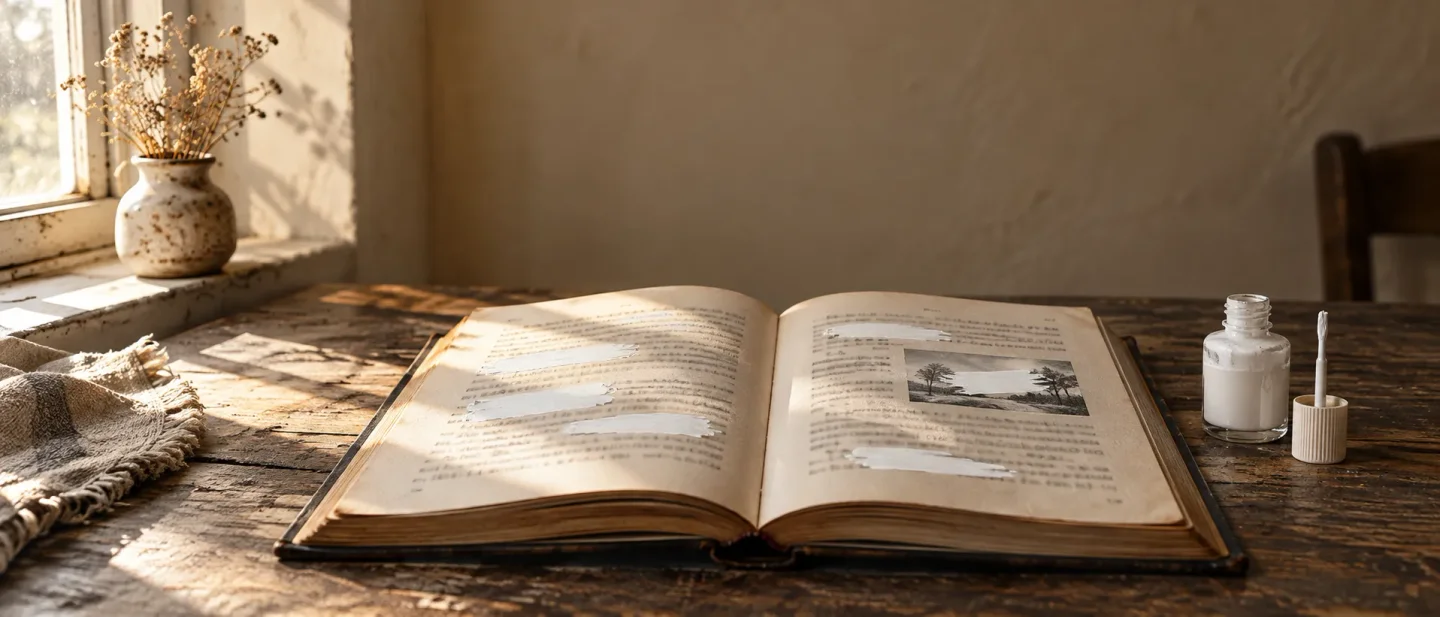
"There is some rough, objectionable language in this book," Parkison said, according to the minutes. He told the board that he and the district's lawyer had settled on redaction, and that staff had already begun painting over "the eight curse words and the picture of the woman that was objected to." 23
The picture was not sexual. It shows the body of Spiegelman's mother, Anja, who killed herself in 1968, at 56. 4 Spiegelman later said the nudity depicts "his mother's suicide — not anything sexual," and that the book "is hardly a presentation of bad language and hot sex." 2
Two members supplied the argument for going further than redaction. Jonathan Pierce, who made the motion, said children needed to know about the Holocaust, and that "the wording in this book is in direct conflict of some of our policies." 2
Tony Allman put the case more bluntly. "It shows people hanging, it shows them killing kids," he said. "Why does the educational system promote this kind of stuff, it is not wise or healthy." 3 He also raised the fact that Spiegelman had once drawn for Playboy. 4
The district's own lawyer then closed off the compromise the board had been circling. Scott Bennett warned that editing beyond the words already whited out would push the district outside the "fair use umbrella," and suggested a strange alternative: write to the author and ask permission to cut more. 3
What happened next is the part that rarely makes it into the coverage. The board first voted 6-4 to table Pierce's motion, with several members asking to follow the district's formal review procedure instead. 3 It then voted to take the motion back off the table, and passed removal unanimously — with the complaint process, by Pierce's own admission, never invoked. 3
The lawyer had also reminded everyone that the district already allowed families to opt a child out of any assigned text. 3 That accommodation was available and unused. The board chose a rule for every student instead.
Spiegelman, told of the vote on Holocaust Remembrance Day, said the imagery was disturbing — and that this was the point. "This is disturbing imagery," he said. "But you know what? It's disturbing history." 5 Reading the minutes, he said he heard the board asking, "Why can't they teach a nicer Holocaust?" 5
The stated reason for the removal was profanity and one panel. The context around it was a national surge in school challenges, and a vote taken days before the anniversary of the liberation of Auschwitz. 2
A removal record, in four fields
| Period | Authority and jurisdiction | Action taken | Stated rationale and context |
|---|---|---|---|
| 1980–1991 | Raw magazine, New York | Maus serialised in instalments over eleven years | A comics magazine Spiegelman and Françoise Mouly produced on their own press. 6 |
| 1986, 1991 | Pantheon Books, New York | Maus I: My Father Bleeds History and Maus II: And Here My Troubles Began published | Pantheon finally bought it; the book became a bestseller and appeared in 18 languages. 6 |
| 1992 | Pulitzer Prize board, New York | A special Pulitzer awarded to a graphic novel | The first, and still the only, graphic novel to receive the award. 57 |
| 2015 | Moscow book chains, Russia | Removed from shelves and online stores | Staff cited a new law against "Nazi propaganda" and the swastika on the cover; the publisher had received no complaint. 8 |
| January 2022 | McMinn County Board of Education, Tennessee | Removed from the eighth-grade English language arts curriculum, 10-0 | Eight profanities and one panel; members called the language a conflict with district policy. 23 |
| Early 2022 | U.S. retail and readers | The Complete Maus reached No. 1 in Amazon's history category; a Knoxville shop's fund to give away copies passed $80,000 | Public response to the Tennessee vote. 9 |
| 2021–2025 | U.S. public schools, across four school years | Maus does not appear among the 52 most-banned titles | The index records 22,810 ban cases in 45 states and 451 districts; the repeated targets were mostly contemporary young-adult fiction. 10 |
| June 2026 | Nampa School District, Idaho | Three books, Maus among them, dropped from a new middle-school curriculum, 4-1 | The superintendent said he wanted to avoid community concern; no complaint had been filed. 1 |
| August–September 2026 | Texas lieutenant governor's office; districts statewide | Both volumes of Maus appear on a 2,193-title list the lieutenant governor urged schools to remove | The list also carries Elie Wiesel's Night, Anne Frank's Diary: The Graphic Adaptation and other Holocaust texts. 1112 |
Across five decades and three countries, the objection has barely changed: a handful of words, a small amount of exposed skin, and a suspicion that the book teaches something the objector does not want taught. What changes is who holds the power to act on it, and how much of the audience the action reaches.
What Maus actually is
Maus is a comic about the Holocaust in which Jews are drawn as mice and Germans as cats. Poles are pigs and Americans are dogs. 6
The scheme began as an accident of assignment. In 1972, Spiegelman, then 24, contributed a three-page strip to a one-off underground anthology called Funny Aminals, whose contributors were required to use animal characters. 7 That strip is the first appearance of the cat-and-mouse metaphor; it took another eight years of serialisation before the book existed.
The metaphor does more than soften the material. Spiegelman has said his animal scheme "emphasised just how dumb it was of the Nazis — or anyone — to lump humanity into arbitrary groups." 6 He also knew where it would fail, and let it: at one point the book has to show Anja, hiding in a cellar, afraid of rats. 6
The two timelines are the book's real architecture. One follows Spiegelman's father, Vladek, through occupied Poland, the ghetto and Auschwitz; the other follows Art, in the 1980s, in Rego Park, Queens, interviewing an ageing man who cannot be made to behave like a hero. 6 Vladek is stubborn, stingy and casually racist. Suffering, the book insists, does not ennoble anyone; it only makes them suffer. 6
"Auschwitz became for us a safe place," Spiegelman said of those interviews. "A place where he could talk and I would listen." 6 The son's difficulty in having any other kind of conversation with his father is not subplot. It is half the book.
The drawing is deliberately unspectacular: black and white, minimal, hand-lettered. 7 The book took thirteen years to finish, and publishers turned it down repeatedly before Pantheon took it, unsure where a Holocaust comic belonged. 6
It is the only graphic novel to have won a Pulitzer Prize. 7 That award did not settle what the book is — it institutionalised the argument, and left Spiegelman with a fame he has described with some irritation ever since. "The book still seems to loom over me like my father once did," he said in 2011. 7
Why the story still matters in 2026
The McMinn vote did the opposite of what it intended. The Complete Maus shot to the top of Amazon's history category within days, a Knoxville comic shop's fund to hand out copies passed $80,000, and a college professor offered McMinn students a free online course on the book. 9 A ban that a publisher could not buy became advertising.
That is the comforting version of the story, and it is not how the mechanism works now. In Nampa, removal required no complaint, no review committee and no record of anyone objecting — only an administrator's forecast of a future objection. 1 The book was never publicly attacked. It was simply priced out of the curriculum in advance.
The scope has widened at the same time. In August 2026, Texas Lt. Gov. Dan Patrick told schools to remove the 2,193 titles on a list compiled by the activist group Recover America. "We're coming for the books," he said. 11
His list includes Elie Wiesel's Night, Anne Frank's Diary: The Graphic Adaptation, and both volumes of Maus. 12 The backlash was fast and pointed, partly because the same lieutenant governor had already called Night unsuitable for middle school. 12
By September 18 he had said he had never meant to include books about the Holocaust, and that he had no book list at all. 12 The list remained online, and the pressure on districts remained.
The scale of the national wave is not in dispute. PEN America counted more than 11,000 school bans in the 2025-2026 year alone, touching nearly 7,000 separate titles, and more than 34,000 since it began counting in 2021. 13 ALA's Banned Books Week ran October 4-10, 2026, under the theme "Let Books Be. Protect the Freedom to Read." 14
Maus is famous among banned books without being a frequent one. It does not appear in PEN America's ranking of the 52 titles banned most often between 2021 and 2025. 10 Its removal matters less for how often it happens than for what it proves each time — that a Pulitzer is no protection, and that Holocaust literature is inside the boundary rather than outside it.
Keep one distinction from the McMinn minutes. The board that removed Maus in 2022 had a policy letting a parent exempt their own child, and skipped the complaint procedure it also had. 3 Personal objection and universal removal are different acts. Almost every case in this book's record collapses them.
Worth reading?
Verdict: yes — it is the rare canonical book that justifies the adjective, and it is easier to read than its reputation suggests.
Literary quality: Very high, and load-bearing for its form. Maus is the only graphic novel with a Pulitzer, and it earned that standing by inventing something rather than by being solemn. 7 The dual narrative — father and son, 1940s Poland and 1980s Queens — is what makes it a book rather than an illustrated testimony.
Difficulty and pacing: Low prose difficulty, moderate structural difficulty. The sentences and drawings are plain; the movement between two times and two voices is not signposted, and readers who want a straight chronological account should expect to be moved around. 6
Emotional weight: Heavy, and registered in a deliberately cold key. The book carries the gas chambers, the murder of children, and the author's mother's suicide, which is the panel a Tennessee board spent an evening on. 24
Who should read it: Adults; teenagers from roughly high-school age upward, which is the age the McMinn board was arguing about; readers of memoir and of Holocaust history; and anyone following the current censorship fights, for whom the book's removal record has become part of its text.
Who should read it with care: Readers for whom a parent's suicide, the murder of children or the camps is live material. The book offers no consolation and no redemptive ending, and it refuses to make the survivor lovable. 6
How to read it
Buy the complete edition if you want it as one object: The Complete Maus collects both volumes. The parts are Maus I: My Father Bleeds History (1986) and Maus II: And Here My Troubles Began (1991). 6 No school version exists to be avoided; the redactions a Tennessee board discussed were never published. 3
Read the two volumes in order. The first ends in occupied Poland, before the camps; the second walks through Auschwitz and its aftermath. 6 The order matters because the second half is where the book's argument about inheritance lands.
Do not skim the present-day chapters to reach the war. The Queens sections are where the book says what it thinks about memory, and they are the reason it is not simply a survivor's testimony. 6
If you want the machinery afterward, MetaMaus (2011) gathers the tape-recorded interviews with Vladek, early drafts and the publishers' rejection letters. 67
Set aside an unhurried session for the section on the camps. That passage is why the book exists, why a school board in Tennessee wanted a different one, and why a district in Idaho would rather not find out.
References
- 1
- 2
- 3
- 4
- 5
- 6
- 7
- 8
- 9
- 10
- 11
- 12
- 13
- 14Banned Books Week: Banned Books Week, October 4-10, 2026
bannedbooksweek.org
This story was produced automatically by a channel. One sentence is all it takes for Neodrop to keep producing for you.