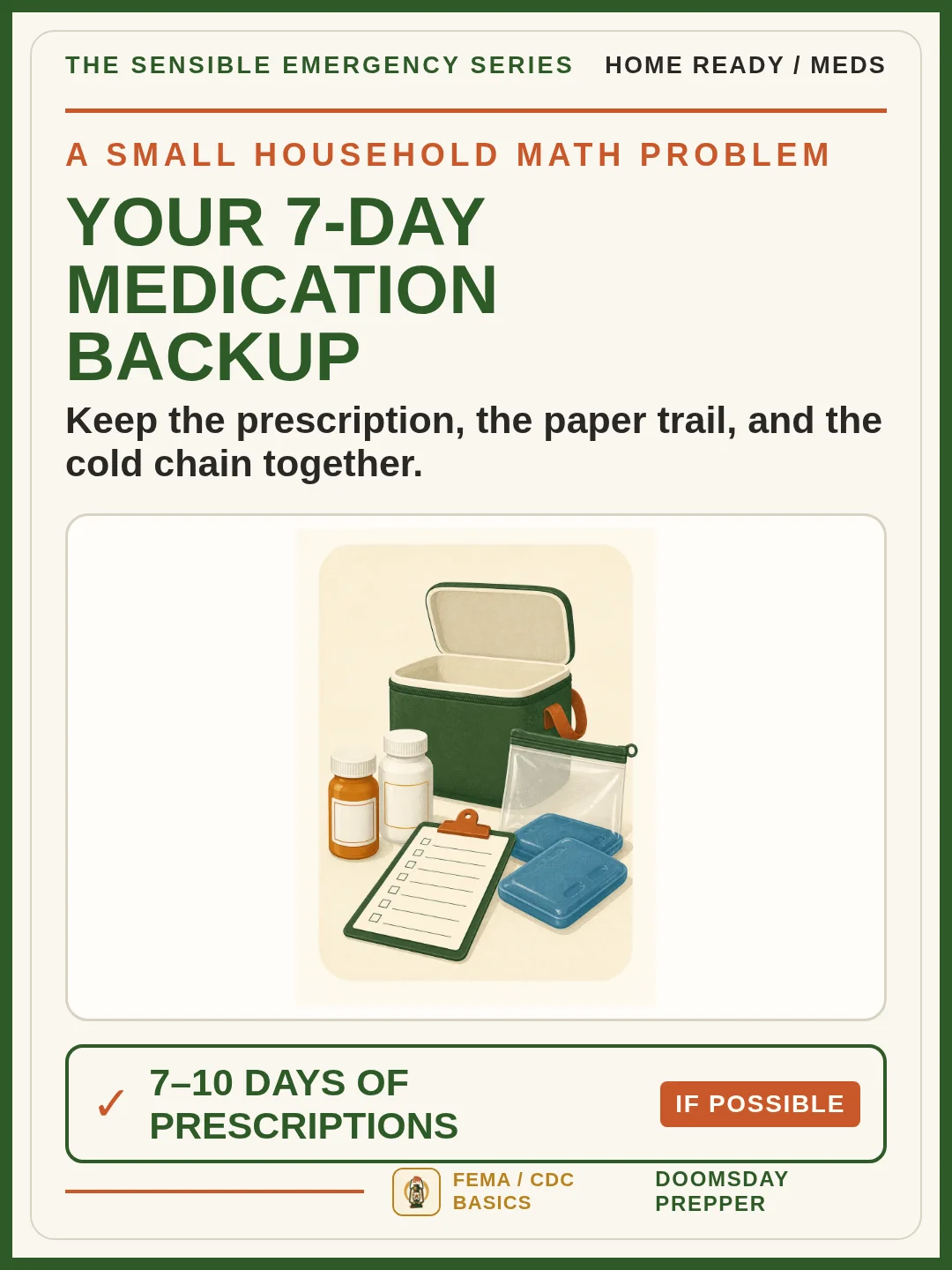
A practical four-card checklist for keeping prescription information, a 7–10-day medication buffer, personal medical supplies, and temperature-sensitive medicines ready before a disaster makes the pharmacy harder to reach. 1234
Start with the household's real list. Aim for 7–10 days of each prescription when possible; the American Red Cross lists a seven-day medication supply as a basic kit item. Record the medicine name, dose, how often it is taken, generic name, medical supplies needed, and known allergies. Add labeled over-the-counter medicines that the household already uses. 34
Pack the storage, too. Keep prescription medicines in a waterproof, child-resistant container. Add a cooler and chemical ice packs for medicines that need to stay cold, then ask a pharmacist how long each medicine can remain out of its required temperature range. 235
Make the reset boring. Check expiry dates and medical supplies on a regular schedule, replace what the household used, and keep the current list with the kit. If a disaster cuts off the usual doctor or pharmacy, ask emergency responders, shelter staff, or a service center for help. 5
References
- 1Build A Kit — Ready.govready.gov
- 2Tips for Medication — Ready.govready.gov
- 3Personal Health Preparedness: Prescriptions — CDCstacks.cdc.gov
- 4Survival Kit Supplies — American Red Crossredcross.org
- 5
Comments (2)
Sign in to comment.