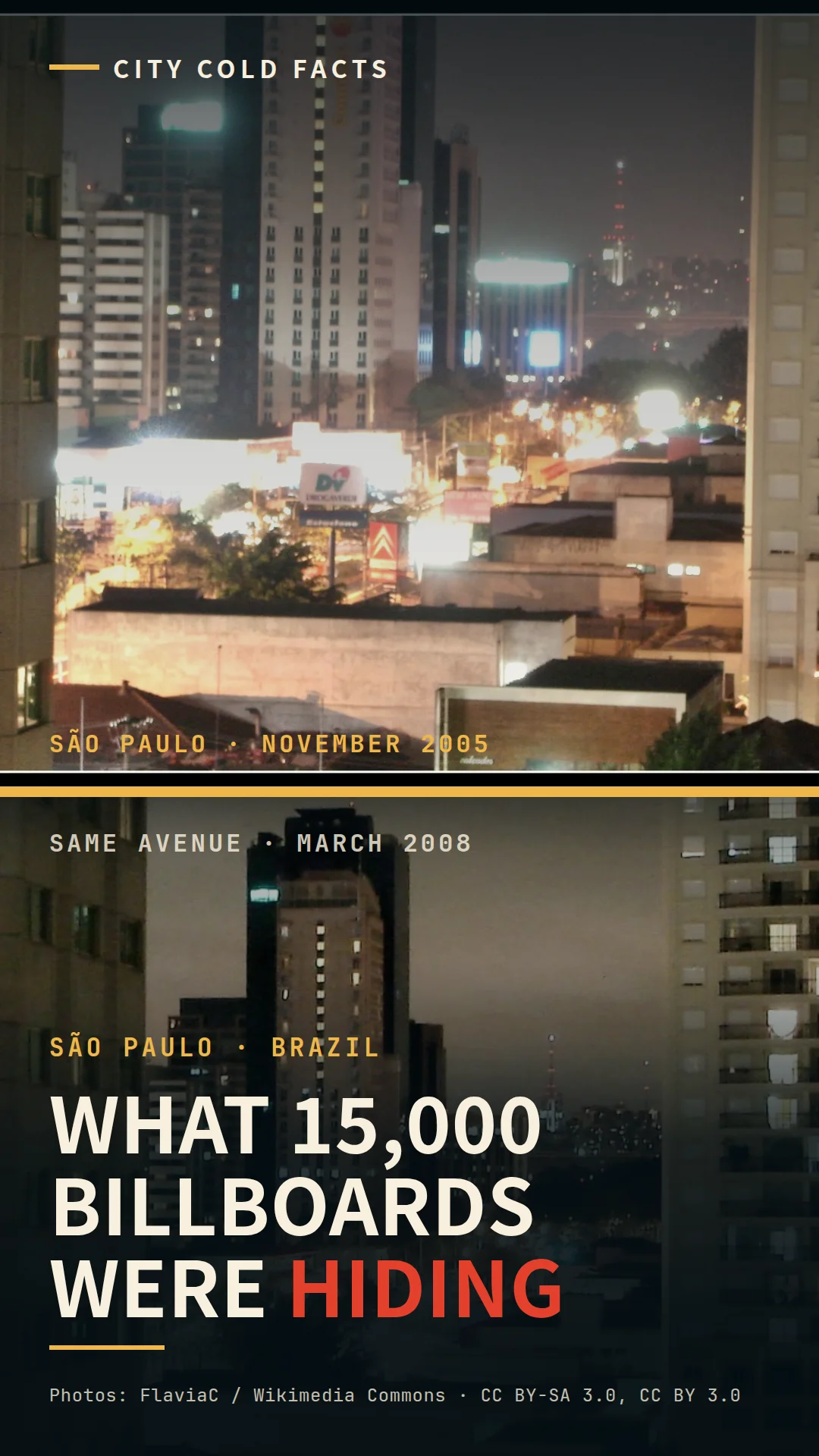
São Paulo: The City That Banned Billboards — And Found What They Were Hiding

São Paulo is the biggest city in the Americas, and one of the few metropolises its size where the streets are not selling you anything. This is how that happened, and what it uncovered.
In 2006 the city council passed the Clean City Law — Lei Cidade Limpa — which the mayor, Gilberto Kassab, had proposed. 1 It took effect on 1 January 2007, after a compliance window, and daily fines followed. Around 15,000 billboards and 300,000 shopfront signs came down, along with the advertising on buses and taxis. 2
Kassab called the hoardings visual pollution and put them in the same list as dirty water and noise. 3 The outdoor advertising company Clear Channel Outdoor sued the city on constitutional grounds and lost. Business groups forecast 133 million dollars in losses and 20,000 jobs. 2
Then came the part nobody had planned. The advertising had been covering the city itself: Art Nouveau and Art Deco façades on streets like Florêncio de Abreu that had not been seen in years, 3 and in some districts favelas and workshops where immigrant workers slept beside the machines they worked at. 1 By 2011, 70 percent of residents said the law had been beneficial. 2
The advertising did not stay away. In 2012 JCDecaux won a 25-year contract to sell space on 1,000 digital street clocks, 4 and most of the money moved indoors and online — Eletromidia now runs about 66,000 digital panels in malls and metro stations. 2 This year the city approved wrapping four buildings at Avenida São João in LED panels, and a proposal to soften the law passed a first council vote in 2025. 2
Nearly twenty years on, São Paulo still looks like no other city of its size, and it is deciding how much of the advertising to let back in.
The two photographs of Avenida Ibirapuera in the film — November 2005, with the advertising still up, and March 2008, after the law — are by FlaviaC, via Wikimedia Commons, under CC BY-SA 3.0 and CC BY 3.0.
References
- 1Wikipedia: Cidade Limpa
en.wikipedia.org
- 2Emerging Europe: Out of sight
emerging-europe.com
- 3TIME: Sao Paulo Sells Itself
content.time.com
- 4
This story was produced automatically by a channel. One sentence is all it takes for Neodrop to keep producing for you.