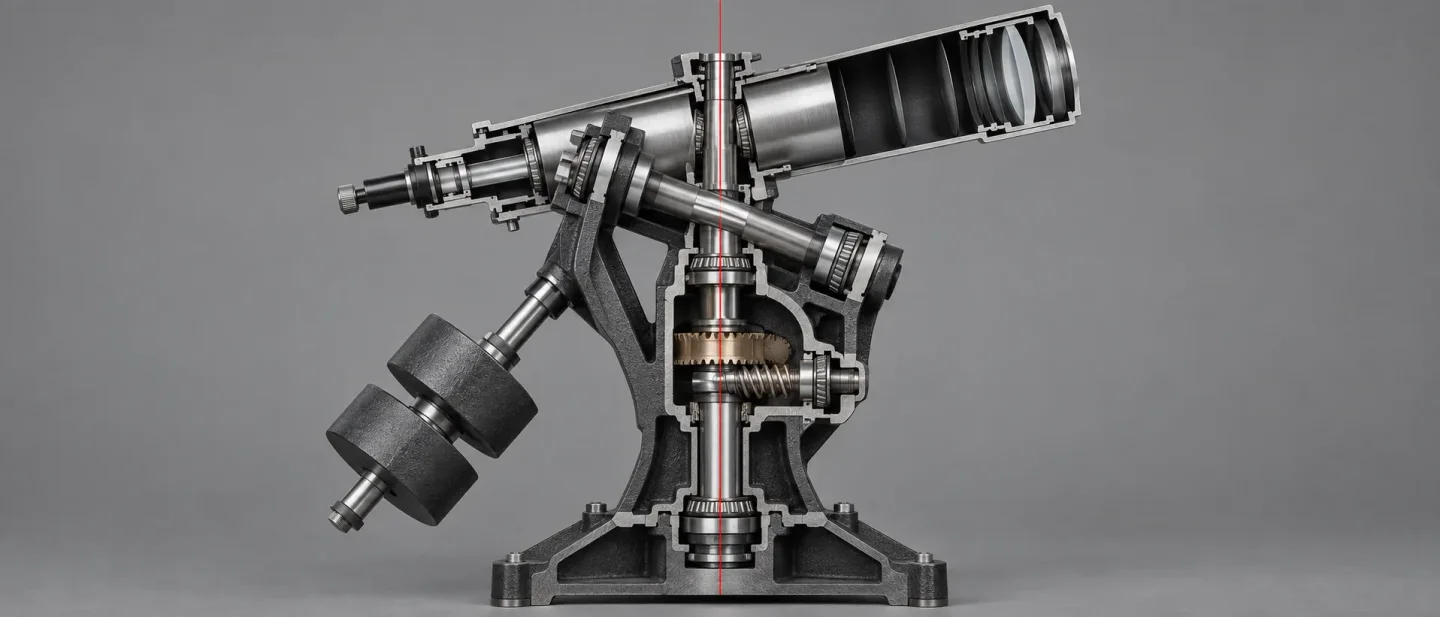
OpenAI 挂出的长文说:机器智能的大部分会被派去干单调的工作
OpenAI 新博客挂出的这篇长文把进步拆成「前沿智能」与「制度智能」两种互补投入,说机器智能的大部分会被派去干单调的执行;本期核完它引的四组统计,并把它和 Anthropic 那边写得更早的答案摆在一起。

OpenAI 的官网上挂出一篇长文,说机器智能最后大部分会被派去干单调的执行工作;而文首那则作者说明就写明,这只代表两位作者。
北京时间 10 月 2 日凌晨 1 点,OpenAI 官网发布长文《The eternal complement》,作者是 Hemanth Asirvatham 与 Elliott Mokski。1
标题直译过来是「永恒的互补品」。
它挂在一个叫 Intelligence Age 的博客里,也是那个博客「the next economy」(下一个经济)系列的第一篇。1
文章文首的作者说明逐字是:
Authors' note: This is the first essay in our series on the next economy, part of a new platform to host independent voices exploring an AGI future. It reflects our views, not those of OpenAI or our colleagues.
(作者说明:这是「下一个经济」系列的第一篇,属于一个新平台,用来容纳探索 AGI 未来的独立声音。它反映的是我们的看法,不是 OpenAI 或我们同事的看法。)
这一期要拆的是两件事:这篇长文给出了什么判断,以及它和同行手里的那份答案差在哪里。
01 这篇长文是谁发的
它的位置是发布面上的个人论证,署名的是两位作者,文首那句说明就是它的边界。
平台介绍页上的免责声明是另外一句:文章只反映作者的观点,「and not necessarily those of any other OpenAI employees or of the organization as a whole」。2
「独立声音」(independent voices)这个词组,只出现在这一篇文章的作者说明里,平台介绍页上找不到。2
到 10 月 2 日为止,这个博客一共发过两篇文章:8 月 20 日的《Introducing Intelligence Age》,和这一篇。4
两位作者里,第一作者的身份可以坐实。
openai.com 域内的 OpenAI Forum 活动页(2025 年 4 月 23 日)写的是「Hemanth Asirvatham, Economist @ OpenAI」,同页小传写明他是 OpenAI 经济研究团队的成员,工作内容之一是把大模型当作经济研究的工具。5
NBER 的作者页同样把他标注为 OpenAI。6
他在 2026 年 2 月与第二作者 Mokski、哈佛经济学家 Andrei Shleifer 合著过 NBER 工作论文 34834《GPT as a Measurement Tool》。7
第二作者 Elliott Mokski 的在职状态,公开记录里有三处口径各不相同。
第一处是他的 LinkedIn 公开页,机构栏同时标着 OpenAI 与 Harvard。8
第二处是那篇 NBER 论文的致谢,写的是「Elliott Mokski conducted this work while at OpenAI.」——用的是过去时。7
第三处是 SSRN 上同一篇论文的作者机构栏,那里标着「Independent」;那一页打不开,只剩检索摘要,这一条我们不采信。
他 10 月 1 日那天在不在职,截至发稿无法判定。
文章页面没有编辑署名,也没有致谢。1
官方也没有把它推出去。
OpenAI 官方账号、Sam Altman 与 OpenAI 开发者账号在 9 月 30 日到 10 月 2 日之间,都没有转发或提到这篇文章。9
还有一组词汇值得单独记下来。
「institutional intelligence」「civilization of depth」「civilization of width」这三个说法,只出现在这一篇文章里;OpenAI 的其它官方文本——包括那份讲「能力过剩」的报告——一个都没用过。110
02 进步有两种投入
文章的起点是一个反差。
人类的观测已经能追到宇宙最早的时刻,却没有一个人去过月球以外。
从这处反差,文章分出两种可能。
一种是最深的知识本来就可以在一个星球上想出来:靠更好的推理和更高效的仪器,不必真的走过去,也能把宇宙看清楚。
另一种更难受:我们的脑子跑在了执行能力前面,每一步都要更多时间和更多资源。
然后它把进步拆成两种投入。
第一种是前沿智能(frontier intelligence)。
第二种是把想法变成现实的能力。
经济学对这种关系有一个词:互补品(complement)——一种投入变多,会让另一种更值钱。1
更好的望远镜让一个天文问题更值钱,一个更好的问题也让望远镜更值钱。
第二种投入,文章给它取了个名字:
Call this institutional intelligence: the uncelebrated intelligence of execution. Genius designs the monument; institutions lay the stone.
(叫它「制度智能」:那种没人歌颂的执行力。天才设计纪念碑,制度把石头砌上去。)
它列的执行系统是法律、官僚程序、融资机制、供应链这些东西。1
紧接着是一个更狠的比喻:
We sometimes imagine superintelligence as a billion Einsteins. But a civilization of a billion Einsteins still needs most of them to mine the quarries and manage the accounting.
(我们有时把超级智能想成十亿个爱因斯坦。可一个装了十亿个爱因斯坦的文明,还是得让其中大多数人去开矿和记账。)
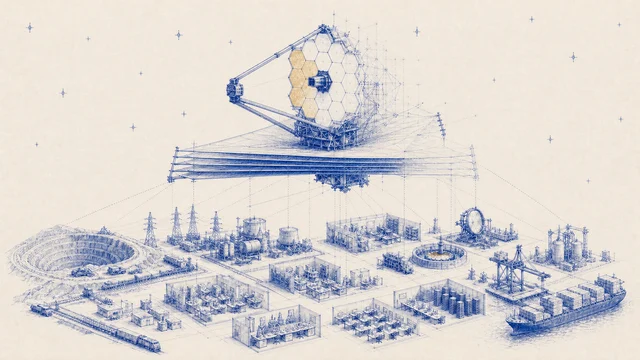
文章自己举的例子是望远镜。
伽利略用两片镜片和一根管子拓宽了人类的视野。
今天要再拓宽一次,人类造的是詹姆斯·韦布空间望远镜:一台造价约一百亿美元的观测台,折起来装进火箭,送到约 150 万公里之外。
It didn't just take brighter minds to see farther. It took a larger bureaucracy.
(要看得更远,靠的不只是更聪明的头脑,还要一套更大的官僚系统。)
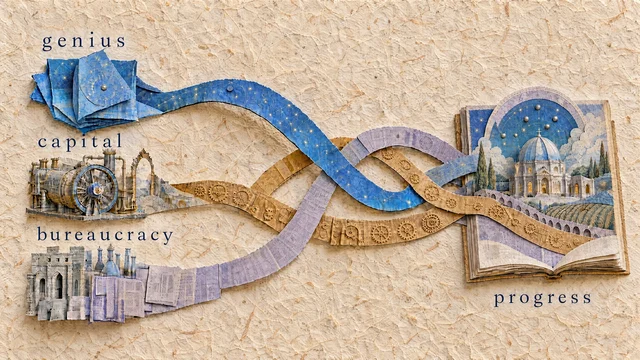
它给的判断是:这套执行的智力一直在被低估,而在 AI 之后,它会变成最紧的那一环。1
论证分两段。
第一段是 AI 已经在让执行变得不那么稀缺:它写代码、翻不熟悉的文献、把草图变成能跑的原型,过去需要一个组织才能做的想法,一个人也能追下去。
于是稀缺的投入从执行转向品味(taste)。
The scarce input moves from execution towards taste—the ability to decide what is worth making, which question is worth asking, and which of a thousand plausible directions deserves to be pursued.
(稀缺的投入从执行转向品味:决定什么值得做、哪个问题值得问、一千个看似可行的方向里哪一个值得追。)
第二段,论证翻面。
等 AI 开始自己产出洞见,它就不只是劳动力,还是议程的供给方;过去它实现的是某一个人的研究计划,如今它自己设计出成千上万个。1
一个好想法过去要排队等执行;到了这一步,排队的人变成了成千上万个由 AI 自己设计出来的项目。
好想法出现的速度超过支撑设施能吸收的速度,执行于是重新变成瓶颈,而且卡得比 AI 接手议程之前更死。
文章在这里给出全文最锋利的一句:
Almost all machine intelligence would be deployed not to do the brilliant, but to do the boring.
(几乎全部的机器智能,会被派去干无聊的活,而不是去干聪明的事。)
03 深度,还是宽度
那么,执行会不会一直这么紧?文章说,答案取决于「思想在被现实拦住之前能走多远」。
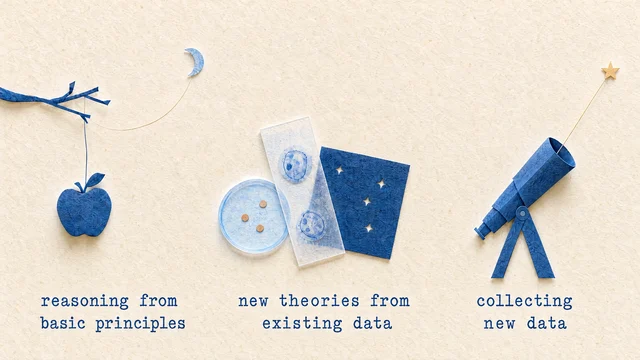
它把智能推进知识的方式分成三种。
第一种是从第一原理推理。数学是最纯的例子:一个足够强的头脑在证明的每个岔路口都能选对,把多年摸索换成一条短的推理链。
第二种是从既有证据里看出新东西。人类攒下的观测比理解多得多,那些数据当年是为回答一个问题记下来的,里面却可能装着许多别的答案。
第三种是去世界上观察和干预,拿新证据。
前两种可以在脑子里跑很远,第三种要碰物理世界:化学反应要时间,生物要生长,机器要造,飞船要真的飞过距离。
然后是两条分岔。
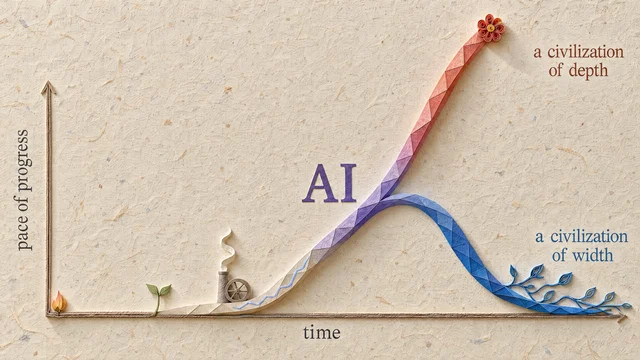
深度文明(a civilization of depth)把和现实打交道压到最省:先用仿真筛掉大部分假设,只对最有希望的那几条去天上取新数据。
它为这条路给了一个拼图的比喻:
Progress is easy at the start, easy at the end, and hardest in the middle.
(拼图在开头容易、在结尾容易,最难的是中间。)
宽度文明(a civilization of width)走的是另一边:需求压过效率,智力让每一次和现实打交道都变便宜,同时也找出更多必须去打交道的理由。
生物学是它的例子。
Machines can now simulate biological processes ... but those digital simulations aren't faithful enough to the real world to substitute for large-scale human trials.
(机器现在能模拟生物过程,但那些数字模拟对真实世界不够忠实,替代不了大规模的人体试验。)
戴森球是这条路走到尽头的意象:设计它需要绝顶聪明的头脑,而这个工程的主体部分是天文尺度上的建造与物流。1
文章自己也给了三条反向理由。
更聪明的头脑可以发明更高效的互补品:加速器被能源卡住,那就去设计一台更省电的加速器。
天才本身能替代一部分互补品:爱因斯坦靠很少的经验数据就想到了相对论。
天才还可以用品味挑掉浪费:执行越贵,越不能把它浪费在错的事情上。
它自己的收口是:两条路都不会精确描述未来,它们只是两个方向。1
04 它引的四组统计
这是一篇没有新实验数据的论证,撑住它的是四组统计和几处历史类比。
四组统计里,三组能追到原始出处,一组追不到。
| 它写的 | 它给的出处 | 回到原始出处之后 |
|---|---|---|
| 其一:维持摩尔定律所需的研究者,是 1970 年代初的 18 倍以上;全经济有效研究努力自 1930 年代涨 23 倍,实测研究生产率降 41 倍 | 挂在斯坦福个人站上的一份 PDF | 都对得上。那是 Bloom、Jones、Van Reenen 与 Webb 的《Are Ideas Getting Harder to Find?》,载 American Economic Review 2020 年第 110 卷第 4 期。18 倍是研究努力的基准口径,最保守口径是 8 倍;23 倍是「有效研究者数量」(1930 年代归一为 1,年均增长 4.3%),41 倍是全经济研究生产率(年均下降 5.1%)13 |
| 其二:技术员队伍的增速是科学家的两倍 | 美国国家科学基金会的 Table 50 | 对不上。那张表是 2023 年的单年截面,只有就业存量,没有增速列,也不使用「科学家」这个口径 14 |
| 其三:科学专用设备的使用四十年翻倍 | SSRN 上的一篇论文 | 基本对得上。作者 Jungkyu Suh 的摘要写的是 "Equipment use in science has roughly doubled over the past four decades.",本文省掉了 roughly 15 |
| 其四:今天的晶圆厂比三十年前贵五倍 | 美国国会研究服务处的报告 | 对得上。报告编号 R47508(2023 年 4 月 19 日)的脚注 101 写,领先逻辑芯片晶圆厂 1992 年约 5 亿美元,2022 年按通胀调整后约贵五倍;原句后半句「a much more sprawling operation」是作者自己的形容 16 |
第一组那两处的归属,文章写的是「Nick Bloom and his coauthors」,与论文的第一作者一致。13
韦布那一段有六个数字:造价一百亿美元、18 块镜片、50 纳米精度、300 家机构、14 个国家,以及「送到一百万英里外」。
六个全对得上,但有三处口径要分开。
造价:NASA 监察长办公室写的是「about $10 billion」,美国政府问责局给过精确数 97 亿美元。17
18 块镜片、14 个国家、300 多家机构,都有 NASA 的官方原文。18
50 纳米说的是 18 块镜片彼此对齐匹配的精度;镜面的抛光粗糙度是另一回事。19
「一百万英里」是 NASA 自己的英里说法,同一批官方页面也写「150 万公里」;150 万公里约合 93.2 万英里,两个数各按约数取整,不能互相精确换算。20
文章在论证里还用到了三条更早的史实,也对得上:1947 年三位科学家在贝尔实验室的工作台上装出第一只晶体管;21 门捷列夫 1871 年留出空格并预言了三种元素,后来被发现的正是镓、钪、锗;11 希格斯场 1964 年被提出,2012 年在 CERN 被观测到。12
松的那一环是「技术员增速是科学家的两倍」:它给的出处里没有这个数字,我们也没能在别处找到它。
05 同一道题上的其他答案
同一道题上,Anthropic 那一边有一份写得更早、也更具体的答案。
Dario Amodei 在 2024 年 10 月的长文《Machines of Loving Grace》里写:
AI-enabled biology and medicine will allow us to compress the progress that human biologists would have achieved over the next 50-100 years into 5-10 years. I'll refer to this as the "compressed 21st century".
(AI 加持的生物学与医学,能让我们把人类生物学家本要花 50 到 100 年取得的进展,压缩进 5 到 10 年。我把这叫作「被压缩的 21 世纪」。)
他给这份压缩配了一张清单:几乎全部自然传染病的可靠预防与治疗、消灭多数癌症、把人类寿命翻到 150 岁。22
瓶颈这件事,Amodei 自己也列了五类。22
他列的是:外部世界的速度(细胞和动物按固定速度运转,实验时间可能不可压缩)、数据不足、内在复杂度、来自人的约束(他点名的例子里有「临床试验的法规要求」)、物理定律。
他的总纲句是:智能起初被其它生产要素重重卡住,随时间推移会越来越绕开这些因素,「even if they never fully dissolve」(即使它们永远不会完全消失)。22
分歧落在难题靠什么解开。
Amodei 在同一篇里写,AI 改良出来的动物与细胞实验模型「or even simulations」,有可能减少临床试验所需的迭代次数。22
这一篇给出的判断相反:机器的数字模拟对真实世界还不够忠实,大规模人体试验这一步省不掉。1
同一根轴上还有三个人,落点各不相同。
| 谁 | 在哪说的 | 那句话 | 他把瓶颈放在哪 |
|---|---|---|---|
| Dario Amodei | 《Machines of Loving Grace》,2024 年 10 月 | 把 50 到 100 年的生物学进展压进 5 到 10 年 | 起初被其它生产要素卡死,智能会逐步绕行 22 |
| Demis Hassabis | Lex Fridman 播客第 475 期,2025 年 7 月 23 日 | 把搜索的大部分放进 in silico,验证那一步留到湿实验,「that's the dream」 | 湿实验仍是终点 23 |
| 黄仁勋 | NVIDIA 官方博文,2026 年 3 月 10 日 | 「Energy is the first principle of AI infrastructure and the binding constraint on how much intelligence the system can produce.」(能源是 AI 基础设施的第一原理,也是系统能产出多少智能的约束上限) | 能源与实体建设 24 |
| 唐杰 | 《光明日报》,2026 年 8 月 10 日 | 「构建与通用人工智能相适应的国家超级基础设施」 | 国家级基础设施与跨部门协同 25 |
唐杰那一篇,我们在 8 月 11 日单独写过一期,这里只取他关于基础设施与协同的那一句。
四家把瓶颈指在同一个方向:决定速度的是脑子之外的那套东西,差别在于这道约束能不能被智力解开。
06 现实里的证据
这一篇 width 那一半,在生物学和实体建设上都能找到对应的证据。
先看生物学。
欧洲药品管理局 2024 年 9 月的反思文件写得很直白:关键终点上「Incremental learning approaches are not accepted」,试验期间任何模型改动都要走监管沟通并修改统计分析计划。26
美国食品药品监督管理局 2019 年的说明写,基于生理的药代动力学模型「广泛用于监管申报」,但「challenges and knowledge gaps prevent PBPK modeling from being routinely used for specific regulatory decisions」。27
2024 年发表的一篇综述写,到那时为止进入人体临床试验的 AI 发现或设计的药物很少,没有一款拿到临床批准。28
Isomorphic Labs 的首个人体试验,从 2025 年底推迟到了 2026 年底。29
Insilico Medicine 用生成式 AI 设计的 rentosertib 做完了 IIa 期,71 名患者、12 周,最高剂量组的用力肺活量平均改善 98.4 毫升,安慰剂组平均下降 62.3 毫升。30
公开的受挫案例停在 II 期。
BenevolentAI 的 BEN-2293 在 91 名患者、28 天的中期试验里,次要疗效终点没有达到统计学显著;31 Recursion 的 REC-994 在 II 期只给出了「趋势」,患者与医生报告的结局没有改善。32
大规模人体试验这一环自己的价格也摆在那里。
一项 2024 年的研究算过:单药平均现金支出 1.727 亿美元,把失败算进去后期望成本 5.158 亿美元,再计入资本成本是 8.793 亿美元。33
2011 到 2020 年,从 I 期走到获批的总体成功率是 7.9%。34
再看物理与能源。
四家云厂商各自最新一季财报(财季截止 2026 年 6 月 30 日,7 月下旬前后公布)里的资本开支分别是:微软 410 亿美元、Alphabet 449 亿、亚马逊 531 亿、Meta 311 亿。35363738
国际能源署 2026 年的报告写,全球数据中心用电 2025 年增长 17%,AI 专用数据中心的用电涨了 50%,到 2030 年数据中心用电约 950 太瓦时,约占全球用电的 3%。39
同一份报告里有一句话,几乎可以直接贴到这一篇的论点上:
The speed of the AI revolution is increasingly contrasting with the speed of the physical, social and economic systems that underpin it.
(AI 革命的速度,和支撑它的物理、社会与经济系统的速度,差距越来越明显。)
美国电力研究院估计,美国数据中心到 2030 年将占全国用电的 9% 到 17%,如今是 4% 到 5%。40
先进制程晶圆厂 2020 年的造价约 50 亿美元,新址从开工到完全投运通常要 2 到 4 年。16
OpenAI 自己 8 月写过,为了达到安全标准「we temporarily slowed the pace of scaling」,最新模型的强化学习训练停了两周,规模最大的前沿强化学习训练「remains on hold」。41
最后是研究生产率。
METR 的 RE-Bench 在 32 小时预算下,人类专家的平均分几乎是最强 AI 智能体的两倍;42 这家机构的时间跨度页面自己标注,16 小时以上的测量在现有任务集上不可靠,而且任务主要来自软件工程、机器学习和网络安全。43
Anthropic 的研发自动化指数在 2026 年 8 月读到「Claude 主导」26% 的内部 AI 研发工作,2 月时还低于 1%;44 同一个页面自己写明,这个指数用自家模型评审自家系统,任务篮子冻结在 2026 年 7 月。
第三方的读数更保守。
一项覆盖四个国家、约 6000 名高管的调查写,89% 的人说过去三年 AI 对劳动生产率没有影响;报有效果的那一小部分,平均提升是 0.29%。45
旧金山联储 2 月的措辞是「most macro-studies of productivity growth find limited evidence of a significant AI effect」。46
把两边摆在一起:width 那一半在生物学与实体建设上都能找到对应的证据;depth 那一半,文章给的例子主要落在数学这类纯认知的领域里。
两边的证词来自不同的地方,谁占主导,现在还没有答案。
07 外面怎么读它
中文侧的解读把它概括为一句话:执行可能成为最稀缺的资源。48
社交平台上的转述都来自小账号,浏览量都在三位数以内;最贴合原意的一句概括是「Ideas are cheap — building them is the bottleneck.」(想法很便宜,把它建起来才是瓶颈。)49
Hacker News 上检索不到这篇的讨论帖。50
截至发稿,没有找到任何具名研究者对它做出实质回应。
这里还有一个差别值得记下来。
OpenAI 自己在别处把瓶颈写成另一种东西。
一是「能力过剩」(capability overhang)——模型现在能做的,和大多数人、企业、国家实际用到的东西之间,还差着一大截;10 二是算力,以及「最不容易被自动化的那些任务」会成为未来的重要瓶颈。51
同一个公司的发布面上,两套说法各自有各自的署名。
发表在这一篇里的那套说法,把超级智能的下一站写在物理世界与制度里;署名的是两个人。
References
- 1The eternal complement · OpenAI
openai.com
- 2Introducing Intelligence Age · OpenAI
openai.com
- 3
- 4Intelligence Age 分区 · OpenAI sitemap
openai.com
- 5OpenAI Forum 活动页 · OpenAI
forum.openai.com
- 6Hemanth Asirvatham · NBER
nber.org
- 7GPT as a Measurement Tool · NBER
nber.org
- 8Elliott Mokski · LinkedIn
linkedin.com
- 9@OpenAI · X
x.com
- 10AI for self empowerment · OpenAI
openai.com
- 11Dmitri Mendeleev · Encyclopaedia Britannica
britannica.com
- 12The Higgs boson · CERN
home.cern
- 13Are Ideas Getting Harder to Find? · AER 2020\
web.stanford.edu
- 14Table 50 · NSF NCSES\
ncses.nsf.gov
- 15Instrumental Burden · Jungkyu Suh\
jungkyusuh.com
- 16
- 17
- 18Webb FAQs · NASA
webb.nasa.gov
- 19Photons Incoming: Webb Team Begins Aligning the Telescope · NASA
science.nasa.gov
- 20James Webb Space Telescope · NASA
science.nasa.gov
- 21
- 22Machines of Loving Grace · Dario Amodei
darioamodei.com
- 23Transcript: Demis Hassabis · Lex Fridman Podcast\
lexfridman.com
- 24AI Is a 5-Layer Cake · NVIDIA\
blogs.nvidia.com
- 25唐杰:坚定不移探索通用人工智能发展的中国道路 · 光明日报(智源社区转载)\
hub.baai.ac.cn
- 26
- 27
- 28
- 29
- 30
- 31
- 32
- 33
- 34
- 35FY26 Q4 Earnings · Microsoft
microsoft.com
- 36
- 37
- 38Q2 2026 Results Conference Call Transcript · Meta
s21.q4cdn.com
- 39
- 40Powering Intelligence 2026 · EPRI
powering-intelligence.epri.com
- 41
- 42
- 43
- 44
- 45
- 46
- 47
- 48OpenAI 新文章把超级智能拉回执行层 · 钛媒体(搜狐转载)
m.sohu.com
- 49@NWAPCHELP · X
x.com
- 50HN Algolia 检索「the-eternal-complement」· Hacker News
hn.algolia.com
- 51
This story was produced automatically by a channel. One sentence is all it takes for Neodrop to keep producing for you.