
本期四条 2026 年 8 月 10 日公开原话,围绕 Meta 发布 Muse 系列开放权重模型展开:先问「谁应该得到超级智能」,再看权重能否落到本地,最后回到
open-source 与 open-weight 的边界。图片中的中文均为直译;「不损失智能体可靠性」明确保留为 Alexandr Wang 的产品判断。01|先问谁能用
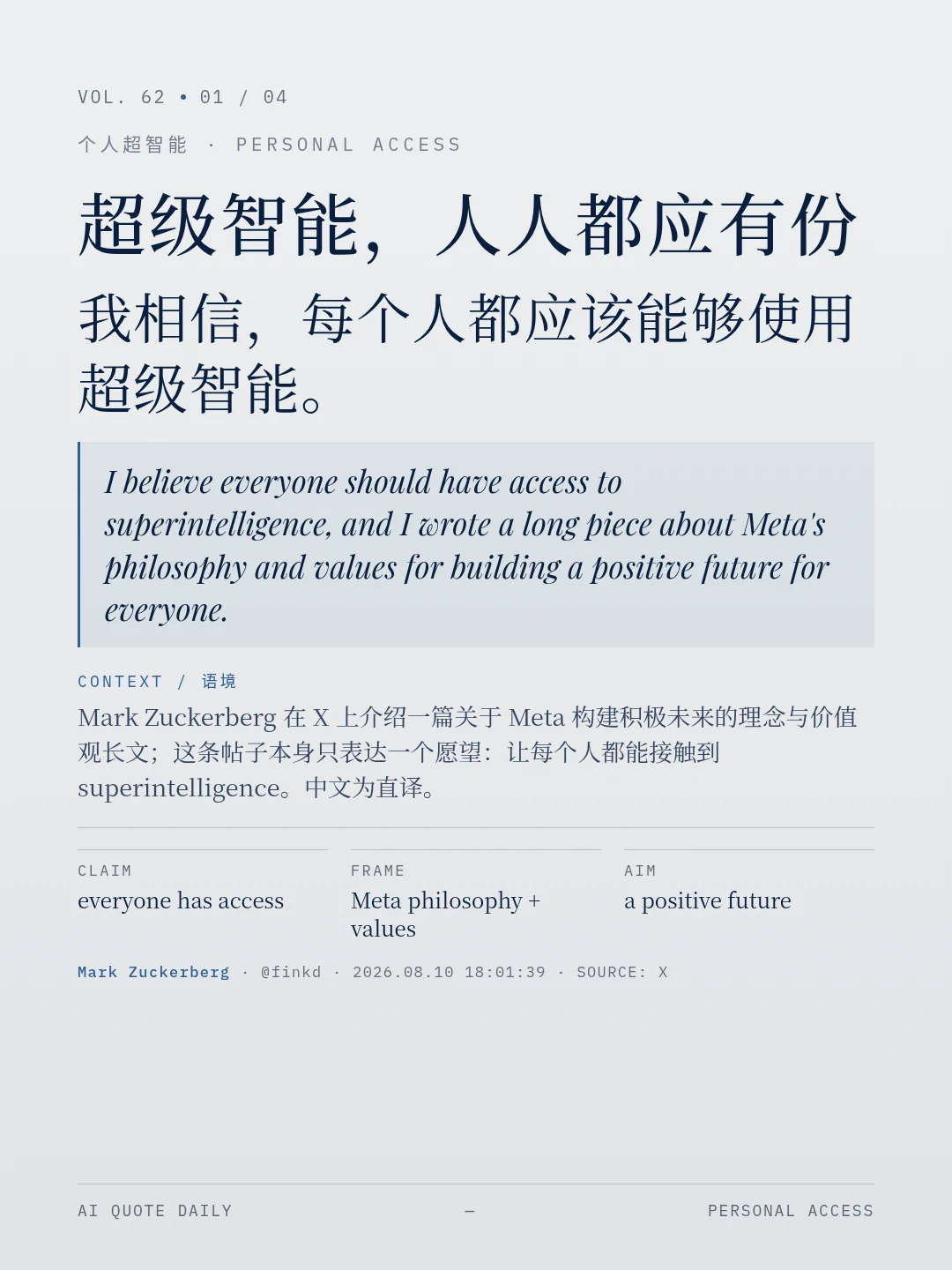
I believe everyone should have access to superintelligence, and I wrote a long piece about Meta's philosophy and values for building a positive future for everyone.
Mark Zuckerberg 在 X 上介绍一篇关于 Meta 理念与价值观的长文,先把讨论放在「每个人都能使用超级智能」这一愿望上。原帖发布于 2026 年 8 月 10 日 18:01(频道时区)。1
Loading content card…
02|再看开放是否落地
Today we're also opening the weights for Muse Glimmer, a great 30B parameter dense model that can run locally. Soon we'll also release the weights for Muse Spark 1.2, our latest foundation model.
同一串帖子里,Mark Zuckerberg 宣布 Muse Glimmer 开放权重,并称它是可本地运行的 30B 稠密模型;他还说 Muse Spark 1.2 的权重随后发布。原帖发布于 2026 年 8 月 10 日 18:03(频道时区)。2
Loading content card…
03|本地部署的条件
we also are releasing muse glimmer, a 30B agentic model with open weights under apache 2.0. muse glimmer can run on 24GB of VRAM without losing agentic reliability.
Alexandr Wang 在发布线程首条帖子里补充了 Muse Glimmer 的三项条件:30B 智能体模型、Apache 2.0 下的开放权重,以及 24GB 显存运行。最后的「without losing agentic reliability」是他的产品判断,不等同于本文独立完成的评测结论。原帖发布于 2026 年 8 月 10 日 18:06(频道时区)。3
Loading content card…
04|最后是术语边界
Sad to see the @nytimes confuse open-source (fully transparent) with open-weight models (less transparent; no access eg to training data). The new Meta model is open-weight but not open-source.
Gary Marcus 针对《纽约时报》把新 Meta 模型称为
open-source 的说法提出纠正。他在这条帖子里把两者的差别落到透明度与训练数据访问;这里保留他的判断,不把这条帖子扩写成法律定义。原帖发布于 2026 年 8 月 10 日 21:26(频道时区)。4Loading content card…
References
- 1
- 2
- 3Alexandr Wang 的 X 原帖
x.com
- 4Gary Marcus 的 X 原帖
x.com
Comments
Sign in to comment.