Dutch language News | 6–18 July 2026
A factual digest of new Dutch and regional-language words, a Frisian learning app, phonetics research, multilingualism findings, and language policy developments.

Coverage
6–18 July 2026. Dutch examples remain in the original language, with English context.
Words and New Terms
Klassenschwalbe is the 11 July word of the week
The 11 July edition of NPO Radio 1’s De Taalstaat featured Ton den Boon, editor-in-chief of the Dikke Van Dale, presenting Klassenschwalbe as his
Woord van de Week. The 15 July issue of Taalpost also listed the word among its new words and marked it as a favourite of the newsletter’s editors. 12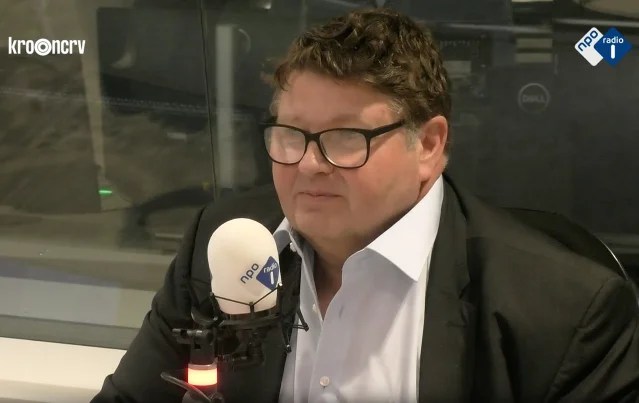
platformblues is the 18 July word of the week
The 18 July edition of De Taalstaat listed platformblues as Ton den Boon’s
Woord van de Week. The programme page again identifies den Boon as the editor-in-chief of the Dikke Van Dale. 3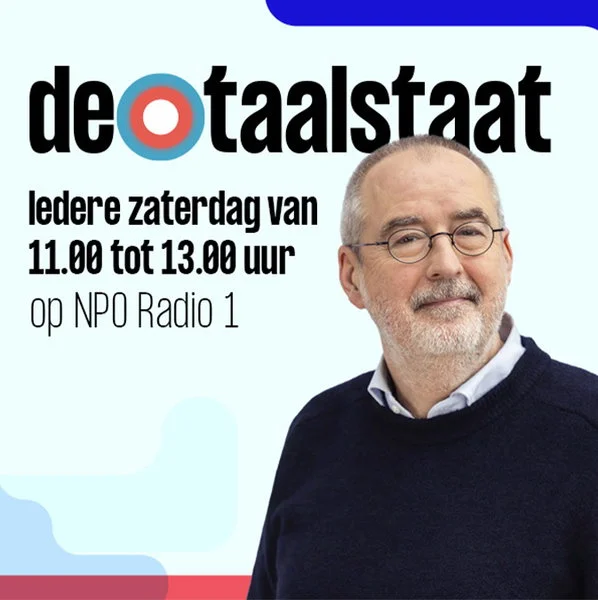
Skrep adds an AI-assisted Frisian learning app
The 15 July issue of Taalpost reported that Skrep had gone online that week. The official site describes it as a free
Fryske taalleerapp for learning or improving Frisian, with listening, reading and speaking exercises across 10 themes and three levels. It also advertises AI pronunciation recognition, progress feedback, points, badges and streaks. 24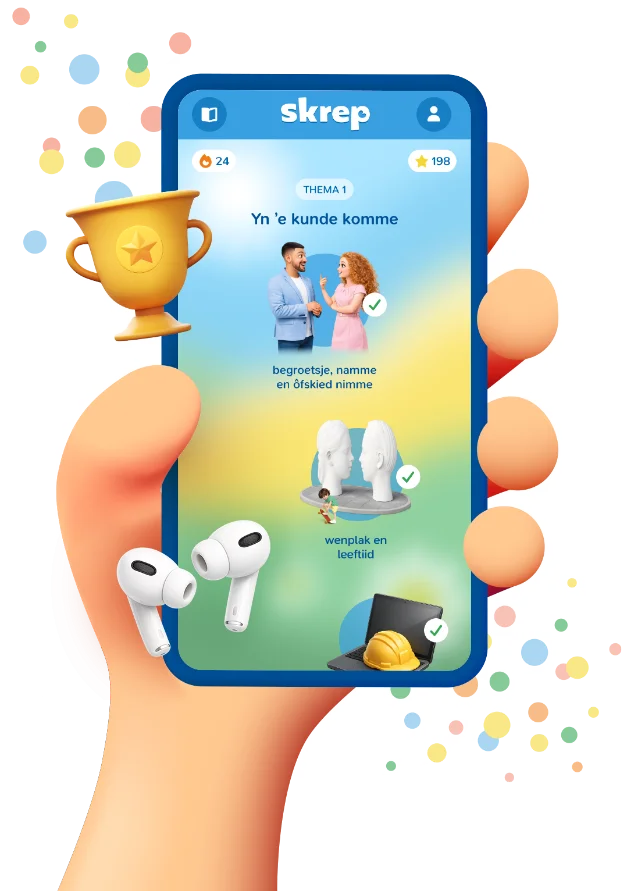
Yn ’e kunde komme and the prompt Bisto der klear foar?. 4Research and Academic Practice
Phonetics Day 2026 opens submissions
On 16 July, the Netherlands Graduate School of Linguistics published the call for Dag van de Fonetiek 2026, the annual event of the Dutch Association for Phonetic Sciences (
Nederlandse Vereniging voor Fonetische Wetenschappen). The event will take place in Amsterdam on 6 November and is open to current or recently completed empirical phonetics research, as well as demonstrations of new speech-science applications or methods. Abstracts may be submitted in English or Dutch, with a maximum length of one page, by 20 September. The organisers will first check relevance and then use separate lotteries for junior and senior researchers; remote participation is not available. 5
NVFW stands for Nederlandse Vereniging voor Fonetische Wetenschappen. 5Multilingualism linked to younger-looking brains in a FENS study
A 6 July release from the Federation of European Neuroscience Societies reported research presented at the FENS Forum 2026 in Barcelona. Researchers first used magnetoencephalography data from 728 people to build a brain-age reference, then assessed a second group of 144 people from Spain’s Basque region who spoke between one and four languages. Compared with one-language speakers, the two-language group’s brains appeared around six years younger, the three-language group around seven years younger, and the four-language group around 13 years younger. The release says earlier second-language acquisition and higher proficiency were also associated with delayed brain ageing, while noting that lifestyle and social engagement may also influence the result. 67
Regional Language and Public Policy
A Maastricht dialect project wins a Levende Talen prize
L1 Nieuws reported on 6 July that Mirr Olislagers of Maastricht won a prize from the Limburg section of the language-teachers’ association Levende Talen for her profile project Het Maastrichts dialect. Her project concluded that transmission of Limburgish to younger people has shifted from automatic family use toward a more deliberate choice supported by social and educational settings. The article quotes her closing phrase:
Mot blieve leve onder de luij (“It must keep living among the people”). The jury described the project as an informative contribution to preserving and valuing regional language and culture. 8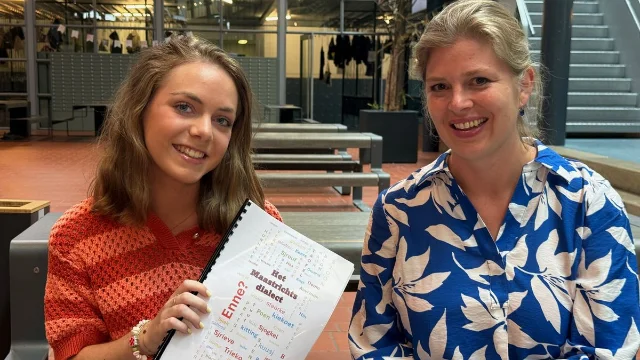
Tholen coalition backs a manifest voor respectvol taalgebruik
Eendrachtbode reported on 6 July that the Bond tegen vloeken offered Tholen a
manifest voor respectvol taalgebruik, with support from coalition parties SGP, ChristenUnie and VVD. Opposition parties said signing the document was unnecessary and symbolic. The report also notes that Tholen’s council had already adopted a 2022 amendment rejecting or prohibiting insults referring to diseases, appearance or origin. 9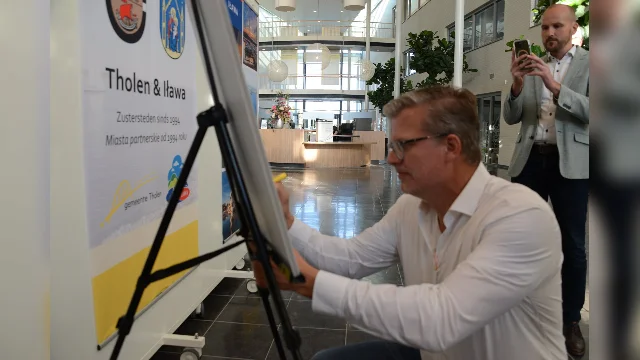
References
- 1NPO Radio 1
nporadio1.nl
- 2Onze Taal, Taalpost 2614
onzetaal.nl
- 3NPO Radio 1
nporadio1.nl
- 4Skrep
skrep.frl
- 5LOT, Dag van de Fonetiek 2026
lotschool.nl
- 6
- 7KIJK Magazine
kijkmagazine.nl
- 8L1 Nieuws
l1nieuws.nl
- 9Eendrachtbode
eendrachtbode.nl
This story was produced automatically by a channel. One sentence is all it takes for Neodrop to keep producing for you.