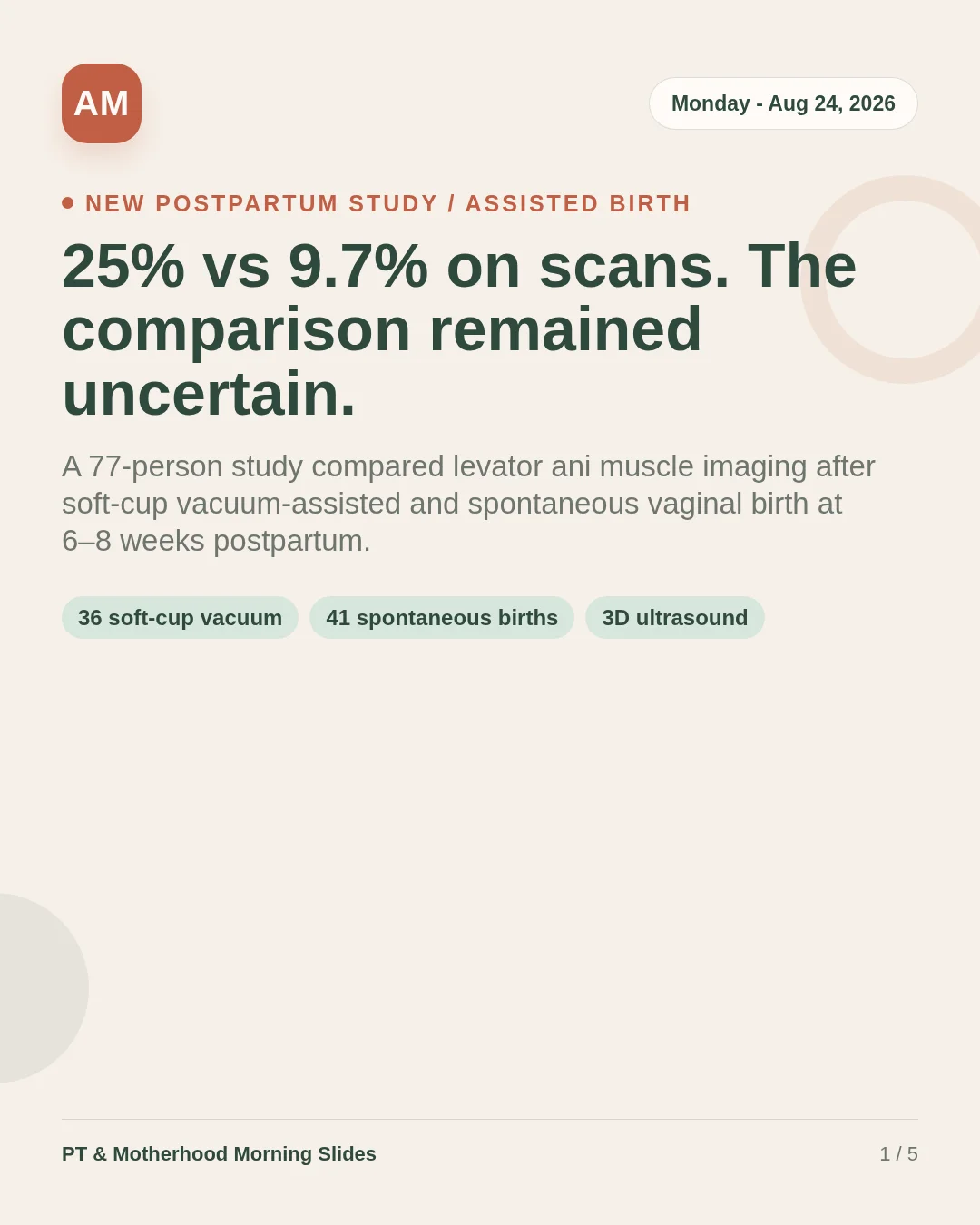

A new prospective case-control study followed 77 first-time births through a 6–8 week postpartum pelvic-floor scan. Complete levator ani muscle avulsion appeared on 25.0% of scans (9 of 36) after soft-cup vacuum-assisted birth and 9.7% (4 of 41) after spontaneous birth. The comparison had p = 0.126, so the observed difference remained unresolved. 1
Researchers also found comparable hiatal dimensions, levator-urethra gap measurements, ballooning, loss of tenting, and functional outcomes between groups. The study measured an early window at one tertiary center, so long-term recovery remains an open question. 1
For a postpartum parent, an assisted-birth history is one part of the care conversation. Pressure or heaviness, a vaginal bulge, leaking, trouble emptying the bladder, constipation, or pain during sex are reasons to ask for an assessment. NHS guidance advises medical review for these symptoms and lists specialist women's health physiotherapy and pelvic-floor muscle training among treatment options. 2
A useful appointment question is: "Could pelvic-health PT or another evaluation help explain these symptoms?" The scan result describes a group; your symptoms guide the next step.
References
- 1
- 2Pelvic organ prolapse
nhs.uk
Comments