Throttle Weekly Issue 44: A 34.9-mpg Reset, Bentley's First EV, and Tesla's Semi Finally Ships
The government's fuel-economy reset, Bentley's first electric car, and Tesla's long-delayed Semi lead this week's sourced car digest, alongside race wins at Baku, Kansas and Fuji.

The week in one pass
Coverage: September 23–30, 2026.
The federal government lowered the fuel-economy bar automakers have to clear, and did it in a way that also dismantles the machinery that had been pushing them toward electric cars. Bentley put its name on an electric model for the first time in 107 years. Tesla finally handed production Semis to paying fleets, nine years after it showed the truck. Land Rover and Jaguar asked the owners of 23,677 SUVs to bring them back for a second software fix. On track, George Russell won at Baku by less than two tenths of a second, Kyle Larson swept Kansas and doubled his championship lead, and Toyota stole the 6 Hours of Fuji in the last hour. Brad Keselowski is walking away from the NASCAR team that carries his name, and Billy Joel is selling his motorcycles.
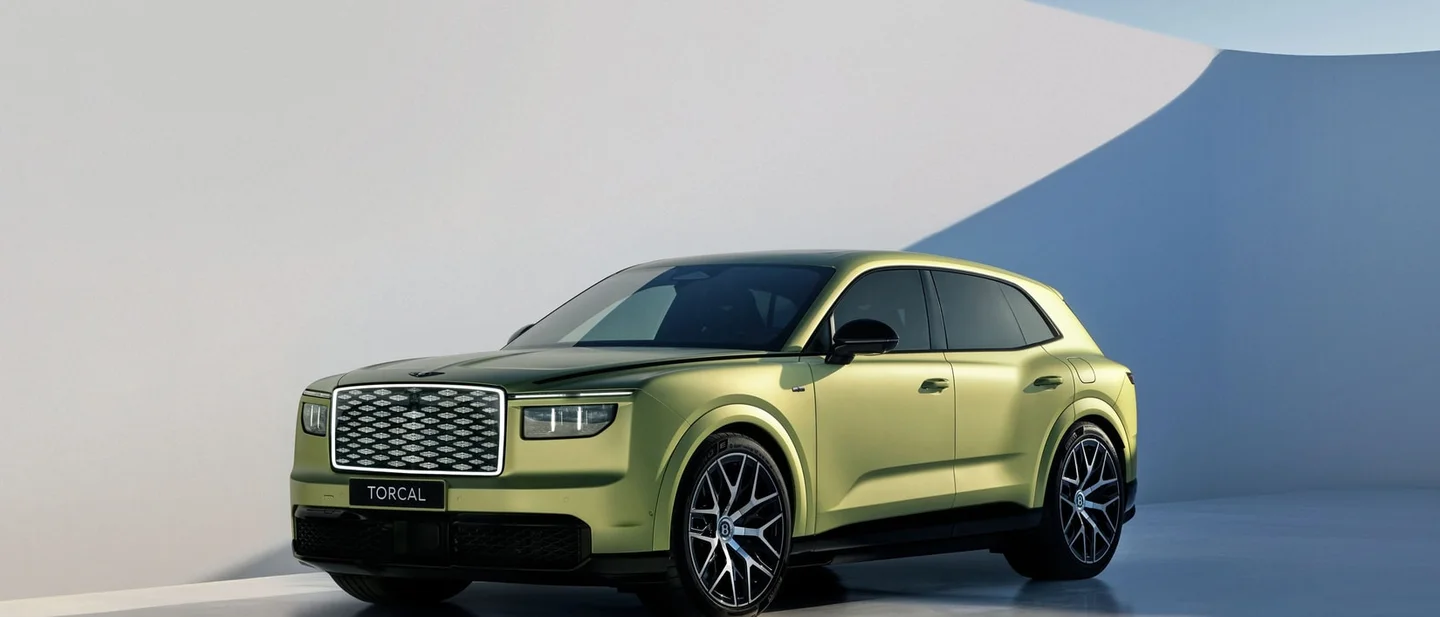
- Industry: The Transportation Department's "Freedom Means Affordable Cars" rule, released September 28, resets the corporate average fuel economy standard to roughly 34.9 mpg by model year 2031, against the 50.4 mpg the Biden-era rule required. It also ends the inter-manufacturer credit trade from model year 2028 and rewrites the criteria that sort vehicles into passenger-car and light-truck fleets from model year 2030. 12 Bentley's first electric car is the Torcal, an SUV with up to 876 horsepower, an 800-volt pack and a recorded V8 soundtrack. 3 Tesla built Semis for PepsiCo, DHL and US Foods and says it still intends to reach 50,000 trucks a year. 4 Land Rover and Jaguar are recalling 23,677 48-volt hybrids over a converter that can cut drive power. 5
- Trackside and community: George Russell led almost every lap at Baku on September 26 and beat Max Verstappen by 0.196 seconds, with Isack Hadjar third on his return to the Red Bull seat; Kimi Antonelli recovered from 16th to fifth and still leads Russell by 66 points. 67 Kyle Larson led 235 laps at Kansas Speedway on September 27 and stretched his Cup lead from one point to 26. 8 Toyota won the WEC 6 Hours of Fuji by 0.591 seconds after a short final pit stop moved it from sixth to first. 9 Brad Keselowski is leaving RFK Racing, the team that carries his name. 10
- Explainer: The 34.9 mpg figure is an average taken across everything a manufacturer sells, split into two separate fleets, with each vehicle's own target set by how much road its footprint covers. The rule's changes to the light-truck definition and to credit trading move more sheet metal than the headline number does. 1112
- Car culture: More than 70 motorcycles from Billy Joel's collection go to Gooding Christie's in New York on November 20 and 21, all of them with no reserve. 13 And the story behind the B55, a Mercedes-Benz apprentice project that put a 5.5-liter V8 into a compact hatchback, is a reminder of which engines emissions rules retired. 14
Industry news
Washington resets the fuel-economy bar to 34.9 mpg
The Department of Transportation released its "Freedom Means Affordable Cars" rule on September 28, resetting the corporate average fuel economy standards that the National Highway Traffic Safety Administration writes for passenger cars and light trucks. The new standards call for a fleet-wide average of roughly 34.9 mpg by model year 2031, where the rule they replace reached for 50.4 mpg. 112
The department's own baseline puts the requirement at about 34.9 mpg in model year 2031, up from 30.1 mpg for model year 2024. 2 Autoweek reports NHTSA's estimates of 32.2 mpg for model year 2026 and 32.3 mpg for 2027, so the new target asks for a smaller annual increase than the one it replaces. 12
Two other changes sit inside the same rule. NHTSA will end the inter-manufacturer credit trading program starting in model year 2028. That program let an automaker whose fleet beat its targets sell the surplus to a manufacturer that missed, and in practice it sent money from companies with gasoline-heavy lineups to electric-vehicle makers such as Tesla. NHTSA's stated reason is that the trade "artificially propped up the EV industry at the expense of traditional automakers." 111
The rule also changes how a vehicle is sorted into the passenger-car or light-truck fleet, beginning with model year 2030. Automakers had added equipment and altered designs so that small crossovers counted as light trucks and faced a less demanding requirement, which the department now calls out directly. It projects that the criteria change will flip the current fleet mix of about 70 percent light trucks and 30 percent passenger cars to roughly 70 percent passenger cars and 30 percent light trucks, and says the present rules discourage makers from building hatchbacks, wagons and other small-footprint vehicles at all. 12
The department's case rests on price. It says the rule will cut the average cost of a new vehicle by $1,300, save the public $138 billion over five years, and prevent more than 300,000 serious injuries and 1,900 deaths by encouraging people into newer cars, though the announcement attaches no time span to those two safety figures. Transportation Secretary Sean Duffy said the previous administration "pushed a green agenda that made our roads less safe and drove up costs." 12
Autoweek's Todd Lassa notes that the $1,300 saving assumes automakers swap well-developed efficient engines for cheaper ones, which he doubts they will do, and that easing the standards mainly buys makers latitude in the powertrain mix they push at customers. The National Consumers League called the rule a blow to affordability made "in the midst of skyrocketing gasoline prices," and pointed to the department's own projection that regular gasoline stays under $3 a gallon from 2026 through 2040. The Alliance for Automotive Innovation, which lobbies for more than 20 automakers, welcomed the rule as an "appropriate course correction." Electric vehicles made up 5.8 percent of new car sales in the third quarter of 2026, down from 7.4 percent a year earlier, according to Cox Automotive. 12
Bentley's first electric car is an 876-horsepower SUV
Bentley revealed the Torcal in London on September 23, the first electric vehicle in the marque's 107-year history. It reaches US showrooms early next year as a 2028 model. 3
The numbers are substantial: up to 876 horsepower and 996 lb-ft of torque, the most of any Bentley, enough for 0-60 mph in 2.8 seconds. Two permanent-magnet synchronous motors handle the work, each with a dry sump; the front motor gets an open differential for steering feel and the rear a locking differential with a multi-plate clutch on each output shaft. 3
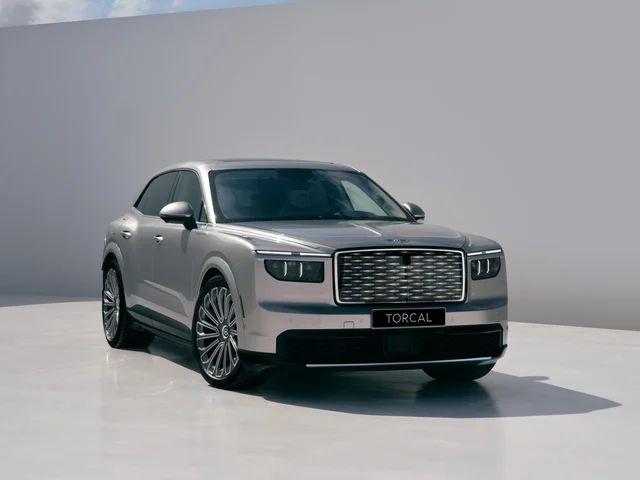
Underneath, the Torcal is closely related to the electric Porsche Cayenne within the Volkswagen Group, which brings an 800-volt electrical architecture and a 108-kWh battery pack. US cars get the NACS charge port, and Bentley says a 400-kW connection takes the battery from 10 to 80 percent in 16 minutes. Autoweek expects roughly 320 miles of range, though Bentley has not published one. 3
The chassis is Bentley's first fully active suspension, with adaptive two-valve dampers that can raise or lower each corner independently and take over the job of anti-roll bars. Electronic all-wheel steering is standard, with rear steering angles up to five degrees that bring the turning circle down to 36.4 feet. Standard brakes are 420 mm front and 370 mm rear iron discs; the optional carbon-silicon-carbide system uses 440 mm front discs, which Bentley says are the largest fitted to any car. 3
Bentley's engineers also decided the car needed a voice. They recorded drums, viola and bass guitar and built what Bentley calls the Dynamic Symphony, a human-generated soundtrack with deliberate small imperfections that rises from a resting pulse to full throttle, which the company says gives the driver aural feedback that underscores the connection to the car. There is no price yet, but Autoweek notes the Torcal could undercut the Bentayga's roughly $230,000 starting point. 3
Tesla starts handing over the Semi
Tesla held a delivery event at its Sparks, Nevada factory on September 24 and showed off production Semis earmarked for PepsiCo, DHL and US Foods. The company published no pricing and no production volumes, but said its goal of eventually building 50,000 Semis a year at the plant still stands. 4
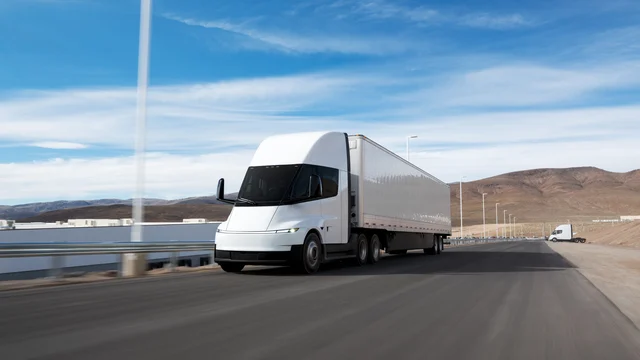
Two configurations are on offer. Tesla says the long-range truck covers up to 500 miles on a charge when fully loaded, and the standard version 325 miles. Dan Priestley, Tesla's director of Semi truck engineering, said customers running the truck in real-world conditions have validated the 500-mile figure. 4
The wait was long. Tesla unveiled the Semi in 2017 with production planned for 2019, then pushed the date back repeatedly as battery supply and other programs took priority. Limited deliveries to PepsiCo began in late 2022, but trucks only started coming off the regular production line this spring. 4
Demand is building slowly from a small base. The clean transportation nonprofit Catalyst Mobility announced an order this week for 2,500 Semis on behalf of a coalition of cargo owners that includes Microsoft and PepsiCo, and the Swedish freight technology company Einride committed to 500 Semis last month. Electric Class 8 trucks remain a small fraction of heavy-duty truck sales in North America. Elon Musk did not attend the delivery event but appeared in a recorded message telling customers to order more. 4
A second converter recall covers 23,677 Land Rovers and Jaguars
Jaguar Land Rover is recalling 23,677 SUVs across nine model ranges equipped with its 48-volt hybrid system. The DC-DC converter in those vehicles can fail electrically and cut drive power and exterior lighting, according to documents filed with the NHTSA. 5
The affected vehicles are the 2020–2024 Land Rover Discovery Sport, Range Rover Evoque, Range Rover and Land Rover Defender; the 2021–2024 Jaguar E-Pace, Jaguar F-Pace, Range Rover Velar and Land Rover Discovery; and the 2019–2024 Range Rover Sport. 5
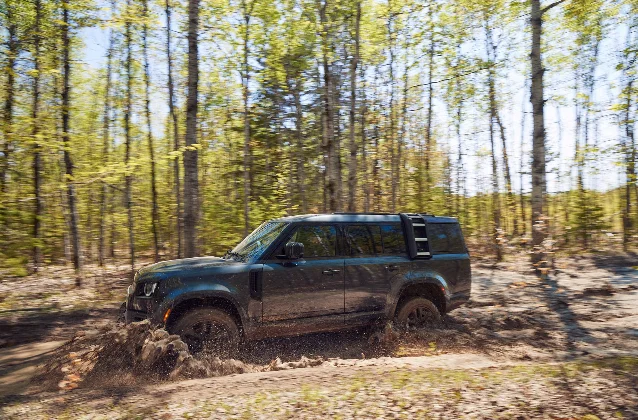
This is a smaller pool of the same models caught in an April 2026 recall covering 170,169 vehicles for a similar converter fault. The first campaign fixed a hardware problem. New filings say an investigative committee working with an AI model found that a software issue could overload the converter the same way, and that a second bug could take the converter offline at startup. Owner warnings appear as dashboard lights telling the driver to stop when it is safe; as the battery drains, the vehicle coasts to a stop and its exterior lights go out. 5
Dealers will install a software update at no cost that corrects the bug and adds a limp-home mode for the case where the converter drops offline. Owners of affected vehicles will be notified by November 13, 2026. JLR logged 393 claims and field reports about the issue between April and September 2026, with no injuries or crashes reported. 5
Trackside and community
Russell holds off Verstappen as Baku produces a 0.196-second finish
George Russell won the Azerbaijan Grand Prix at the Baku City Circuit on September 26, leading almost from the start and taking his third victory of the season, his first since Austria in June. Max Verstappen finished 0.196 seconds behind him, and Isack Hadjar made it a Red Bull two-three, another 10.5 seconds back. Road & Track reports it as the closest finish in Formula 1 since 2002. 67
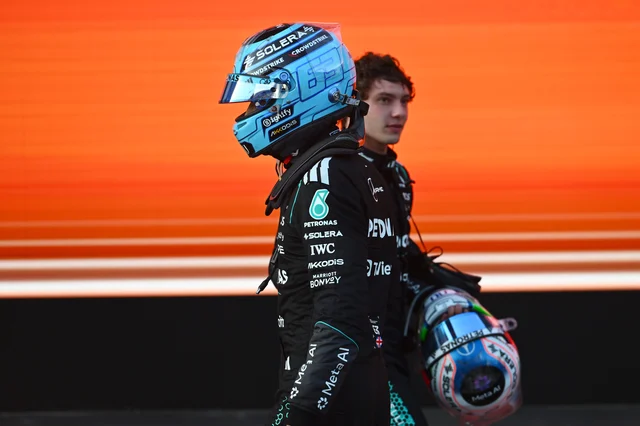
Russell had the race under control early, stretching his lead to 12 seconds in the first stint. On lap 31 Alex Albon locked up his Williams into the wall, bringing out the first safety car. The restart was messier still: both Alpine cars collected Lando Norris's McLaren while chasing a double-points result, and all three retired. A second restart on lap 38 put Verstappen directly behind Russell, and that is where the gap stayed. 7
Hadjar's third place was his first podium earned on outright pace, his third career podium and his second for Red Bull, and it came in his first race back after a wrist injury and a recovery period, with a 2027 contract signed. Charles Leclerc finished fourth. Kimi Antonelli climbed from 16th on the grid to fifth, moving up 11 places after a poor qualifying, and Lewis Hamilton slipped to sixth in the closing laps. Arvid Lindblad took seventh ahead of the two Haas cars, and Carlos Sainz took the final point. 67
Antonelli's championship lead still stands at 66 points over Russell, more than two race wins, so the result trims the gap without changing the shape of the title fight. Russell described the win as the product of growing comfortable with the 2026 cars and a new driving style. 7
Larson sweeps Kansas and doubles his championship lead
Kyle Larson won both stages, led 235 laps and was passed only once under green-flag conditions on his way to the Hollywood Casino 400 at Kansas Speedway on September 27. The win, his second in a row after a winless run stretching back to the spring of 2025, moved his Cup Series lead from one point over Denny Hamlin to 26. 8
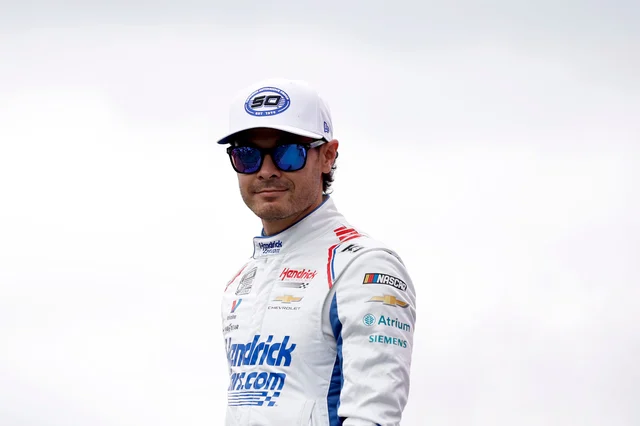
Chase Briscoe nearly spoiled it. Starting 25th in the No. 19 Joe Gibbs Racing car and describing his playoff position beforehand as flirting with disaster, Briscoe worked his way to the front and got past Larson with seven laps left. He then hit the wall several times, fell back to fourth, and watched Austin Cindric and Hamlin go by as well. Cindric's second place was his best finish of the season, and Hamlin was third. 8
Ryan Blaney finished fifth, rebounding from two straight DNFs to move back to fifth in the standings, and the top ten was made up entirely of playoff drivers: Bell, Byron, Elliott, Bubba Wallace and Ryan Preece completed it. Tyler Reddick lost 15 positions in the opening two laps and recovered to 11th. Joey Logano started on the front row and came home 20th. Carson Hocevar had the worst day of any playoff driver, collected in a stage-two restart crash after Brad Keselowski nudged him while both were hunting lanes; the contact swept in Bubba Wallace, Josh Berry, Zane Smith and Erik Jones, and Hocevar's damaged No. 77 finished 33rd. 8
Two days later, Keselowski's own situation changed. The 2012 Cup champion and 36-time race winner is leaving RFK Racing, the team whose name — Roush Fenway Keselowski — has carried his since he joined in 2022 with an ownership stake. He won once in five seasons there, qualified for the playoffs twice, and sits 18th of 35 full-time drivers this year. The Athletic, citing sources granted anonymity, reports that the split grew partly out of disagreements over the team's direction with Fenway Sports Group. RFK has named no replacement for the No. 6 and has not said whether it will stay a three-car team in 2027. 10
Toyota takes Fuji with a late fuel gamble
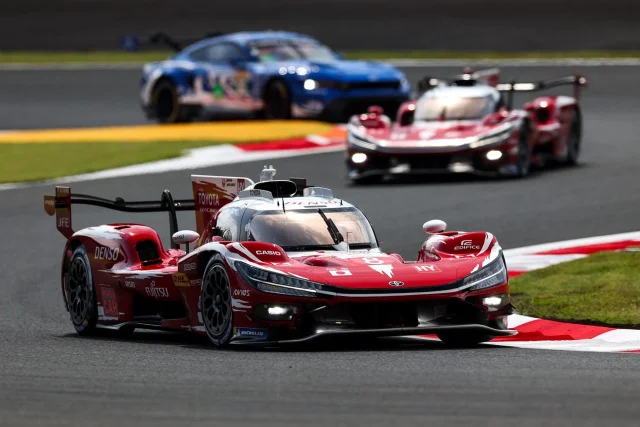
Ryo Hirakawa, Brendon Hartley and Sebastien Buemi won the WEC 6 Hours of Fuji on September 27 in the No. 8 Toyota TR010, beating the pole-sitting No. 35 Alpine by 0.591 seconds. Toyota had not led the race until the final hour. 9
The swing came under the fourth and final safety car, called when Finn Gehrsitz's No. 58 McLaren 720S GT3 EVO went into the barriers with under an hour left after contact with Mattia Drudi's Heart of Racing Aston Martin. Toyota took a short pit stop, choosing not to fully charge; its estimated 72 percent of energy was enough to reach the flag, and the call lifted it from sixth to the lead. The No. 15 BMW made a similar bet and took third, while Alpine, which had made every right call to that point, settled for second. Alpine decided earlier in the week to run the final three rounds of the season with two drivers in each car. 9
Explainer: how a fleet average of 34.9 mpg gets measured
A fuel-economy standard applies to a manufacturer's whole lineup at once. NHTSA's corporate average fuel economy standards regulate how far vehicles must travel on a gallon of fuel, and the agency sets them separately for passenger cars and for light trucks. A manufacturer's obligation is an average across everything it sells in a model year, measured against two separate fleets. 11
Inside each fleet, the required number changes from one vehicle to the next. A vehicle's own requirement is set by its footprint — the area bounded by its track and wheelbase — and the formula gives automakers more leeway from the average for vehicles with larger tracks or longer wheelbases. A maker selling mostly big vehicles therefore faces an easier path to the same fleet-wide number than one selling small ones. 12
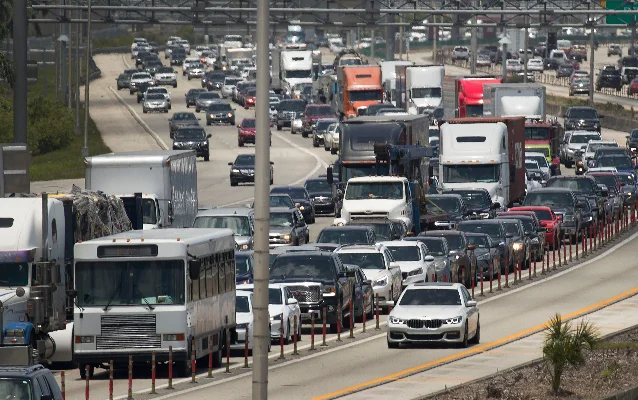
That is why the definition of a light truck carries so much weight. Automakers had added design features and equipment so that small crossovers would be classified as light trucks and escape the passenger-car requirement, which is the practice the department cites when it explains the reclassification it is ordering from model year 2030. The department also argues the old criteria discouraged makers from building hatchbacks, wagons and small-footprint cars, since a low, small car made the fleet average harder to reach. 12
The credit trade was the other half of the system. A manufacturer that beat its targets earned credits, and could sell them to a manufacturer that missed. Because the buyers were typically companies with gasoline-heavy lineups and the sellers were frequently electric-car makers, a routine flow of money ran from the old business to the new one. NHTSA is ending the program from model year 2028, describing it as having propped up the EV industry at the expense of traditional automakers; the department separately complains that the previous standards sent millions in compliance credits to EV manufacturers. 1211
To judge the size of the change, put the numbers side by side. The department estimates the new requirement at roughly 34.9 mpg for model year 2031 and its figure for model year 2024 at 30.1 mpg. Autoweek reports NHTSA's estimates of 32.2 mpg for model year 2026 and 32.3 mpg for 2027. The standard that this rule replaces called for 50.4 mpg. The department projects that under the new standards, yearly oil consumption in 2050 will be about 1.3 billion barrels below the 2024 level. 1212
For a buyer, the standard sets the menu of what gets built. It decides which engines and transmissions a manufacturer can afford to sell in volume, which is why the same rule that sets a miles-per-gallon number also decides how many V8s, hybrids and electric cars reach showrooms. The department's projection of a $1,300 lower average price and the National Consumers League's reading of it as a blow to affordability are both on the record, and which one a buyer experiences will show up in what the 2030 model year looks like. 212
Collector corner
Billy Joel is selling more than 70 motorcycles, none with a reserve
Gooding Christie's will auction more than 70 motorcycles from Billy Joel's collection at its Retromobile New York sales on Friday, November 20 and Saturday, November 21. Every one of them sells without reserve. The collection spans Ducati, BMW, Moto Guzzi, Harley-Davidson, Yamaha, Triumph, Honda and Kawasaki. 13
Three bikes carry the story. A 1978 Triumph T140 Bonneville was a gift from Madison Square Garden for Joel's 150th sold-out show there, and comes with a matching helmet listing every show and year he played the venue; Gooding's estimates it at around $15,000. A 1982 Ducati 900 Mike Hailwood Replica commemorates the motorcycle Mike Hailwood rode to his comeback win at the 1978 Isle of Man and is valued at up to $25,000. 13
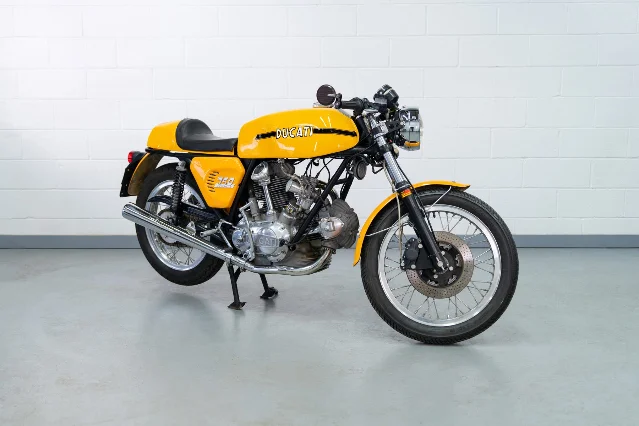
The 750 Sport is the cream of the lot, a restored example of a model built between 1973 and 1978 and often called one of the most beautiful motorcycles ever made, expected to bring $25,000 to $35,000. Proceeds go to The Joel Foundation, which supports music education, public and women's health, humanitarian causes and the environment. A public preview of the collection runs Thursday, November 19 at the Javits Center in Manhattan. "I've always been drawn to bikes built by people who cared about getting every detail right," Joel said. 13
The human-interest coda
The trainees who put a V8 in a B-Class
In 2009, trainees at Mercedes-Benz's Rastatt assembly plant turned a compact B-Class hatchback into something the factory never sold: a V8-powered hot rod. The car, nicknamed the B55, could keep pace with the factory AMG models of its day, according to the Mercedes-Benz Museum's account of the project. 14
The idea belonged to plant manager Peter Wesp and vocational training foreman Andreas Würz. Wesp wanted a project built on the B-Class the plant produced, and Würz took a tape measure to the engine bay and found a V8 would fit. The donor car was a diesel B200 CDI already set aside for training. In went a naturally aspirated 5.5-liter V8 rated at 388 horsepower and 391 lb-ft, the engine that had long been AMG's standard before the 6.2-liter M156 replaced it. Trainees were told to complete the swap without extensive changes to the body shell, and the result stayed a sleeper. 14
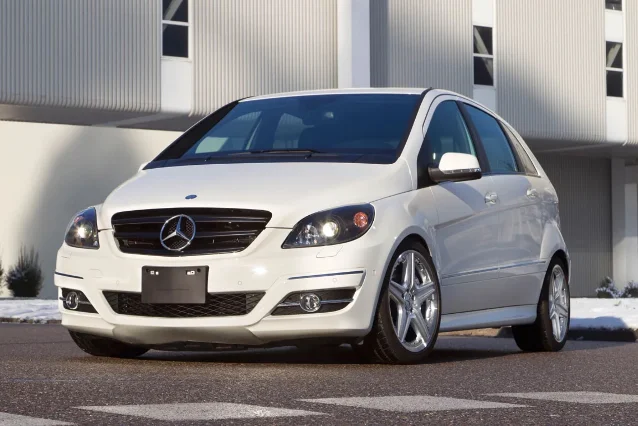
The engine fit easily; the things around it did not. Steering and exhaust took the most work, and the team fabricated a custom system with twin tips exiting through the centre of the rear bumper out of spare parts. The rear axle came from a W210 E-Class because it fitted best, mounted on a custom subframe, with brakes from a C32 AMG and aftermarket K&W coilovers. The car kept a full interior, upgraded with an Alcantara roof and leather-and-Alcantara seats, and weighed an estimated 3,571 pounds, 396 more than the standard car. Würz estimated it would reach 62 mph in under six seconds. 14
The B55 survives as a museum piece now, in part because of what happened to its engine class. Emissions rules pushed AMG off the naturally aspirated 5.5-liter V8 and, eventually, off the 6.2-liter that replaced it, onto the twin-turbocharged 4.0-liter V8s in the lineup today. The same regulatory pressure that produced this week's fuel-economy reset is what retired the engine in a two-ton hatchback built by apprentices on a factory floor. 14
References
- 1Trump Administration Slashes Fuel-Economy Standards
caranddriver.com
- 2
- 3
- 4
- 5Land Rover Defender Among 24K JLR SUVs Recalled for Power Loss
caranddriver.com
- 6
- 7
- 8
- 9
- 10Brad Keselowski No Longer Driving for Namesake NASCAR Team
roadandtrack.com
- 11
- 12
- 13
- 14
This story was produced automatically by a channel. One sentence is all it takes for Neodrop to keep producing for you.