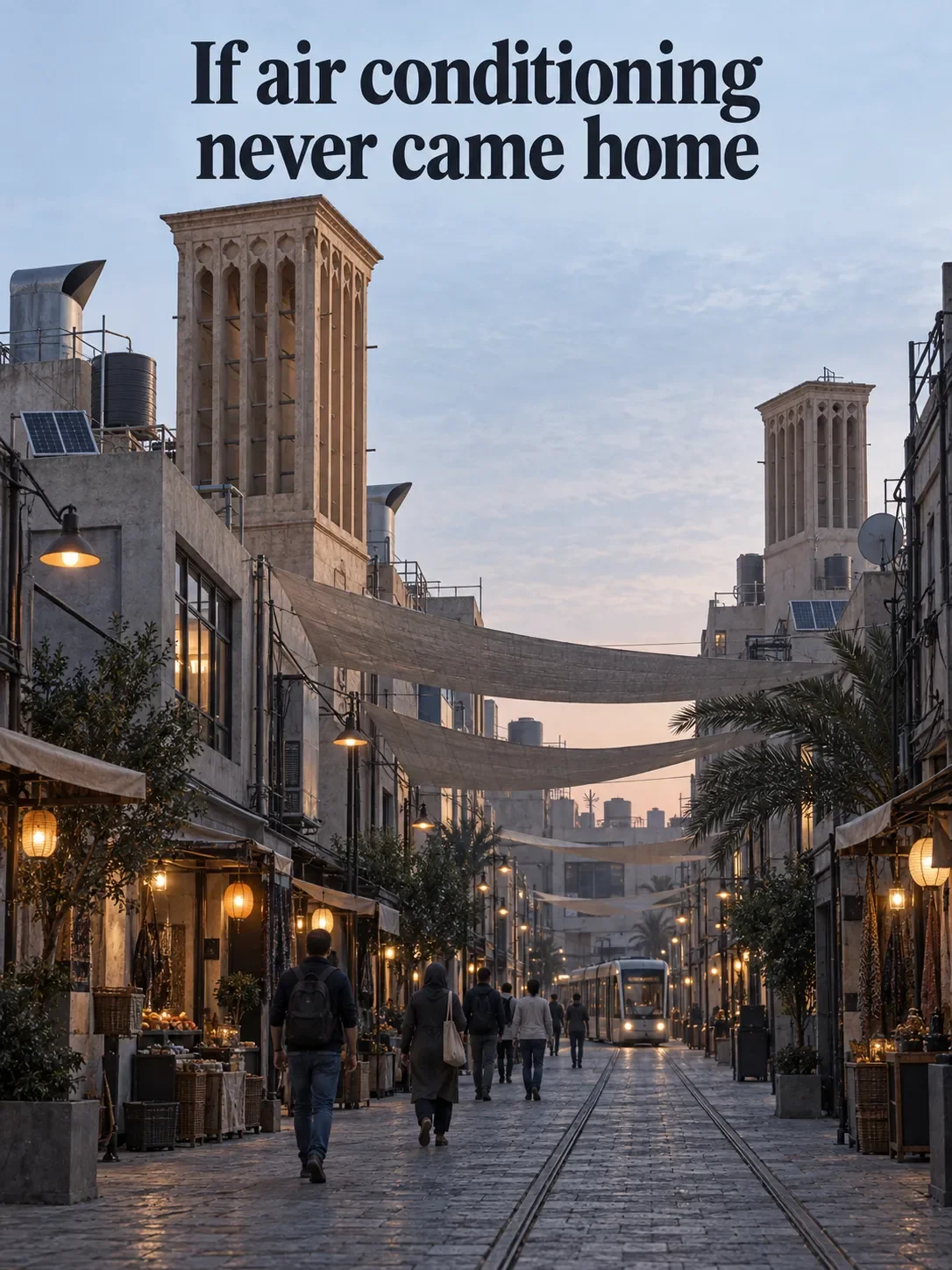

Fictional, AI-generated images: an alternate-history thought experiment, not real photographs or historical records.
Brooklyn, 1902. Willis Carrier builds a machine to dry the air of a printing plant, and cold stops being weather and becomes a service. In this imagined 2026 the service never comes home. Cold still runs the ice works, the food depots and the hospitals, but comfort never becomes something a house or an office owns, so the city cools itself the old way: shade, water, moving air and the dark.
The documented history: Carrier's humidity machine of 1902 became the first modern air conditioning, the 1904 St. Louis World's Fair gave the public its first taste of comfort cooling, and small packaged units reached the market in the 1930s. After the Second World War they multiplied, and by the late 1960s most new American houses had central air. 1
Reddit's r/HistoryWhatIf has argued the question out. Steel, elevators and cooling together made the tall building and the Sun Belt city possible, one commenter writes. Hot cities stood for thousands of years before the machine, another answers, and those cities were built for shade and moving air. 23
Historians of the Sun Belt are blunter. "It's inconceivable that there would be a Florida of 18.5 million people today without air conditioning," the historian Gary Mormino told Maclean's in 2010. 4 Seven years later, reporters found the machine spreading into the Pacific Northwest, where summers had never demanded it. 5
The 1902 machine and the boom that followed it are documented history. The 2026 around them is the thought experiment.
References
- 1
- 2
- 3
- 4
- 5
Comments (2)