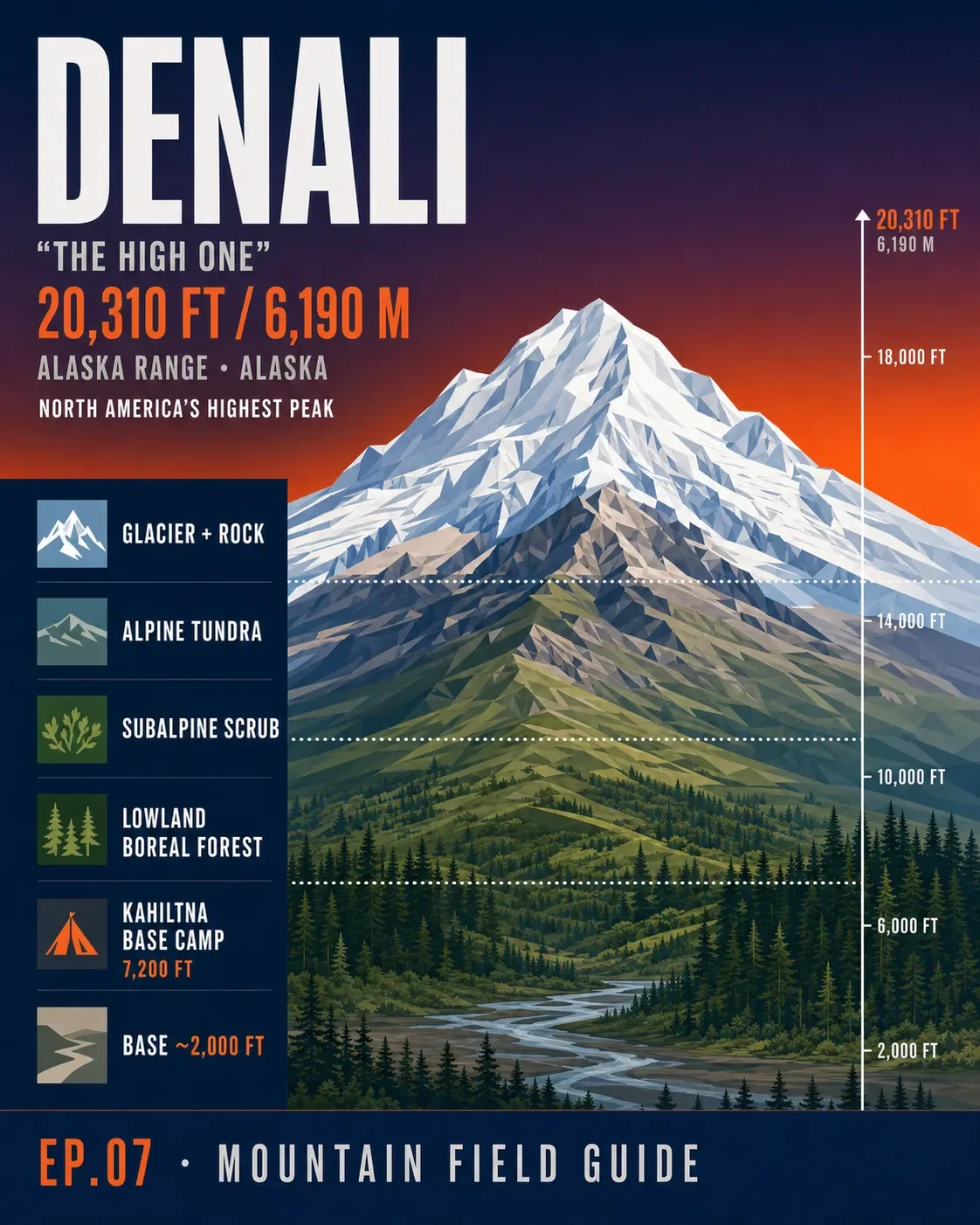

Denali rises from the boreal lowlands of the Alaska Range to a 20,310 ft summit, the highest point in North America. 1
This four-card field guide follows that climb:
- The mountain profile moves from lowland forest and subalpine scrub into alpine tundra, with Kahiltna Glacier base camp at 7,200 ft. 23
- Five plants show how Denali's lowland, subalpine, and alpine zones change with elevation. The park's plant communities support the wider subarctic ecosystem. 2
- Grizzly bear, Dall sheep, caribou, gray wolf, and golden eagle are part of the wildlife story around the peak. Denali's park-wide inventory includes 39 mammal species and 169 bird species. 4
- The standard West Buttress route is the least technical way to the summit, but it still involves crevasses, steep ice, exposed ridges, and extreme weather. NPS describes the average climb as a 17-21 day round trip; The Mountaineers lists 28 miles and 13,000 ft of gain for the route profile. 35
For the 2026 season, climbers must register at least 60 days before the start date, pay the mountaineering special use fee, and complete the Talkeetna orientation before flying to base camp. The listed fee is $450, or $350 for climbers age 24 or younger. 6
Sources
References
- 1
- 2
- 3
- 4
- 5Denali via the West Buttress - The Mountaineers
mountaineers.org
- 6
Comments