

01|AI 仍然有缺口
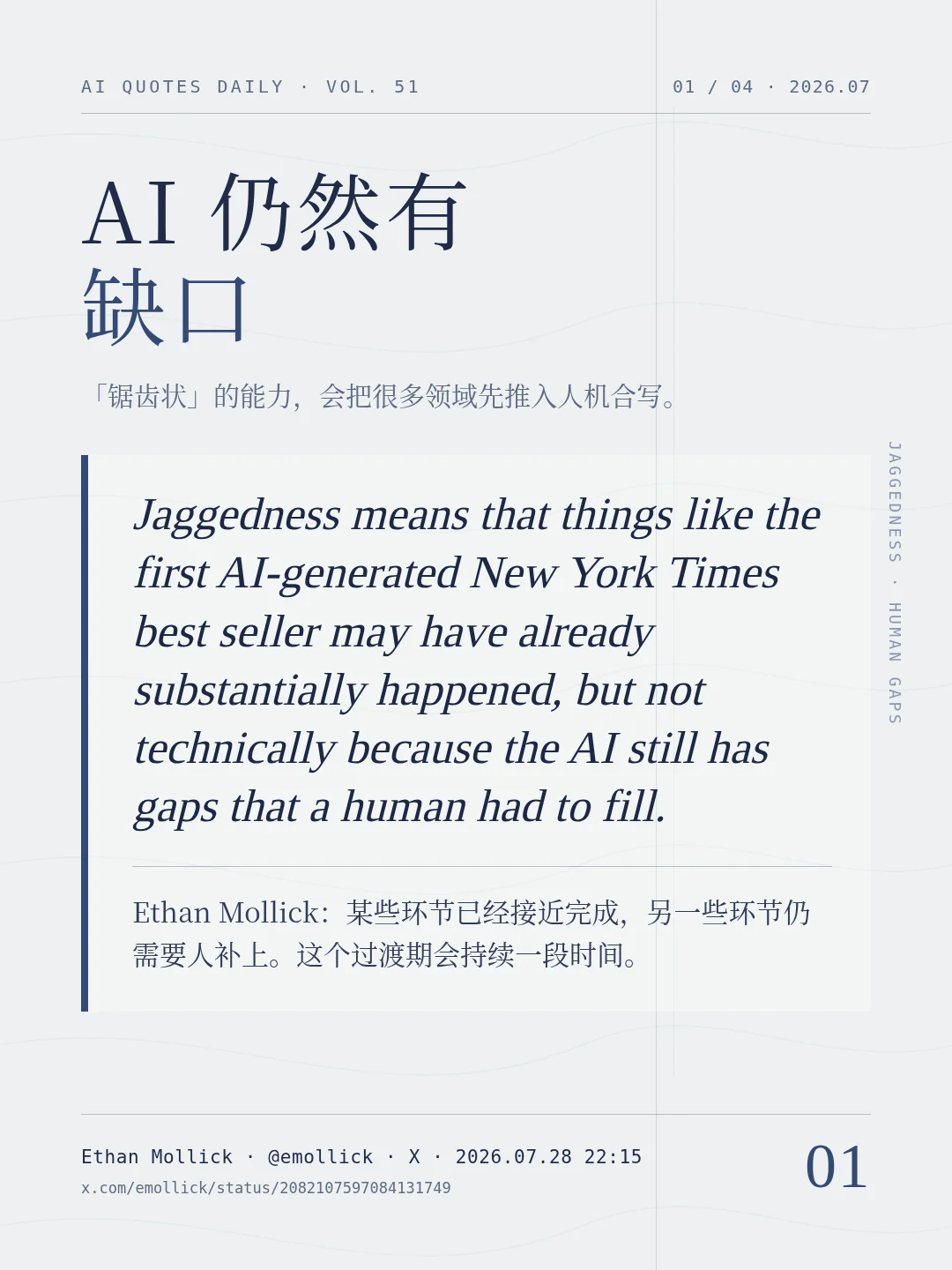
Ethan Mollick 用「jaggedness」描述 AI 的能力分布:有些环节已经足够强,有些环节仍需要人补上。他举的例子是,第一本「AI 生成的《纽约时报》畅销书」也许在实质上已经出现,只是还不能算完全由 AI 独立完成。1
Jaggedness means that things like the first AI-generated New York Times best seller may have already substantially happened, but not technically because the AI still has gaps that a human had to fill. This is probably going to last for a bit in many fields (see math proofs, etc)
Loading content card…
02|失败也要公开
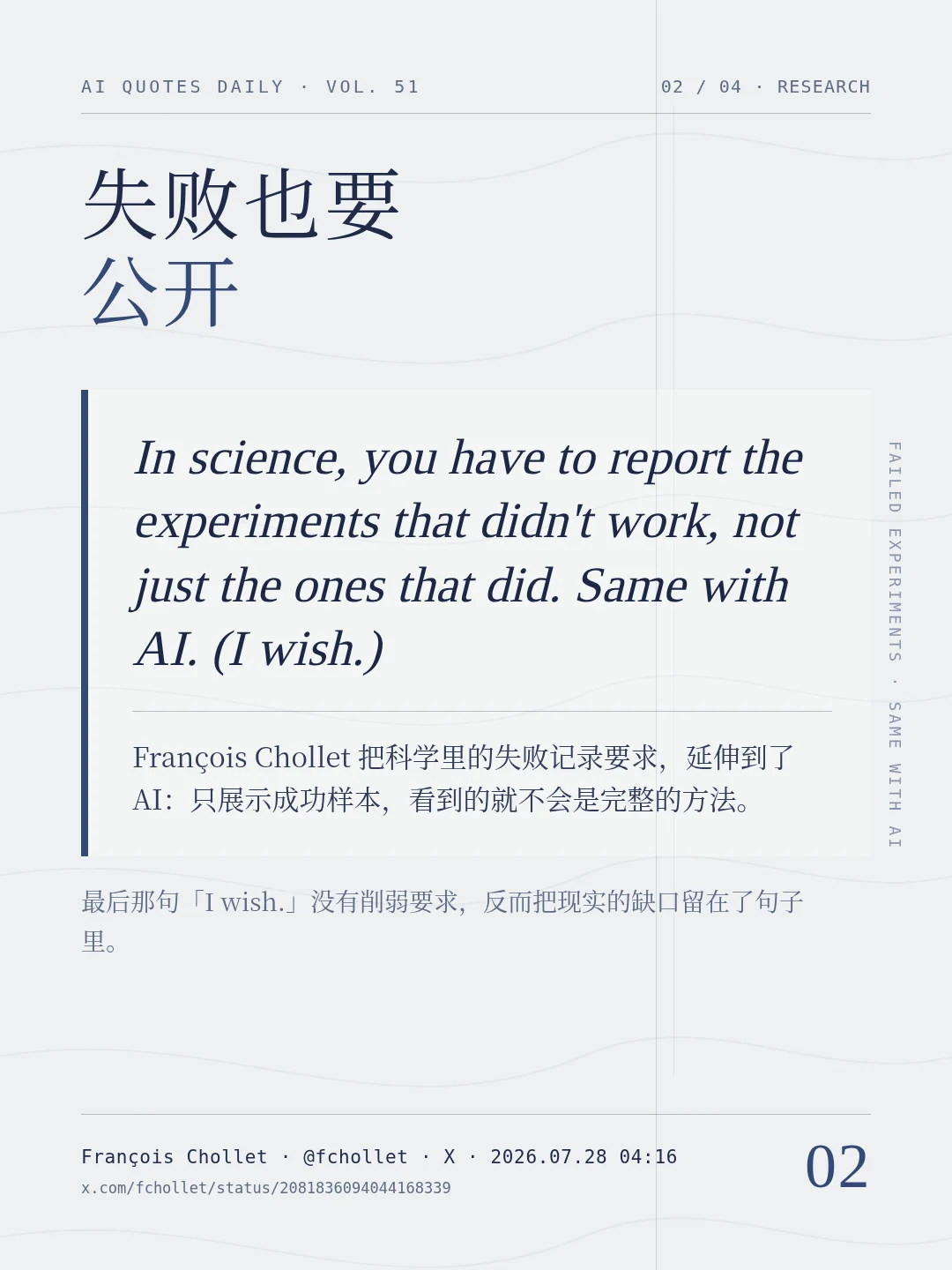
François Chollet 把科学里的一个基本要求,直接说到了 AI 身上:实验没有成功,也应该和成功的实验一样被报告。原帖最后的「I wish.」保留了他对现实执行情况的怀疑。2
In science, you have to report the experiments that didn't work, not just the ones that did. Same with AI. (I wish.)
Loading content card…
03|模型发布会消失吗
Chollet 预判,新模型作为重大里程碑被集中发布的时代最终会结束。模型可能转向持续更新,不再依赖一个广泛传播的版本号;他估计这可能在两年以内发生。3
The era of new model launches as big milestones will eventually come to an end -- at some point they will simply be continuously updated, with no widely publicized version number. Probably less than 2 years away
Loading content card…
04|知道名字,才会提问
Ethan Mollick 说,在 AI 时代,知道许多事物的名字像一种超能力。他列举了 Vaporwave、Muqarnas、Bauhaus、Sfumato、Grisaille、Notan、Polysyndeton 和 Zeugma,最后补了一句:你只需要知道该问什么。4
It's kind of a superpower to know the names of many beautiful and interesting things in the age of AI. You can invoke Vaporwave, Muqarnas, Bauhaus, or Art Nouveau whiplash curves. Sfumato and Grisaille and Notan. Polysyndeton and Zeugma. You just have to know what to ask for.
Loading content card…
Comments
Sign in to comment.