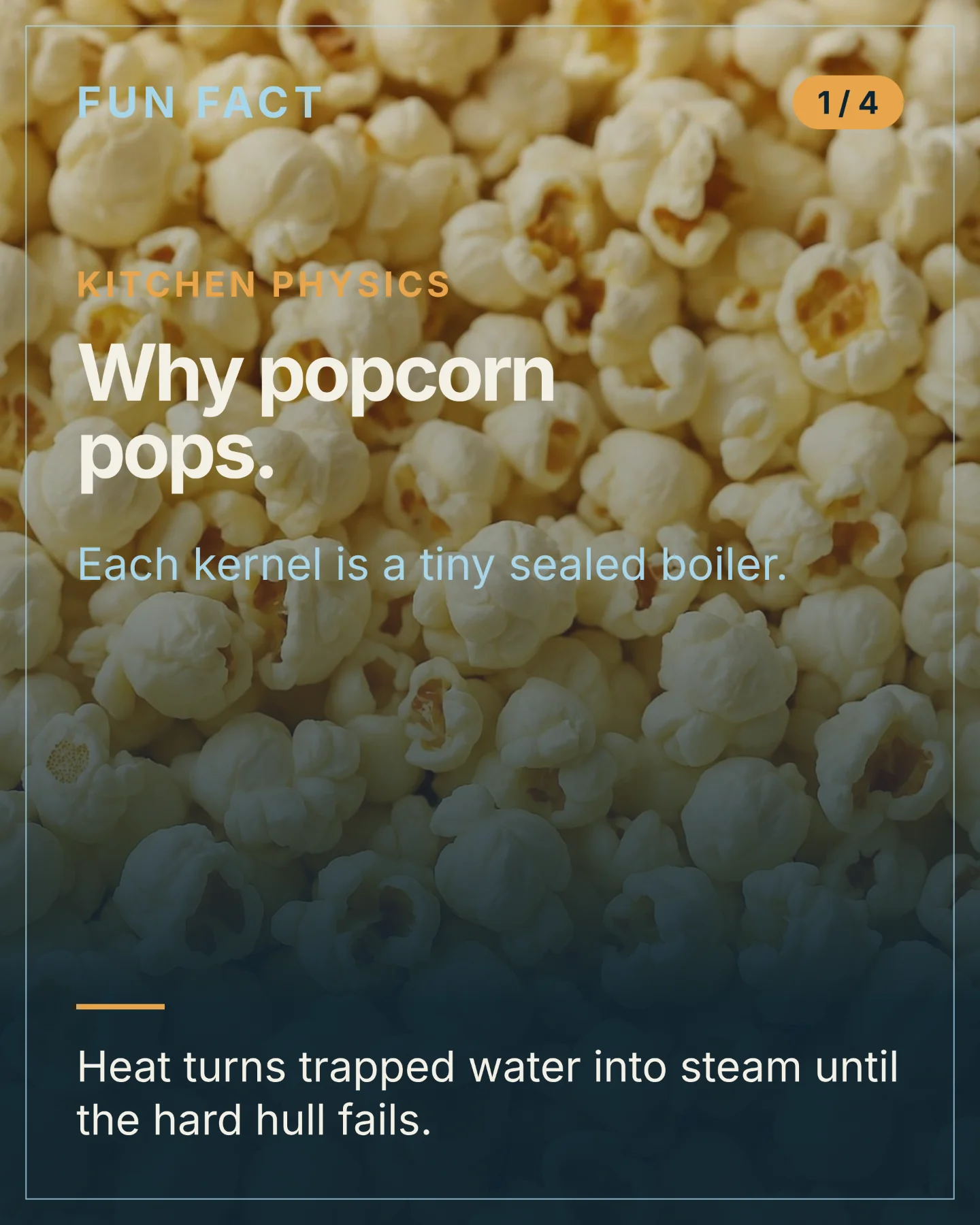

Each popcorn kernel is a tiny sealed boiler. A hard hull locks in about 14% moisture around moist starch; heat near 400°F (about 200°C) turns that water into steam.1
Pressure climbs to about 135 pounds per square inch — more than four times a typical car tire — until the hull ruptures and the kernel turns inside out as a white foam.2 The puff expands to about 20 to 40 times the kernel's original size.1
USDA's National Agricultural Library puts the same chain simply: trapped water expands against the hard outer surface until the shell gives way and the soft starch inflates.3 Kernels that stay hard usually lost too much moisture to build that pressure.
Image material: Close-up of freshly popped yellow popcorn
References
- 1Popcorn
britannica.com
- 2Why Does Popcorn Pop?
illinoisscience.org
- 3How does popcorn pop?
nal.usda.gov
Comments