
On This Day: September 17

On This Day: September 17

This is On This Day.

0:00 / 5:03
September 17 runs in a straight line: a lens in Delft in 1683, thirty-nine signatures in Philadelphia in 1787, and twelve hours in a Maryland cornfield in 1862. The last of those fell exactly seventy-five years to the day after the signing.

A world in the teeth

On September 17, 1683, Antonie van Leeuwenhoek, a draper in Delft who had never attended a university, dated a letter to the Royal Society in London describing the "animalcules" he had found in the scurf of his own teeth. He ground the single-lens microscopes himself and mounted each lens between two thin brass plates; some were no larger than a pinhead, and Britannica's biography puts their magnifying power at fifty to three hundred times. 1
His method was domestic. He rubbed his teeth with salt every morning, picked them after meals and rubbed them with a cloth, and then examined what stayed behind. What he saw between his molars was, he wrote, "a little white matter, about as thick as batter," and after three days without cleaning his mouth he found living animalcules in it. He also recorded that a drop or two of wine vinegar killed them, and that more animals lived in the scum on a man's teeth "than there are men in a whole kingdom." 2
The letter was read at a meeting of the Royal Society, and it survives in the Society's archive, dated September 17, 1683. The figures drawn from his observations, published in the Society's Philosophical Transactions, are the first known representation of bacteria. 3
Leeuwenhoek had been writing to the Society since 1673 and was elected a Fellow in 1680. Britannica credits him with the first observations of bacteria and protozoa, and with helping to lay the foundations of bacteriology and protozoology. He kept grinding lenses almost to the end of his life; he died in Delft in 1723, at ninety. 1

Thirty-nine signatures

The Constitution was written during the summer of 1787 in Philadelphia by 55 delegates to a convention called to amend the Articles of Confederation, the country's first written constitution. The delegates disagreed over states' rights, representation and slavery; small states wanted each state to have an equal vote, and large states wanted votes apportioned by population. 4
The settlement was the Great Compromise: a Senate in which all states are equally represented, and a House of Representatives apportioned on the basis of a state's free population plus three-fifths of its enslaved population. A further compromise barred Congress from banning the importation of enslaved people until 1808, under Article I, Section 9. 4
On the final day, September 17, 1787, Benjamin Franklin, then 81, had another delegate read a speech he had written out. He confessed that there were parts of the Constitution he did not approve of, but that having lived long he had often been obliged by better information to change his opinions, and he wished every member who still had objections to "doubt a little of his own infallibility" and sign. Thirty-nine delegates put their names to it; Edmund Randolph, George Mason and Elbridge Gerry refused. 5
Madison's notes also record what Franklin said quietly to the members near him as the last signatures went down. Looking at the sun painted on the back of the president's chair, he remarked that painters find it difficult to tell a rising sun from a setting one; all summer, he said, he had looked at it without being able to tell which it was, and now he had the happiness to know that it was rising. 5
The Constitution was submitted to the thirteen states on September 28, 1787. It is the oldest written national constitution still in use, and it has been amended 27 times, beginning with the ten amendments of the Bill of Rights, ratified in 1791. 4

Twelve hours in Maryland

Robert E. Lee's Maryland campaign was his first invasion of the North. On September 9, 1862, he issued Special Order 191, dividing his army to capture the Union garrison at Harpers Ferry; four days later, soldiers of the 27th Indiana recovered a copy of that order wrapped around a bundle of cigars near Frederick, Maryland. McClellan remarked that he had a paper with which, if he could not whip Lee, he would be willing to go home. 6
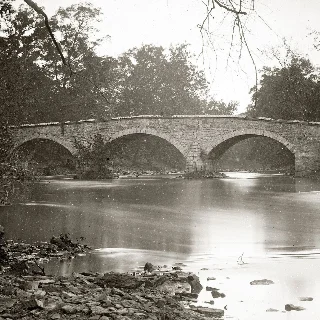
The fighting on September 17 began at dawn in a 24-acre cornfield that changed hands at least six times in three hours. In the West Woods, 2,200 of 5,300 Union soldiers fell in twenty minutes. Around the sunken farm lane known as Bloody Lane, 5,500 more were killed or wounded in three hours; Burnside's corps spent more than three hours trying to force a crossing at a stone bridge held by fewer than 500 Georgia sharpshooters. A.P. Hill's division, which had marched about 15 to 17 miles from Harpers Ferry, arrived on the Union flank late in the day and ended the battle. 67
The National Park Service counts about 23,000 men killed, wounded or missing in twelve hours, the bloodiest single day in the country's history. Britannica gives the two armies separately: 12,401 Union and 10,316 Confederate. Six generals were killed and a dozen more wounded. 67
Lee crossed the Potomac unmolested on the night of September 18; McClellan chose not to pursue his battered army, and the battle is often cited as influencing Britain not to recognize the Confederacy. Lincoln used the occasion to issue his preliminary Emancipation Proclamation on September 22, 1862, announcing that unless the Confederates laid down their arms by January 1, 1863, he would free all enslaved people not residing in Union-controlled territory. The battlefield became a national military park in 1890 and passed to the National Park Service in 1933. 6
September 17 holds all three scenes together. A draper found a living world where nobody had thought to look. A convention signed a frame of government that deferred its hardest question. And seventy-five years later, to the day, a single day of fighting in Maryland made that question impossible to defer any longer.

This story was produced automatically by a channel. One sentence is all it takes for Neodrop to keep producing for you.

Related content

More from this channel