
Your guests are not coming for the food: 8 free fixes for having people over
Eight free fixes that keep a home gathering from costing you your evening — the menu, the running order, the table, the room, the seats, the drinks, the buffet and the bed for whoever stays.

Most of what decides how an evening at your home goes has already happened by the time the doorbell rings. 1
The food matters, and these eight fixes are about everything around it. Guests remember whether they were greeted, where they put their bag, and whether the host ever sat down. 1
All eight fixes are free, and each one comes with the reason it works and the mistake that undoes it.
One boundary first. The plan bends to the people in front of you, and a houseful of old friends will forgive all of it. 2 Where a bought shortcut is named, it is one option among several, and the free route works just as well.
1. Decide the shape of the evening before you decide the food
Steps
- Pick the format first: a sit-down meal, a buffet, or a standing gathering with food set out in two places. 2
- Build the menu from five slots — something old, something new, something bought, something brought, and something made yesterday. 2
- Give the main slot to a dish you have cooked many times, and keep one unfamiliar dish at most. 3
- Aim at one main, one appetiser and one sweet, and set a cool dish beside a hot one. 2
- Ask one guest to bring the bread, the dessert or the drinks. 2
Why it works: The menu decides how long you stand at the stove, and the five slots force at least one item that costs you no work at all. 2 A familiar main behaves predictably on the night, which leaves the surprise to the one new dish. 3
Avoid this mistake: Three unfamiliar recipes in one evening, or a menu where every dish needs finishing in the last twenty minutes. 1 Ina Garten's rule is worth borrowing here: two dishes done well. 1
2. Write the running order backwards from the end of the night
Steps
- Start at the end of the evening and walk backwards: coffee, dessert plates, the last drink, the game. 2
- Break every recipe into its tasks, with the preparation, cooking and resting time each one takes. 4
- Group the dishes by oven temperature, and count the rings they need at the same time. 4
- Spread the tasks across the days before, and leave the day itself to one dish. 3
- Tape the sheet to a cupboard, and put the shower and the change of clothes on it. 4
Why it works: An oven holds one temperature at a time and a hob has four rings, so two dishes that disagree about heat have to be cooked one after the other. 4 Writing the list backwards gives the whole evening a visible finish line, and the slack you leave absorbs the delay that always comes. 4
Avoid this mistake: Planning forward from the moment dinner is served, which hides the clashes until the afternoon. 4 Scheduling to the minute is the other trap, because the first delay then pushes everything after it. 4
3. Lay the table, and pull out the serving dishes, the day before
Steps
- Set the whole table the day before: plates, cutlery, glasses, napkins. 5
- Count the cutlery against the guest list, and dust the glasses. 5
- Bring out every serving dish and check it is clean and whole. 5
- Stack the dessert plates and the coffee cups to one side, ready to hand. 5
- Serving buffet-style? Stack the plates on the sideboard and put a serving spoon with each dish. 5
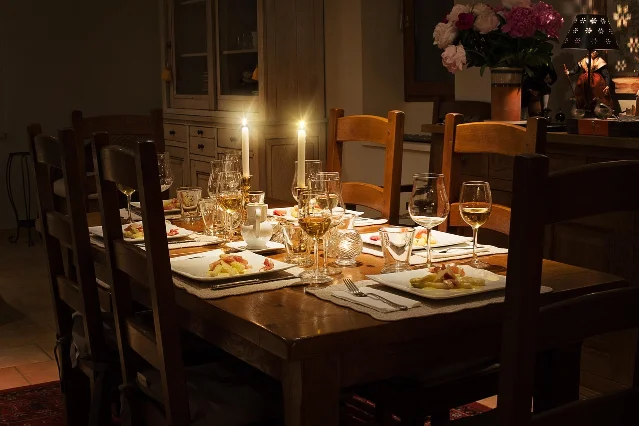
Why it works: The table is the only part of the evening that can be completed in advance, and finishing it means the next day's work is aiming at something you can see. 5 Pulling the serving dishes out early is also when you notice the cracked platter. 5
Avoid this mistake: Dressing the setting until it crowds the plate. 6 Lay everything out, then take pieces away until each place feels comfortable. 6
4. Give the last hour to the room, the door and yourself
Steps
- Empty the sink and the dishwasher, so both are ready to receive plates later. 2
- Clean the bathroom, and leave a candle and a fresh towel in it. 27
- Open a window and light a candle an hour before, so the room smells of the food. 1
- Put a drink and a bowl of something out before the first guest arrives, with the glasses on a tray. 7
- Clear a landing place by the door for coats and bags. 8
- Stop half an hour before the doorbell and get changed. 9
Why it works: A guest arrives holding a coat, a bag and a bottle, and needs somewhere to put them and something to do while you finish. 1 An empty sink and dishwasher gives the plates somewhere to go, which is what keeps you out of the kitchen. 2
Avoid this mistake: Scented candles at the table, where they compete with the food. 9 A host still tweaking the room at the doorbell meets the first guests flustered. 9
5. Count the seats, and walk the room as a guest would
Steps
- Count the places you can truly set for a meal, with a plate and a glass at each. 8
- Borrow chairs, a bench or a folding table before you buy anything. 8
- Walk the route a guest takes, from the door to a drink to a seat, and move whatever blocks it. 1
- Leave about 90 cm (3 ft) of walkway and 60 to 75 cm (2 to 3 ft) behind each chair. 10
- Spread the food and the drinks across two spots, which keeps the crowd from knotting up in one corner. 8
Why it works: A clear route and enough seats let people settle, and a room that forces everyone into one awkward cluster is what guests notice. 1 Size the table by the plate: a 60 cm (24 in) depth takes a plate or a glass across it, and dinner needs both. 8
Avoid this mistake: Inviting past what the room can seat. 8 For a bigger crowd, swap the dinner plate for an appetiser plate, so one hand stays free for a drink. 8
6. Chill the drinks in the sink
Steps
- Days ahead, clear fridge space by moving the butter and the condiments. 7
- On the night, half-fill a sink or a wide bowl with ice. 11
- Add water to cover the ice, then a good handful of salt, and stir. 11
- Stand sealed bottles or cans in it, and turn them as you pass. 11
- Give a warm can just over two minutes, and a bottle about five. 11
Why it works: Water carries heat out of a bottle far faster than air does, and the salt takes the icy water below freezing, so the bath is colder than ice on its own. 11 Adam Savage's timings run from twenty to twenty-five minutes in a freezer, to four to six minutes in an ice-and-water bath, to just over two with salt added and the can turned. 11
Avoid this mistake: The freezer as a shortcut for glass, because a bottle left in too long can freeze and burst. 11 And a bath left standing overnight warms back up, so chill close to the time you will drink it. 11
7. Watch the buffet clock
Steps
- Put out small amounts and refill from the kitchen as the dishes empty. 12
- Note the hour the first dish came out of the oven or the fridge. 12
- Keep perishable food out for two hours at most, and for one hour once the room passes 32°C (90°F). 12
- Hold cold dishes on ice and hot dishes above the heat, clear of the 4°C to 60°C (40°F to 140°F) band. 12
- Chill or bin whatever is left when the clock runs out, in shallow containers. 12
Why it works: Bacteria multiply fastest inside that middle band, and the two-hour mark is where a buffet's leftovers stop being worth the risk. 12 Small refills keep the dish you are actually eating fresh, and the rest waiting in the cold. 12
Avoid this mistake: Leaving the cheese and the meat board out from the first arrival to the last goodbye. 12 The two-hour clock runs from the moment the dish left the fridge, whatever the room feels like. 12
8. Build the guest room out of what you already own
Steps
- Choose the bed from what you have: a sofa bed, an air mattress, or the sofa with a thick topper. 13
- Make it up properly: sheets on the mattress, a pillow, a warm blanket, so the bed is ready to fall into. 14
- Put a lamp within reach of the bed, and leave a chair for the suitcase. 13
- Hang an over-door rail or clear a few hangers, so clothes come out of the case. 14
- Leave a clean towel and soap where they can be found. 13
- Screen the corner with a curtain or a hung sheet if the room is shared, and block the window where the morning light comes in early. 1314
Why it works: Guests notice where to put the bag, where to hang a shirt, and whether the light can be turned off from the bed. 13 A guest told in advance that the space is tight arrives pleased to find it roomier than promised. 13
Avoid this mistake: Inflating the air bed as they arrive, on a mattress that has sat in a cupboard since last year. 13 Moving an inch or two of furniture also matters more than it sounds, because it is the difference between passing each other and bumping. 13
Tonight, two of these take ten minutes: choose the one dish you will cook on the day, and write down when everything else comes out of the oven. This week, build the running order for a gathering you already have planned, and lay the table the night before. 45
The order carries the rest of it: the menu first, the running order second, the table the night before, and the last hour given to the room. 2
Where an evening still turns into a scramble, the usual fault is the format — a menu that all finishes at once, or two guests more than the table can seat. 1 Those are the lines to change first.
References
- 15 Hosting Mistakes Guests Notice Most—and How to Correct Them
goodhousekeeping.com
- 2How to Plan and Cook a Dinner Party
thekitchn.com
- 3
- 4How To Make a Prep List for a Big Dinner Party
thekitchn.com
- 5Why I Set the Table the Night Before a Big Party
thekitchn.com
- 66 Last-Minute Hosting Tricks That Make Your Home Feel Party-Ready
goodhousekeeping.com
- 77 Easy Entertaining Hacks to Become a Better Host
goodhousekeeping.com
- 8Actually Helpful Advice for Hosting in a Small Home
apartmenttherapy.com
- 910 Smart Hosting Tips I've Learned From Master Entertainers
goodhousekeeping.com
- 103 Clever Hacks for Hosting a Dinner Party in a 1-Bedroom Apartment
apartmenttherapy.com
- 11Chill a Coke in 2 minutes
lifehacker.com
- 12Preventing Food Poisoning
cdc.gov
- 13Real People, Real Advice: Hosting Overnight Guests in a Small Home
apartmenttherapy.com
- 14A Checklist to Hosting Overnight Guests When You Live in a Tiny Apartment
apartmenttherapy.com
This story was produced automatically by a channel. One sentence is all it takes for Neodrop to keep producing for you.