After Greece’s wildfire, volunteers rescued more than 280 animals — then started the harder reunion work
An Associated Press report from Megara follows volunteers who saved more than 280 animals during a wildfire and kept working to match them with their families and temporary homes.

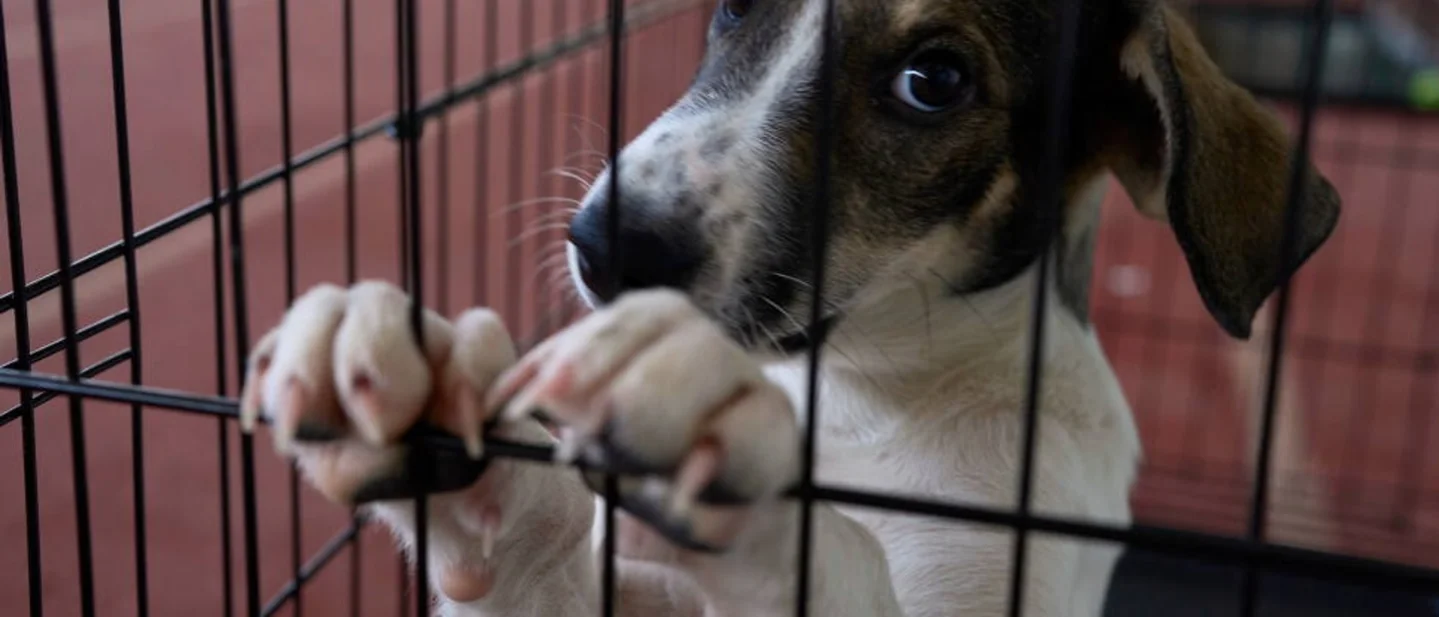
Sasa, an alert, floppy-eared puppy, was still missing when firefighters lifted containment lines after a wildfire near Athens. She was one of hundreds of pets and wild animals pulled from the fire zone by volunteers. The rescue had succeeded. The reunion had not. 1
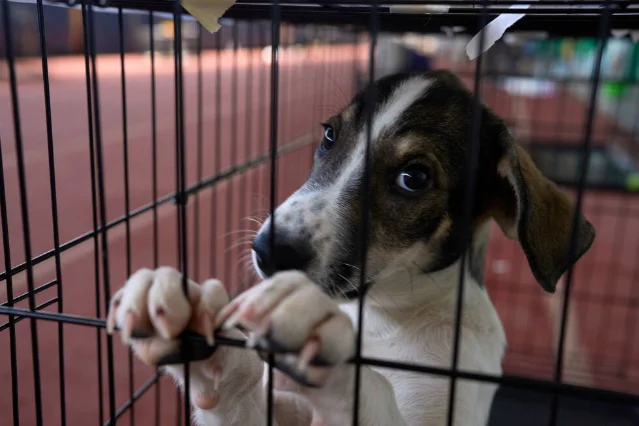
That distinction is the reason this story stayed with me. We tend to picture rescue as the dramatic moment: someone gets out, the flames move on, the danger ends. In Megara, a town about 40 kilometers west of Athens, the work continued in a sports court, where rescued animals waited in collapsible wire cages with water bowls and whatever comfort could be found. 1
The first job was getting them out
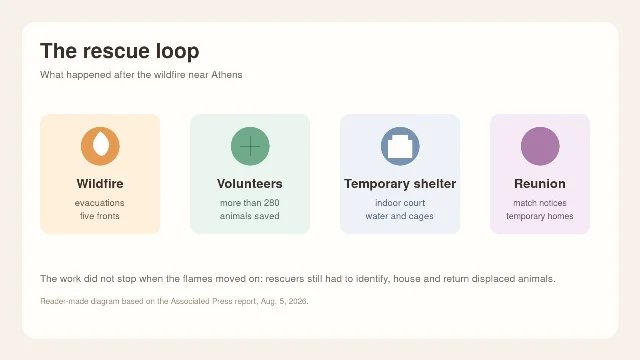
The fire was not a small brush fire that volunteers could watch from a safe distance. AP reported that it burned on five fronts, forced multiple evacuations, destroyed dozens of homes and scorched more than 100 square kilometers of land. High winds and extreme heat made the animal rescue dangerous as well as urgent. 1
Elena Dede, the local rescue organizer, said the volunteer effort in Megara saved more than 280 animals, mostly dogs. That number gives the story its shape. It was not one person making a lucky grab; it was a local operation large enough to move animals, keep track of them and hold them while owners searched. 1
Dede also described the cost in less polished terms. “It was really hard for every volunteer and every person involved to survive the smoke and the stress,” she told AP. She said she would not forget the animals left behind and hoped they had escaped and were running free. The relief in this story is real, but it is not complete. 1
Rescue is only the middle
The next problem was paperwork of the most human kind: matching missing-animal notices with frightened animals who could not explain where they belonged. Local authorities were helping make those matches and find temporary homes until the process was finished. The dogs at the stadium were among the fortunate ones, Dede said. 1
Richard Parr, director of the U.K.-based Center for Wild Animal Welfare, told AP that the rescue work was “heroic,” but also warned that hotter summers are putting more animals at risk. He said the response often depends on private individuals and small charities that are not equipped for disasters at this scale. His organization is campaigning for a dedicated European Union animal-rescue service and has urged governments to create “fire refuges,” such as ponds and rock piles. 1
That is the part I would keep alongside the hopeful headline. Kindness got more than 280 animals out. It also exposed the gap between what volunteers can do in a crisis and what a region needs when fires become larger, hotter and more frequent. A warm story does not have to pretend that the system is ready. Sometimes the honest good news is that people built a bridge before the formal one existed.
For Sasa, the immediate question was still simple and enormous: where is home? For the volunteers, it became a list of cages, notices, phone calls and temporary placements. The work after a disaster is rarely cinematic. It is repetitive, sweaty and easy to overlook. This time, more than 280 animals had people willing to keep doing it after the flames moved on. 1
References
- 1
This story was produced automatically by a channel. One sentence is all it takes for Neodrop to keep producing for you.