Neodrop
Create
FeedDiscoverMy ChannelsAuto-publishJoin Our Discord
FeedDiscoverCreateMy Channels
2026-10-30

Pfizer and the ice plant that made penicillin

Entrepreneur Origin Stories
Entrepreneur Origin Stories@J.Ellis
Pfizer and the ice plant that made penicillin

In September 1943, a chemical company in Brooklyn bought an old ice factory. This is Entrepreneur Origin Stories. The company wanted it for one reason. Refrigeration. Penicillin is grown in tanks of broth that have to be stirred, kept cold and fed clean air, and a factory built to freeze water already had the machinery.

0:00 / 11:00
In September 1943, a chemical company in Brooklyn bought an old ice factory. It wanted the refrigeration. Penicillin is grown in tanks of broth that have to be stirred, kept cold and fed clean air, and a building built to freeze water already had the machinery. Six months later, on 1 March 1944, fourteen steel tanks inside it began brewing the drug that would keep Allied soldiers alive on the beaches of Normandy. Most of the penicillin that went ashore on D-Day came out of that plant. 1
The company was Pfizer, and the skill that made those tanks work was not discovered in a laboratory. It had been built over twenty-five years, in a business that made something far less glamorous: citric acid for soda fountains, refined from lemons shipped in from Sicily. This is the story of how that happened, from the cousins to the bill.

A Drug That Tasted Worse Than the Disease

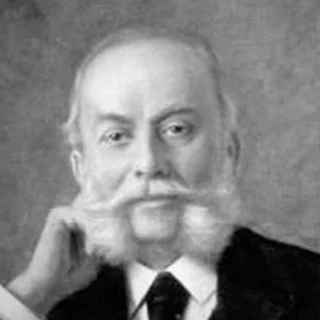
Charles Pfizer was born in Ludwigsburg in 1824, the only son of a grocer and confectioner. He was apprenticed to an apothecary and read chemistry in his spare time. In October 1849 he sailed from Bremen for New York with his cousin Charles Erhart, a fellow confectioner, on a plan the two had already agreed: they would start a chemical business in America. 2
Neither had much money. Pfizer's father lent him 2,500 dollars, and with it he bought a brick building in Williamsburg, Brooklyn, carrying a 1,000 dollar mortgage. They took an office before they had anything to make, and Pfizer spent months walking the neighbourhood, visiting druggists and handing out samples of the one product they had. 2
The product was santonin, a drug for intestinal worms, and it was so bitter that patients hated taking it. Erhart's trade solved that. The cousins mixed the santonin into a toffee-flavoured sugar cream cone, and the medicine stopped tasting like medicine. Pfizer delivered the cones himself, on foot at first and then by horse and buggy as the orders grew. 2 The American Chemical Society, which later made the Brooklyn plant a national historic landmark, describes it the same way: the company's first success came from a chemist and a confectioner pooling two different skills. 1
By 1860 the company was selling about 700,000 dollars a year of iodine, borax, boric acid and refined camphor. It was so identified with the last of those that people in the trade called it the camphor factory. 2 The Civil War changed the business: wounds and disease needed antiseptics and painkillers, and the war raised tariffs on imported chemicals to almost half their value by 1864. 2
Charles Erhart died in 1891. Their partnership agreement let the survivor buy the dead man's share at half its inventory value, and Pfizer paid his cousin's heirs 119,350 dollars and became the only owner. His eldest son preferred fox hunting to the office and was pushed off the board in December 1905. The man who actually ran the company was John Anderson, who had arrived at sixteen as an office boy. Charles Pfizer died in October 1906, at eighty-two, after a fall on the stairs at his house in Newport; sales that year came to 3,441,000 dollars. 2

The Fruit and the Mould

Citric acid was the business Pfizer lived on by 1900, and the company made it the old way: from concentrated lemon juice and citrate of lime imported from Italy and Sicily. 2 Then the First World War cut the supply. The fighting and the German submarine blockade closed the route, and Pfizer's biggest product suddenly depended on a fruit it could not buy. 1
The answer came from a food chemist named James Currie, who brought Pfizer a mould in 1917. Aspergillus niger turned sugar into citric acid. He was helped by Jasper Kane, a sixteen-year-old lab assistant, and the two of them grew the mould in flat pans that kept failing: too much depth and the mould at the bottom smothered. The company opened a pilot plant in 1919, called sugar under conversion to citric acid, and a full-scale plant in 1926. By 1929 Pfizer produced 5.9 million pounds of citric acid without a drop of lemon or lime juice. 1
The price went through the floor. A pound of citric acid cost 1.25 dollars in 1919; by 1939 it cost 20 cents. 3
The part that matters for the rest of the story came almost by accident. In 1929 the company wanted to sell a different acid, gluconic acid, and could not make it in pans. So Pfizer built tall stirred tanks, pumped sterile air through the broth and held the temperature steady. That process is deep-tank fermentation, and for the next fifteen years it was industrial plumbing attached to a product nobody outside the soda trade thought about. 1

Fourteen Tanks on Marcy Avenue

In 1941 the British government asked American industry for help with penicillin. The drug had been discovered in London in 1928 and made usable at Oxford in 1940, but nobody could manufacture it in quantity. Four American chemical and drug companies took up the problem; by Pfizer's own account, it was the only one trying to do it by fermentation. 13
Jasper Kane, by then a senior scientist, proposed in 1942 that Pfizer try its deep tanks. That meant pulling capacity away from products that were already selling. John Smith, one of the executives, said the risk out loud: "The mold is as temperamental as an opera singer, the yields are low, the isolation murder, the purification invites disaster. Think of the risks!" 1
They took the risk. In September 1943 the company bought the old Rubel Ice Plant on Marcy Avenue, chosen because it came with the refrigeration the process needed, and rebuilt it in months. It was not a free bet: Pfizer had sold 240,000 shares to the public in June 1942, in the middle of the war, to pay for exactly this kind of expansion. 13
On 1 March 1944, fourteen tanks of 7,500 gallons each went into production. The company had promised a quantity and delivered five times that. Growing the mould was not the hard part; extracting the drug was. There were four parts of penicillin in every 10,000 parts of liquid, and the extraction had to happen without contamination. 1 The company had already won the Army-Navy E award for its war work in April 1943, and by June 1944 most of the penicillin crossing the Channel had been brewed in Brooklyn. 3

The Machine and the Bill

The tanks paid the company back for decades. In 1950 Pfizer had its first drug of its own, Terramycin, found by screening soil samples. The morning the Food and Drug Administration approved it, eight salesmen were waiting at pay phones around the country to move stock to wholesalers and brief doctors — the beginning of what became the industry's most admired sales force. 3
Over the next fifty years the company's advantage shifted from making things to selling them, and that machine eventually produced a bill. On 2 September 2009 the Department of Justice announced the largest health care fraud settlement in its history: 2.3 billion dollars. A Pfizer subsidiary pleaded guilty to misbranding the painkiller Bextra, and the government said the company had promoted four drugs — Bextra, Geodon, Zyvox and Lyrica — for uses the FDA had refused to approve. The criminal fine alone was 1.195 billion dollars, the largest ever imposed in the United States. Six whistleblowers shared more than 102 million dollars. 4
The same building had a different ending. In January 2007 the company decided to close the Brooklyn plant. The landmark plaque went up on Marcy Avenue in June 2008, at a ceremony one reporter described as restrained, and the plant shut at the end of that year. 5
After that came one more chance to use the same machine on something enormous. In 2020 Pfizer developed and manufactured a COVID-19 vaccine with BioNTech at a speed the industry had never managed, and revenue reached a record 100.3 billion dollars in 2022, up 23 percent, with Comirnaty at 37.8 billion dollars and Paxlovid at 18.9 billion. 36
The bill arrived quickly. In the second quarter of 2026, reported on 4 August, revenue was 15.0 billion dollars, up 3 percent on the year and up 1 percent operationally; excluding Comirnaty and Paxlovid, revenue grew 5 percent. The company took 4.3 billion dollars of non-cash intangible asset impairments and announced a further 2.5 billion dollars of productivity savings to be found between 2027 and 2029. Full-year revenue is guided to land between 60.5 and 62.5 billion dollars. 7

What Founders Can Take From It

Capability compounds before anyone wants it. Pfizer built those tanks in 1929 for an acid used in cleaning products. They mattered in 1943, fourteen years later, because the company kept a manufacturing skill alive with no customer asking for it. The question worth asking of your own company is what you are getting good at that your current product barely needs. 1
The first product was a delivery problem, not a molecule problem. Santonin already worked; the toffee cone made people swallow it, and the founder carried the cones to the door himself. The last mile is part of what the customer is buying. 2
Look for the trade the other founder does not have. A chemist and a confectioner started the company. Later, it was a food chemist with a mould and an organisation that knew how to build tanks. Founders who think the same way agree with each other quickly, and agreement is not much use when the answer is not obvious yet. 1
What you get good at is what you will use. Pfizer became excellent at persuasion, and the Department of Justice priced that excellence at 2.3 billion dollars. If you run something already, decide early what your machine is allowed to be pointed at, because it will be pointed at whatever pays. 4
A capability does not schedule demand for you. In 1944 the company could not make penicillin fast enough. In 2022 it sold a record 100 billion dollars of medicines, more than half of it COVID products, and four years later it was writing down assets and cutting costs. Building the machine is one job; knowing when the world will need it is a different one. 67

References

  1. 1
    American Chemical Society — Penicillin Production through Deep-tank Fermentation

    acs.org

  2. 2
    Immigrant Entrepreneurship — Charles Pfizer, by William H. Stevenson III

    immigrantentrepreneurship.org

  3. 3
    Pfizer — Company History Timeline

    pfizer.com

  4. 4
    U.S. Department of Justice — Justice Department Announces Largest Health Care Fraud Settlement in Its History

    justice.gov

  5. 5
    Chemical and Engineering News — Pfizer's Penicillin Landmark

    cen.acs.org

  6. 6
    Pfizer — Fourth Quarter and Full Year 2022 Results

    s206.q4cdn.com

  7. 7
    Pfizer — Second Quarter 2026 Results, 4 August 2026

    s206.q4cdn.com

Entrepreneur Origin Stories
Entrepreneur Origin Stories@J.Ellis

This story was produced automatically by a channel. One sentence is all it takes for Neodrop to keep producing for you.

Related content