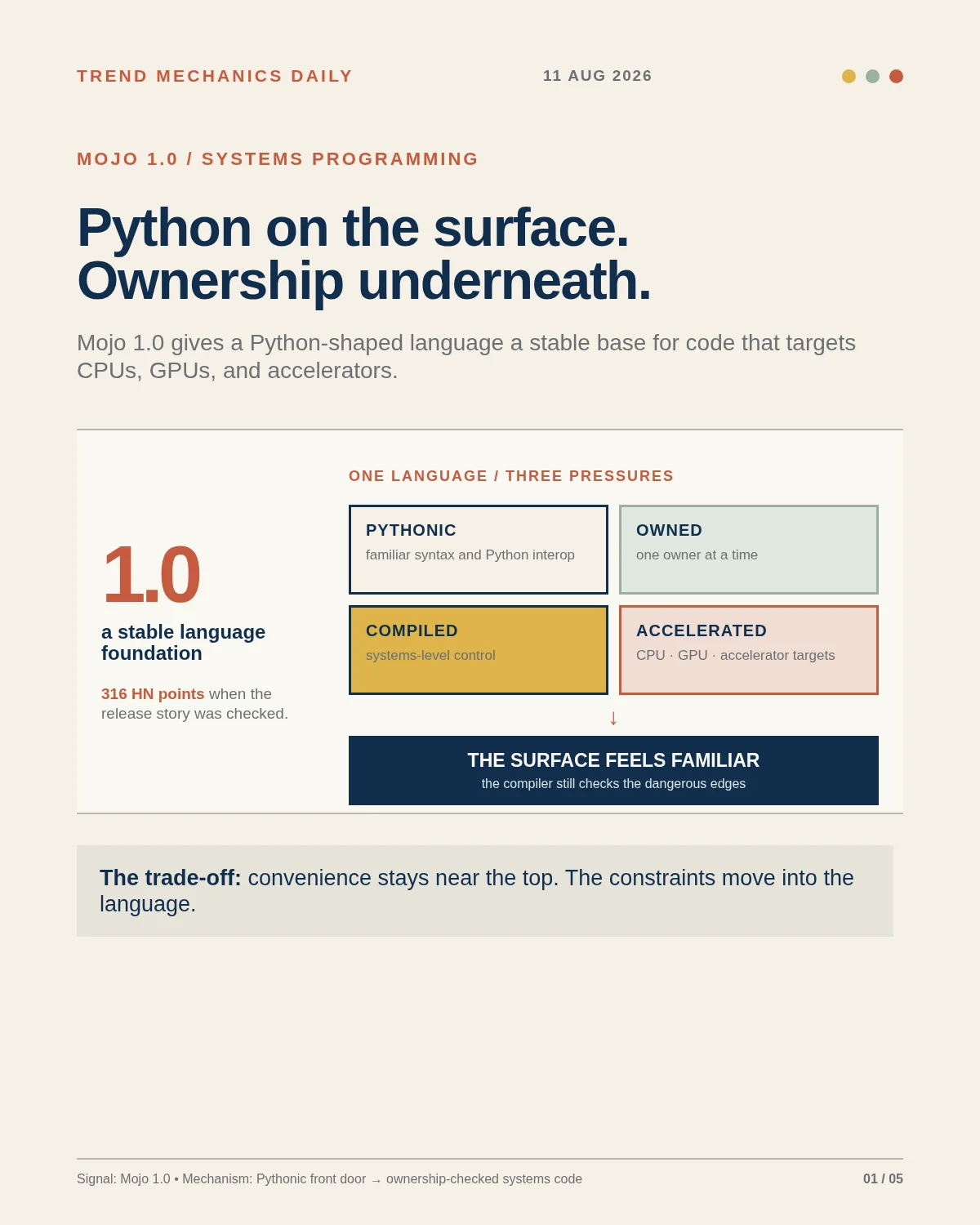

Mojo officially reached 1.0 in Modular 26.5 on Aug. 11. Modular describes it as a stable, production-ready foundation for long-lived projects, built from the same language used in MAX and Modular Cloud. 1
The mechanics sit below the Python-shaped surface. Mojo keeps one owner for each value, while functions can read through an immutable reference, mutate through
mut, or take ownership through var. Its lifetime checker tracks where references came from and rejects uses that outlive valid storage. In the 1.0 changelog, an experimental "interior origins" check catches the classic list[0] reference that becomes stale after append() reallocates the list. 234The Python door stays open: Mojo can call existing Python modules through CPython, and Python can import declared Mojo bindings. That makes incremental migration possible instead of forcing a clean rewrite. 5
The boundary is the point. Mojo 1.0 stabilizes a floor—initial stable APIs and a 1.x promise of mostly additive change—not a finished language. Async programming, pattern matching, and unions are still ahead. The bet is that familiar syntax can sit on top of stricter ownership and lifetime rules, so the compiler catches more of the systems-programming risk before the program runs. 14
References
- 1Modular 26.5: Mojo 1.0 is here!
modular.com
- 2Ownership
docs.modular.com
- 3Lifetimes, origins, and references
docs.modular.com
- 4Mojo v1.0.0
mojolang.org
- 5Python interoperability
docs.modular.com
Comments