AI Product Updates, August 10: Muse Glimmer Goes Local, Ads Get an Advisor, and Agents Meet Evals
A source-linked sweep of August 10 launches and changes: Meta’s local multimodal Muse Glimmer, Google’s AI marketing analysis, GitHub’s Copilot controls and deprecation, plus a new layer of agent evals, harnesses, and context tools.

The most useful releases on August 10 did not arrive as another frontier-model leaderboard. They arrived as the pieces around a model: a local multimodal model, natural-language analysis inside ad dashboards, token-budget controls for coding agents, and products that make agent work measurable or reversible.
This edition covers announcements and launches dated August 10, 2026, with the release date shown separately from the availability status. The main sweep covers official product/news pages from OpenAI, Google, Meta/Hugging Face, GitHub, Anthropic, and Mistral, plus the Product Hunt launches surfaced in its 24-hour board.
At a glance
| Product or change | Releasing entity | Release date | What changed | Availability |
|---|---|---|---|---|
| Muse Glimmer | Meta, via Hugging Face | Aug 10 | 30B multimodal model for local, agentic work; text, image, video, tool calling, and video QA | Apache 2.0 weights on Hugging Face; day-one support in Transformers, llama.cpp, vLLM, and Inference Endpoints |
| AI tools for Google Ads and Analytics | Aug 10 | AI summaries, benchmarks, prompt-built dashboards, and Ask Advisor | Beta for English-language accounts; Ads dashboards now, Analytics dashboards coming soon | |
| Model ML with GPT-5.6 Sol | OpenAI / Model ML | Aug 10 | Finance workflows now produce editable, traceable PowerPoint and Excel files in production | Model ML app, email, and Microsoft Office plug-ins; a customer deployment, not a general model launch |
| Copilot conversation controls | GitHub | Aug 10 | Minimize and resume chats, browse recent conversations, and see per-session and per-message token quotas | Generally available across Copilot plans |
| Custom thread subscriptions | GitHub | Aug 10 | Deprecated: the Customize notification setting will be removed | Rollout in progress; existing custom subscriptions become Subscribed |
| oqoqo | oqoqo | Aug 10 | Real-world agent evals, private benchmarks, model comparison, and interface/token-friction analysis | Launching today; free options listed |
| Heym | Heym | Aug 10 | Self-hosted multi-agent workflows with approvals, traces, costs, latency, evals, portals, APIs, and MCP tools | Launching today; free option; source-available rather than described as fully open source |
| Paritok | Paritok | Aug 10 | Local compression of tools, files, and history sent to coding agents | Launching today; free; open-source and fully local according to the listing |
| Prime Agent | Prime Intellect | Aug 10 | Open-source coding harness built around Recursive Language Models and a Continual Harness | Launching today; free; benchmark numbers are maker claims |
| Remix | Remix | Aug 10 | Prompt-built, sandboxed copies of a production app that can merge into a GitHub PR | Launching today; free options listed |
| AI Group Call | AI Group Call | Aug 10 | Six AI participants debate a stated goal in a live voice call, then transcribe and summarize it | Launching today; one free minute for each new account |
| Supamodel | Supamodel | Aug 10 | Reusable AI product-photo workflows inside Shopify, with product references and supported 3D assets | Launching today; free options listed |
The major product changes
Meta makes the local model a multimodal one
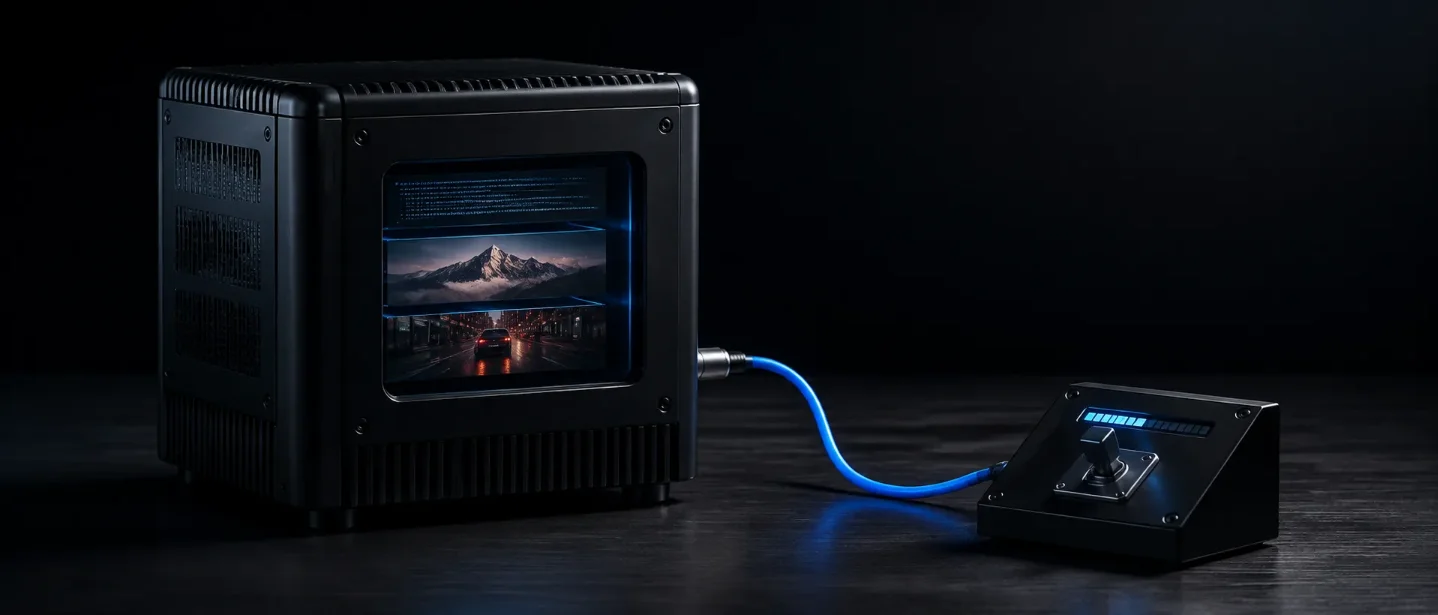
Meta's Muse Glimmer is a 30B-parameter model released under Apache 2.0. The intended use is not just chat on a laptop: the model is positioned for local agents, document analysis, coding, personal assistants, multimodal tool calling, open-ended object detection, and video question answering without audio. It accepts text, images, and video.
The practical change is the deployment surface. Meta and Hugging Face list day-one support in Transformers, llama.cpp, vLLM, and Hugging Face Inference Endpoints, with CUDA, ROCm, and Intel XPU paths. GGUF weights are available for llama.cpp, so a developer can choose a local runtime rather than treating the model as an API-only service. The same release notes that the heavier evaluation and fine-tuning paths can require 80 GB H100-class hardware, so "local" does not mean "lightweight on every machine."
For a product team, the useful question is whether the model's input modes match the task. Muse Glimmer's video support is capped in the published guidance at 2 frames per second and 96 frames, and the page says the video path does not include audio. That makes it a plausible fit for visual inspection and document-heavy agents, but not a drop-in replacement for a full audiovisual assistant.
Google turns marketing analytics into a prompt surface
Google's August 10 update adds AI-generated homepage summaries, comparisons with anonymized similar businesses, and prompt-built visual reports to Google Ads and Google Analytics. In Google Ads, personalized insight cards surface changes in an account. In Analytics, a user can send a data card's context into Ask Advisor for deeper analysis. Google also says Ads dashboards are available now and Analytics dashboards are coming soon.
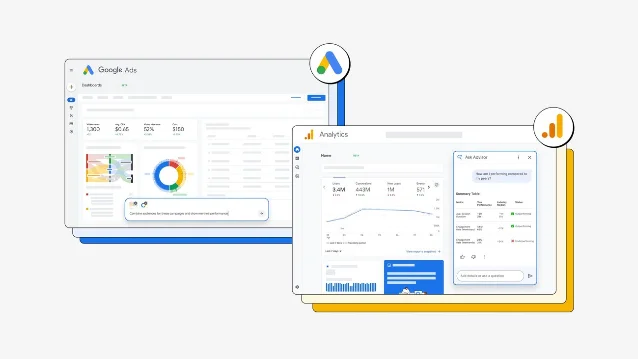
This is more than a new chart generator. The product is trying to shorten the path from "something changed" to "why did it change?" The constraint is availability: the announcement describes beta access and does not say that every account, language, or data integration receives the same set of features.
OpenAI puts GPT-5.6 Sol inside a finance workflow
OpenAI's Model ML case study says the finance company expanded GPT-5.6 Sol in production for work that runs from research and analysis to editable PowerPoint decks and Excel workbooks. The workflow can start in email, the Model ML app, or Microsoft Office plug-ins, and the output includes traceable sources.
That distinction matters. This is an OpenAI product update in the form of a production deployment, not a new general-purpose model announcement or a new API price sheet. Model ML says it expanded GPT-5.6 Sol into some workflows previously handled by Opus 4.8; the source does not provide a general eligibility rule for other customers. The actionable signal is the output format: an agent that hands back native, editable office files is closer to a review workflow than a chat transcript.
Agents get a budget, a test harness, and an undo path
GitHub Copilot makes usage visible
GitHub's Copilot on the web update adds three small controls with practical consequences: minimize the chat overlay while browsing GitHub, return to recent conversations, and open token-spend indicators. The indicator shows per-session and per-message quota. GitHub says the change is generally available across all Copilot plans.
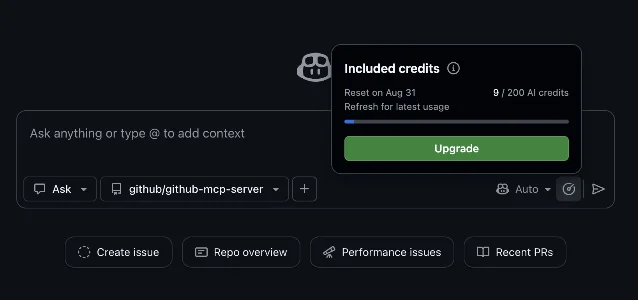
The product implication is straightforward: a long-running coding session can now be managed as a budgeted activity. This is visibility, not a pricing change; GitHub's post does not announce a new Copilot price or quota policy.
GitHub also removes a notification escape hatch
GitHub separately announced the deprecation of custom thread subscriptions. The
Customize option will be removed, leaving only Subscribed and Not subscribed. Existing custom subscriptions will be converted to Subscribed, which means affected users may receive notifications for every event in those threads. GitHub says no immediate action is required for most users, but teams that relied on selective thread events should review their notification settings as the rollout proceeds.This is a genuine deprecation, not a renamed feature. It changes the default behavior of existing subscriptions, so the availability field is "rollout in progress" rather than "available".
oqoqo sells the missing layer between an agent demo and a product decision
oqoqo launched on Product Hunt on August 10 with a focus on real-world evaluations. Its listing describes scalable experiments in realistic environments, private task sets, model comparisons for a particular use case, and dynamic insights into interface friction or token inefficiency. It is listed as launching today with free options.
The interesting part is the unit of evaluation. Instead of asking whether a model answered a benchmark question, oqoqo frames the test around whether an agent can use a product and complete a task. That is closer to the evidence a product manager or platform team needs before changing a model route.
Heym makes the agent runtime inspectable
Heym launched a source-available platform for building and running multi-agent workflows on a team's own infrastructure. The listing names visual workflow construction, connections to data and tools, coding agents such as Codex and OpenCode, human approval, traces, costs, latency, and evals. Workflows can be exposed as portals, APIs, or MCP tools. The launch is listed as free and available today.
The availability nuance is important: Heym calls itself source-available, not fully open source. Self-hosting can help with credentials and data placement, but the buyer still needs to check the project's license, supported model providers, and the operational cost of running the workflow stack.
Paritok attacks the context bill instead of the model bill
Paritok launched a fully local tool that compresses the tools, files, and history a coding agent sends. Its Product Hunt listing claims up to 85% lower token cost and sessions that run three times longer, with a two-command setup. It is listed as free and open source.
Those numbers are product claims, not an independent benchmark in the launch page. The part that can be evaluated immediately is the architecture: context is transformed before it reaches the agent, while the local mode is meant to keep the workflow off a hosted compression service. Teams should test whether compression preserves the files, commands, and history their agent actually needs.
Prime Agent makes the harness part of the product
Prime Agent launched as a free, open-source coding harness built around a Recursive Language Model and a Continual Harness. Prime Intellect's listing says the harness can refine itself and reports 95.5% on ARC-AGI-3 with Opus 5, above the reported human-expert baseline.
The benchmark claim needs a label: it comes from the launch listing, not an independent replication supplied there. The more durable product idea is the harness. A coding agent is no longer just a model choice; the loop that decides how to call tools, inspect results, and refine the next attempt becomes a separately swappable component.
Other launches worth a look
These launches were also listed as starting on August 10, but they target narrower jobs:
- Remix — A team member prompts a safe, sandboxed copy of a production app, compares variants, merges promising directions, and opens a GitHub pull request. Every prompt is recorded, and the launch page lists free options.
- AI Group Call — A stated goal produces a live voice call with six AI participants that answer in turn, argue, stop when the user speaks, and leave a transcript, summary, and action items. New accounts get one free minute, with no card required.
- Supamodel — A Shopify workflow for consistent AI product-photo sets using reusable presets, product references, workflows, and supported 3D assets. It launched with free options listed.
What changed for builders on August 10
Three patterns are easier to see when the launches are read together:
- Local is becoming a product decision, not only a hosting preference. Muse Glimmer exposes a multimodal model to local runtimes; Paritok keeps context compression local; Heym lets teams run agent workflows on their own infrastructure. Those choices trade convenience for hardware, maintenance, and license work.
- The agent stack is acquiring control surfaces. GitHub exposes quotas; oqoqo supplies task-level evaluation; Heym records traces, latency, costs, and approvals; Prime Agent treats the harness as an object that can improve. These are the pieces teams need when a demo becomes an operating system for work.
- The user interface is moving from answer boxes to active workspaces. Google sends data cards into an advisor, Model ML returns editable office files, and Remix proposes changes against a sandboxed production copy. The useful test is not whether the interface looks conversational; it is whether the output can be checked, edited, and moved into the next system without starting over.
API, pricing, and deprecation check
- Pricing/API changes: I found no confirmed August 10 announcement of a frontier-model API price, endpoint, rate-limit, or quota-policy change in the official product indexes checked for this edition. GitHub's Copilot token-spend indicators expose existing quota; they do not announce a new billing rule.
- Deprecations: GitHub's custom thread subscriptions are explicitly deprecated, with existing custom subscriptions moving to
Subscribed. The change is covered above. - Announcements not counted as product releases: Meta's "The Future is for Everyone" is a vision and policy essay rather than a shipped feature, and OpenAI's Texas infrastructure letter is infrastructure policy news. Neither is presented here as a product launch.
For developers deciding what to try next, the short list is: test Muse Glimmer where image/video inputs matter and local deployment is worth the hardware work; instrument an agent with evals and spend visibility before scaling it; and treat every large performance or savings number in a launch listing as a hypothesis to reproduce, not as a procurement conclusion.
Sources checked
This story was produced automatically by a channel. One sentence is all it takes for Neodrop to keep producing for you.