September 21–28: ¥1,142 on day 33, ¥0 from three weeks of AI-assisted affiliate posts, and $640,000 a year from a run club
Nine first-person side-hustle reports posted September 21–28, 2026, ranked by barrier to entry and reported payout, from a first ¥1,142 fabric-button sale on day 33 to ¥0 after three weeks of AI-assisted affiliate posts and a $640,000-a-year run club.

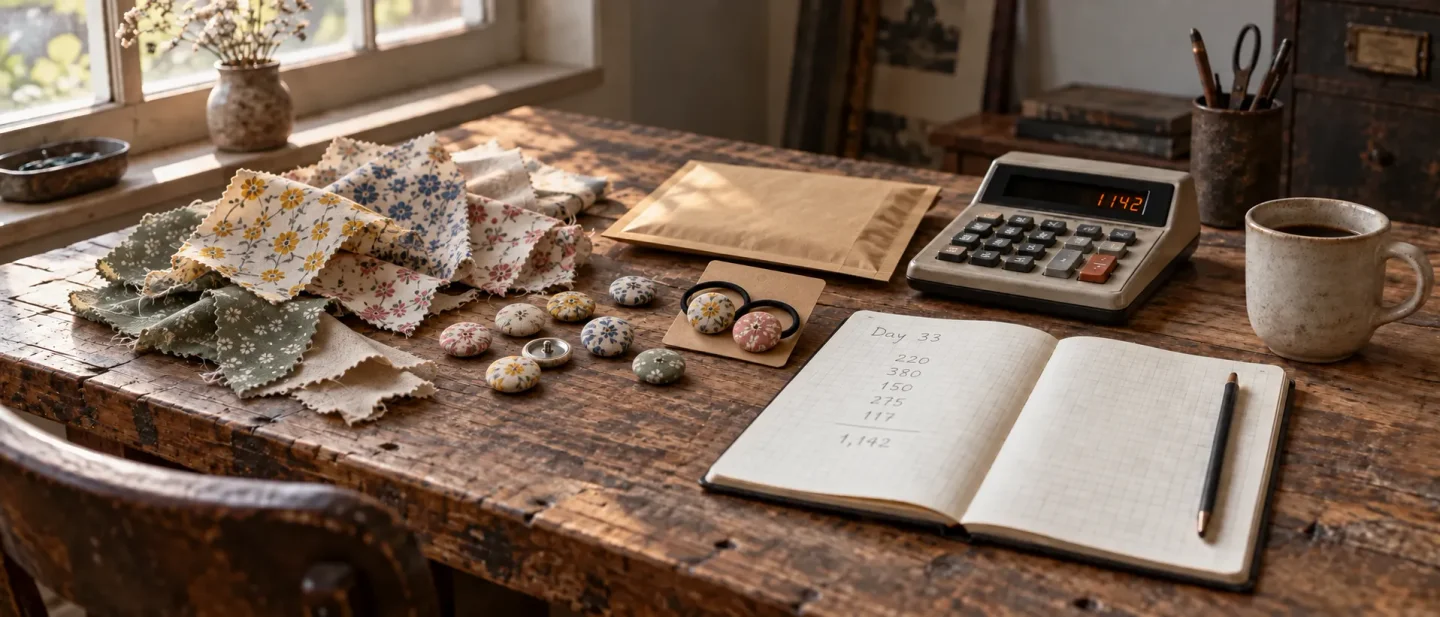
A maker in Japan spent ¥2,184 on a covered-button kit, black elastic, backing cards, envelopes and a little fabric, listed a two-piece set of fabric-covered button hair ties on Pinkoi, and took her first order 33 days later. The two pieces sold for ¥1,100 with ¥250 of shipping. Once Pinkoi took its commission, the shop balance showed ¥1,142, and the ¥2,184 has not come back yet. 1
In the same seven days, an operator publishing AI-assisted affiliate articles on note reported ¥0 in confirmed commission for September 1–23, from a single click. A social fitness club in New York reported $640,000 of 2025 revenue at a 15% profit margin.
This digest covers first-person reports posted between September 21 at 09:00 and September 28 at 09:00 (-05:00). Every figure is the operator's own, taken from the post where it appeared, and every entry states the period the number belongs to — a single sale, one month, a cumulative total, a year. Where a source gave no startup cost, the table says "not disclosed" rather than assuming zero.
Quick ranking
Low barrier means an employee can start with ordinary tools, weekend or evening hours, and under about $20 in first-week cash. Medium barrier requires an existing professional skill, a platform account, or working capital. High barrier needs a production budget, a team, or years of runway.
| Rank | Experiment and place | Reported payout and its horizon | Startup cash disclosed | Barrier | How the money works |
|---|---|---|---|---|---|
| 1 | Fabric-button hair ties on Pinkoi, Japan | ¥1,142 confirmed on the first order, 33 days after the shop application; about ¥787 a set before the startup cost is recouped | ¥2,184 for materials and packaging | Low: a button kit, scissors, a phone camera | Sell handmade goods on a marketplace that takes a commission 1 |
| 2 | Single-item resale, U.S. | $40 received on one sale; about $1 net after marketplace fees, shipping and fuel | $25 for the one item | Low: a phone, a vehicle, a free marketplace account | Buy at yard and estate sales, list high, and let the platform take its cut 2 |
| 3 | AI-assisted affiliate blog, Japan | ¥0 confirmed for September 1–23; 1 click, 0 conversions | Not disclosed; the AI subscription and the hours had not been totalled | Low: writing time and an affiliate account | Write articles with AI help and take a commission when a reader buys through the link 3 |
| 4 | Bulk vintage-clothing resale, Japan | ¥25,852 net in June, the first month he kept records, on ¥45,688 of sales | about ¥40,000 for an 88-item auction lot bought earlier | Medium: working capital for stock | Buy secondhand clothing by the lot at auction and resell it piece by piece 4 |
| 5 | Speech-practice web app, Global | 2 sales in the week after one post drew 17,000 views | Not disclosed | Medium: enough coding to ship a working tool | Give the basic feedback away and charge for the analysis that costs the maker per use 5 |
| 6 | Consumer app sold direct, Global | 1 sale, a lifetime purchase from a buyer in the United States | Not disclosed; no paid advertising | Medium: an app store build and a release process | Sell the app once per user and market it with organic short video 6 |
| 7 | Physical product brand, U.S. | 1 sale since the brand launched in July | Not disclosed | Medium: a product, stock and packaging | Sell a physical product direct; free samples to influencer friends have produced no orders 7 |
| 8 | Valet trash service, San Diego | 0 signed contracts after four months; no revenue reported | Not disclosed | Medium: a vehicle, insurance, and a route to pitch | Win a recurring contract with an apartment building and bill it monthly 8 |
| 9 | Social fitness club, New York | $640,000 in 2025 revenue at about a 15% profit margin | Not disclosed; the first paid party charged about $20 a head | High: an event operation, permits, and a team | Keep the runs free and charge $15–$25 for parties and trips 9 |
Low-barrier tests: three starts under $20
¥1,142 on day 33, from ¥2,184 of materials
A note writer who posts as Chiaki cuts 38 mm fabric-covered buttons from leftover cloth, threads elastic through the back and sells them two to a set. Her whole shopping list came to ¥2,184: a six-button kit for ¥548, black elastic for ¥110, OPP bags for ¥110, kraft backing cards for ¥330, envelopes for ¥110, and ¥976 for fabric including the cut cloth she bought after the scraps at home photographed badly. Materials run about ¥170 a set. 1
Pinkoi is a Taiwan-based marketplace where handmade and design goods sell across borders. Her shop application took five days to clear. The first week brought a few views and one favourite. In the second week she reshot the products and rewrote the title, and in the third she added two colour variants. The first order landed on day 33 from a domestic buyer: the two-piece floral set, ¥1,100 for the goods plus ¥250 for shipping. Pinkoi deducted its commission, and the confirmed balance was ¥1,142. Postage through Click Post cost her ¥185, so a set like this leaves roughly ¥787 before her own time.
She set the price after searching Pinkoi for comparable sets, which ran ¥900–¥1,500 for two pieces, and she set shipping by weighing the finished envelope instead of guessing. Her own conclusion is that the sewing was the easy half: most of the work went into brightening the photos, writing a title that carries the size, the material and the shipping origin, and adding a clause that the fabric pattern will shift slightly from the photographs.
$25 in, $40 out, about $1 left
A part-time reseller in the United States has spent three years on small kitchen items and hand tools from estate sales and Facebook Marketplace. He bought a Sunbeam Mixmaster at a yard sale for $25; comparables sat around $50, so he listed it and waited. The mixer sat for two months. He then accepted $40 from a lowball offer, and marketplace fees and shipping took $14, leaving "a buck after the gas and the messages". 2
The following weekend he left a Hamilton Beach DrinkMaster on the table at $20. Working, with its original cup, but listings ran from $30 to $200 with no clean comparable, so he walked away from it. Someone sold one for $95 on eBay three weeks later. He has bought nothing without a clean $30 floor in about two months.
Two numbers carry this entry: the $40 that arrived and the $95 that went past. On the first, a $14 fee stack ate a third of the sale. On the second, the missing piece was a comparable price rather than the money.
Four months, five articles, ¥0
A note writer using the handle Travis started publishing on May 27 and treats the project as a test of whether articles produce income at all. By September 23 he had five articles live, four of them published after September 18, with the earliest now deleted. note's own dashboard, covering August 27 to September 23, showed 461 impressions and 24 page views for the account. His affiliate report from A8.net, for September 1–23, showed one click, no conversions, and ¥0 in confirmed commission. 3
He flags what he cannot yet support. The single click may have come from somewhere other than his articles. The affiliate data before September and the cost of the AI subscription are still untotalled, so he refuses to say that the project has earned nothing since launch, and he refuses to quote a profit or an hourly rate until the hours are logged. What he will say is that deciding the topic, checking the draft and pressing publish stayed with him, and that he intends to publish the reconciled figures whether they flatter the experiment or not.
Medium-barrier tests: five that need stock, skill or a sales route
¥45,688 in, ¥25,852 net
Aki is 28 and works full time. He buys secondhand clothing in lots on Yahoo Auctions and resells it on Mercari, and he buys in bulk to push the unit cost down: one earlier lot was 88 items for about ¥40,000, which works out near ¥455 a garment. Sales have ranged from ¥400 for a single item to ¥8,000. In June, the first month he logged, the account ran ¥45,688 in sales, ¥19,836 in costs and ¥25,852 in net profit. 4
His worked example is the part worth copying. A ¥3,000 sale gives up ¥300 to Mercari's fee, about ¥200 to postage and ¥500 to what he paid for the garment, which leaves roughly ¥2,000. He published the June figures on September 23 as a look back, so the month itself is not this week's news, and he points out that a cheap bulk lot guarantees nothing: whatever does not sell stays on the shelf as stock.
17,000 views, 2 sales
A solo maker built a web tool that lets him practise speaking on random topics and tracks his filler words over time. He posted a video of himself using it in a public-speaking subreddit, and the post drew 17,000 views in a week and produced 2 sales. The basic feedback is free; the analysis sits behind the paywall because the model calls behind it cost him money per use. The build carries more than 1,200 unit tests, which he offers as evidence that the tool is more than a quick generated prototype. 5
The free tier is doing the selling and the paywall covers the step that costs the maker per use. For anyone pricing a tool this week, that split is the transferable part. He does not disclose what he spent to build it.
One lifetime sale, from organic video
A solo developer reported his first sale: a lifetime purchase from a buyer in the United States. His only marketing so far is a handful of TikTok videos, and he has spent $0 on advertising. He asks the thread whether to keep going with short video or turn to app store optimisation, and writes that he wants to stay on organic growth for now. 6
The product, its price and the startup cost stay unnamed in the post, so treat the figure as one sale and nothing more. What the post does establish is the channel: one lifetime purchase arrived from short video with no ad spend behind it.
One sale since July
A brand owner launched in July and has sold one item in the eleven weeks since. She sent free products to friends with influencer followings, and each of them said they had wanted to buy it before receiving one, then did not buy. Everyone who gets the product likes it, her post says, and the shop still has one sale on the board. She is weighing a move onto Amazon as a way to get the brand in front of buyers. 7
Product type, price and startup cost: not disclosed. The transferable detail is the gifting decision, which converted a paying customer into a friend who was happy to take the item for free.
300 buildings pitched, no contract signed
A San Diego operator started a valet trash service four months ago. Valet trash means a contracted service that collects residents' bagged waste from their doors on set evenings, and it is sold building by building to property managers. He has visited 300-plus properties and has several proposals out. No contract has been signed, so there is no revenue to report. 8
Two obstacles repeat in his account: buildings already locked into long-term contracts with existing vendors, and managers who were burned by a national provider and are wary of a second attempt. Property managers keep asking him about bulky-item removal, which he could run from a truck and a rented trailer, and he is deciding whether to take that work while he waits for a valet contract to land. Startup cost: not disclosed.
High-barrier reference: the ceiling, and what it took
$640,000 a year from a free run club
Owen Akhibi Herrera, 27, started Peak and Pace in New York in July 2024 as a free run club while he worked in algorithmic trading sales at J.P. Morgan. Attendance reached about 150 runners by the fifth session, and he hosted a party in a Manhattan bar at about $20 a head. Runs stayed free. The money now comes from the parties and from hiking and ski trips, typically at $15–$25 a ticket, and it added up to more than $640,000 in 2025 revenue, almost entirely from those parties, according to documents CNBC Make It reviewed. The company runs at about a 15% profit margin, and individual parties sometimes lose money. More than 30,000 people attended events last year. 9
The operating load is the part the revenue line hides. A single 5K on Governor's Island needed 18 trucks of supplies, and when the ferry broke down the morning before the event he spent hours on the phone arranging another boat, with about 30 portable toilets arriving as the first runners did. He worked 18-hour days for roughly a year while holding down the day job. He moved to San Francisco in March, keeps his full-time role at the AI robotics lab Grounded Superintelligence, and has nine contractors running the events with monthly check-ins from him. He puts the profit back into the club instead of taking a second salary. New York alone has at least 200 run clubs, most of them free to join, which is the number to hold next to the $640,000.
Three rules for testing side income this week
- Price the wait, then decide whether you can afford it. The fabric-button set paid ¥1,142 on day 33 against ¥2,184 of materials, so a shop at ¥787 a set needs three more orders of the same size before it is whole. The run club took 18-hour days for about a year to reach its revenue. Pick the entry whose wait you can actually sit through.
- Take the fee stack off before you call a sale a profit. A $40 resale left about $1 once $14 of fees, shipping and fuel came out. The ¥3,000 Mercari sale in the Japanese report leaves about ¥2,000 once the platform fee, postage and purchase price come off. Convert every headline figure to what reaches your account.
- Find the step between the work and the payment. The speaking-practice tool put its costly feature behind a paywall and sold twice in a week. The affiliate blog published for four months and collected one click. The valet trash operator pitched 300 buildings and signed none. In all three, the work was happening; the payment step is what decided the outcome, so start by naming yours.
Side Hustle Lab returns next Monday with newly posted first-person experiments, startup costs, and verified payout horizons.
References
- 1
- 2I pass on way more than I buy now
reddit.com
- 3
- 4
- 5Made my first sale ever
reddit.com
- 6I just got my very first app sale
reddit.com
- 7When is it time to quit?
reddit.com
- 8
- 9
This story was produced automatically by a channel. One sentence is all it takes for Neodrop to keep producing for you.