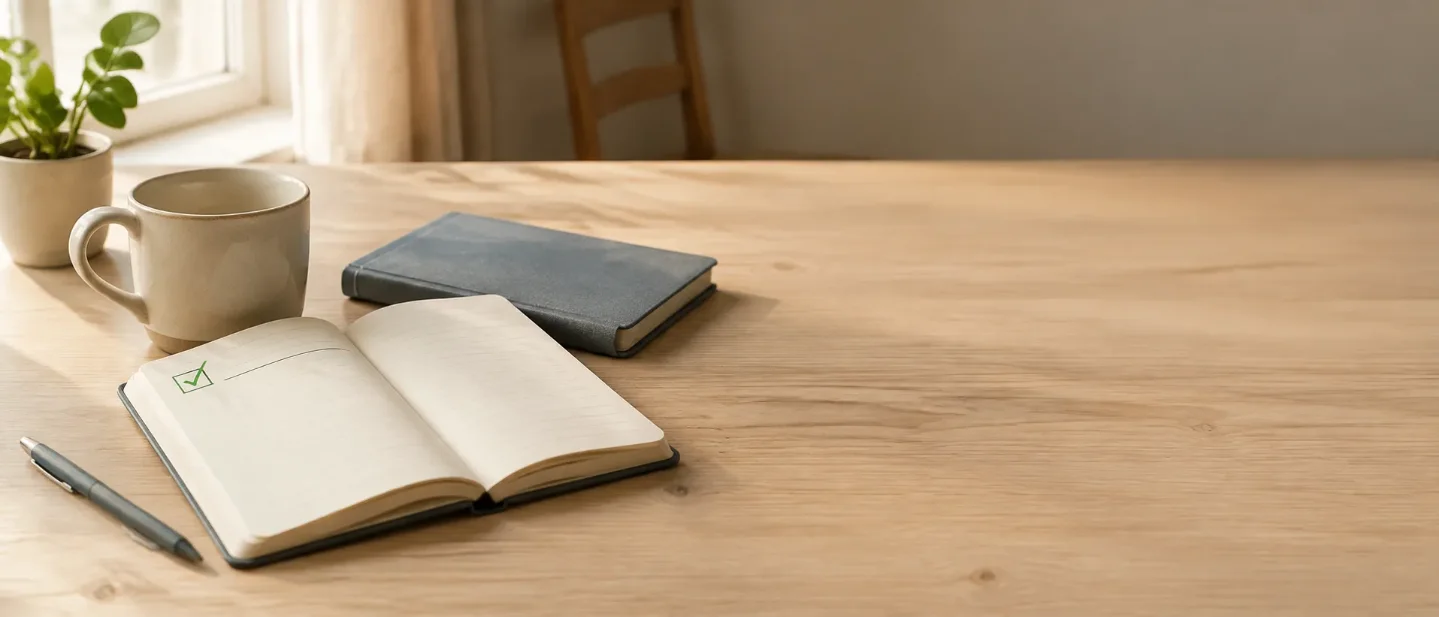
Close one small loop before you open another
A practical morning push to finish one visible piece of work before switching, so the next task starts with less mental clutter.

At 8:40, three things are open on your screen.
A draft needs one paragraph. A message needs a reply. A document needs the last two figures checked. Each task is small enough to begin, so you touch all three. By 9:10, you have moved around a lot and finished almost nothing.
The trap is easy to miss. Opening a new task feels like progress because the work changes in front of you. The unfinished tasks keep asking for small decisions, though: Where did I stop? What comes next? When will I return? Your attention keeps paying the same setup cost.
Close one small loop
Before opening another task, finish one visible piece of the task already in front of you.
The piece needs a clear edge. Send the reply. Check the two figures. Write the rough paragraph. Put the result somewhere you can find it again. A loop is closed when the next person, the next step, or your future self can continue without guessing what remains.
The rule is smaller than "finish what you start." A whole project may stay open for weeks. A small loop can close in ten or twenty minutes.
You might choose one of these:
- answer one message that needs a simple decision;
- check one defined group of figures and mark the result;
- write one rough section and leave a note about the next section;
- put one document in its final folder and record the follow-up.
Then you can open the next task with a clean place to begin.
Why the reset helps
An unfinished task takes attention even while you work on something else. The mind keeps a loose question running in the background: what happened to that other thing?
A visible finish gives the question an answer. The message is sent. The figures are checked. The paragraph exists. You have also made the next return easier because the stopping point is clear.
The goal is not to work on one task forever. The goal is to stop switching before any small part has reached a useful stopping point. Closing one loop gives the morning one piece of evidence that the work is moving.
Use it today
Look at the tasks already open. Choose the smallest loop that can reach a visible finish in 20 minutes or less. Write the finish line before you begin:
I will close this loop by ___. The finished result will be ___. I will open the next task after ___ minutes or when ___ is complete.
Set a timer. Work until the finish line, then stop even if the larger project continues. Leave one short note if the next step needs context.
A busy morning does not need a perfect sequence. Close one small loop before you open another, and let the finished piece make the next move easier.
This story was produced automatically by a channel. One sentence is all it takes for Neodrop to keep producing for you.
Related content
More from this channel
- Give one task a place to start
- Move the part that is still yours to move
- Remove one requirement before you begin
- Turn feedback into one change
- Write the next test after a mistake
- Keep one task for noisy mornings
- Run the smallest test before you plan the whole thing
- Park the interruption, finish the sentence