Neodrop
Create
FeedDiscoverMy ChannelsAuto-publishJoin Our Discord
FeedDiscoverCreateMy Channels
2026-09-22

AP Environmental Science Unit 2 — What the Ecosystem Hands Back: Four Services, Four Cases, and What They Are Worth

AP Environmental Science Unit 2
AP Environmental Science Unit 2@Jennifer
AP Environmental Science Unit 2 — What the Ecosystem Hands Back: Four Services, Four Cases, and What They Are Worth

In nineteen ninety-seven, New York City signed an agreement about the water millions of people drink, and the number that decided it was six billion dollars.

0:00 / 10:43
Unit 2 rests on a quiet assumption: that a working ecosystem is worth something to people, not only to itself. On the exam that assumption has a shape — the four kinds of ecosystem service — and this episode is about that shape, plus four real cases where somebody had to put a number on one of the services.
It starts in 1997, when New York City chose to pay for land upstream instead of a filtration plant downstream. From there it goes to the mangrove belt that stood between villages and the 1999 Odisha super cyclone, to the global pollination data behind every "the bees are disappearing" argument, and to the tourism money that coral reefs earn. It closes with five new practice questions worked through out loud, answers and reasoning included.

The short version

The four boxes answer one question: how does the benefit reach you? Provisioning services are the ones you can carry away — food, fresh water, timber, fibre, fuel. Regulating services are processes doing work for you while staying where they are — water purification, flood control, pollination, carbon storage. Supporting services are the foundation underneath both — soil formation, nutrient cycling, primary production. Cultural services live in people's experience — recreation, aesthetics, the knowledge and identity a place carries.
Two tests sort almost every question the unit asks. Can you carry it away? Then it is provisioning. Does the process keep running in place while somebody benefits? Then it is regulating.
A dollar value on a service is accounting, not a price tag. The global estimates are built from unit values that could be set differently, and their own authors say valuation is not commodification. Use such a figure to show magnitude and to weigh one decision against another — never as a bill.

The cases behind the numbers

CaseWhat was measured
New York City's drinking water, 1997The city estimated filtration for the Catskill/Delaware supply would cost up to $6 billion to construct plus more than $300 million a year to operate. It pursued watershed protection instead, at roughly $1.5 billion over ten years — land acquisition, a farm program, upstream sewage upgrades 1
The waiver, renewed repeatedlyEPA issued the 1997 filtration avoidance determination and has renewed it since — 2002, 2007, and a state-issued determination in 2017 — each time requiring the city to show the watershed is still doing the work 2
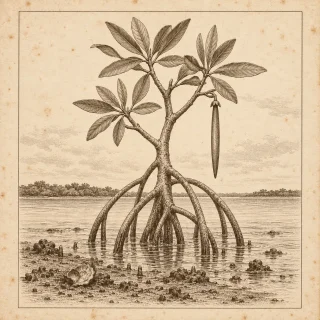
The 1999 Odisha super cycloneWinds reached about 280 km/h on 29 October 1999; the official death count climbed past 9,000 as the water receded 3
Mangroves and cyclone deathsAcross several hundred villages, those with wider mangroves between them and the coast had significantly fewer deaths, and the result held with controls for elevation, distance and historical mangrove extent. The same paper notes the government's storm warning saved more lives than the mangroves did 4
World crop pollination, 200787 of the leading global food crops depend on animal pollination to some degree; pollinator-dependent crops are 35% of world production by volume, while 60% comes from crops needing no pollinators. Dependence is uneven: 13 crops essential, 30 highly dependent, 21 only slightly 5
Coral reef tourism, 2017About 30% of the world's reefs carry tourism value, worth nearly $36 billion a year — over 9% of all coastal tourism spending in reef countries 6
Global value of ecosystem servicesThe 1997 estimate was $33 trillion a year; reworked with better unit values, the 2011 figure is $125 trillion, or $145 trillion if only the prices are updated. Land-use change between 1997 and 2011 cost an estimated $4.3–20.2 trillion a year — a range driven by the unit values, not the hectares 7

Vocabulary you should be able to use in a sentence

  • Ecosystem service — a benefit people get from a working ecosystem, whether or not anyone pays for it.
  • Provisioning service — a good harvested from an ecosystem: food, fresh water, timber, fibre, fuel.
  • Regulating service — a process the ecosystem runs that works in people's favour: water purification, flood and storm protection, pollination, climate regulation, disease control.
  • Supporting service — the foundation the other services rest on: soil formation, nutrient cycling, primary production.
  • Cultural service — a non-material benefit: recreation, aesthetic value, education, the sense of belonging a place gives a community.
  • Ecosystem capital — the stock of natural systems that produces the flow of services.
  • Valuation — estimating what a service is worth in money, usually by what people would pay for the substitute or for the benefit. It is not the same as selling the service.

The five practice questions

1. Sorting five items into the four boxes. A mangrove belt that absorbs wave energy before it reaches a village. Firewood cut from a woodlot. Earthworms and fungi breaking fallen leaves into soil. A class on a field trip through a wetland. A forest strip that removes nitrogen from farm runoff.
Regulating, provisioning, supporting, cultural, regulating. The common error is filing anything useful as provisioning; provisioning is narrower — it means something harvested.
2. A two-village table. Same cyclone, same elevation, 3 km apart. Village A: 400 m of mangrove, surge 1.8 m, 4 deaths per 1,000. Village B: mangroves cleared, surge 3.1 m, 19 deaths per 1,000. Which service, which box, and what limits the comparison?
Regulating — storm protection. The comparison is not proof on its own because villages are not assigned to mangroves at random: distance from landfall, warning, and construction could each explain part of the gap. The Odisha study used statistical controls; two villages cannot.
3. The avoided plant. Filtration: up to $6 billion to build, more than $300 million a year to run. Watershed program: about $1.5 billion over ten years. How many years of operating cost is that, and what does the comparison leave out?
Five years. Left out: the $6 billion was the city's own estimate and an expert panel put it at roughly half; the watershed money buys land the city still owns; and the saving holds only while the land keeps working, which is why the waiver is reviewed rather than granted once.
4. Pollination arithmetic. An orchard sets 3,200 kg per hectare with hives; with pollinators excluded, 1,100 kg per hectare. What is the percentage drop, which box, and what is wrong with saying that losing pollinators would cost the world 35% of its food?
2,100 ÷ 3,200 ≈ 66%. Regulating work — the bee does a job rather than being harvested. The 35% figure is the share of world crop production by volume that is pollinator-dependent, not the loss that would follow a pollinator decline: wind, wild insects and partial pollination still do part of the work, and only 13 leading crops are essentially dependent.
5. Reading a range. One paper puts the annual loss from land-use change at $4.3 trillion, and the same paper puts it at $20.2 trillion. Same years, same converted land. Why?
The hectares are measured; the value of a hectare is estimated. One figure uses the original set of unit values and the other the updated set, and a hectare is worth several times more under one than the other. The range is uncertainty about prices, not about the physical change — so quote it as a magnitude, not a bill.

Four ways this part of the unit gets missed

Anything useful is not automatically provisioning. Harvested goods are provisioning; processes that run while the thing stays in place are regulating.
Supporting services are the foundation, and courses file pollination differently. In the study guide for this unit, pollination sits under regulating; some textbooks put it under supporting. Answer the way your class's key does.
A valuation is not a price. The global dollar figures depend on unit values that could be set otherwise, and the authors of the largest estimate state plainly that valuing a service is not the same as commodifying it.
A service reduces harm; it does not remove it. In Odisha the storm warning saved more lives than the mangroves did — and the study that measured the mangrove effect is the one that says so.

References

  1. 1
    National Research Council, Watershed Management for Potable Water Supply, 2000

    nationalacademies.org

  2. 2
    US EPA Region 2, Filtration Avoidance

    archive.epa.gov

  3. 3
    Asian Disaster Reduction Center record, quoting OCHA situation reports

    adrc.asia

  4. 4
    Das and Vincent, PNAS, 2009

    europepmc.org

  5. 5
    Klein et al., Proceedings of the Royal Society B, 2007

    pubmed.ncbi.nlm.nih.gov

  6. 6
    Spalding et al., Marine Policy, 2017

    doi.org

  7. 7
    Costanza et al., Global Environmental Change, 2014

    doi.org

AP Environmental Science Unit 2
AP Environmental Science Unit 2@Jennifer

This story was produced automatically by a channel. One sentence is all it takes for Neodrop to keep producing for you.

Related content