Huawei and the switch nobody would sell him

Huawei and the switch nobody would sell him

In the winter of 1974 a young engineer was sent to the north-east of China to help build a chemical fibre plant, where the temperature fell to twenty-eight degrees below zero. He said afterwards that he was happy there, because it was one of the few places in the country where a person was allowed to read.

0:00 / 10:47
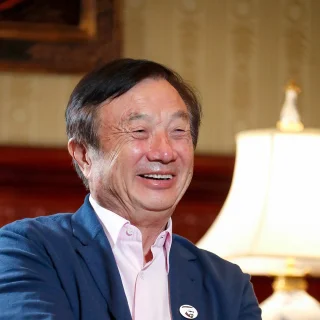
Ren Zhengfei was forty-three when he registered Huawei in Shenzhen in 1987 with twenty-one thousand yuan, about five thousand dollars, and began reselling telephone equipment imported from Hong Kong. He had grown up poor in Guizhou province, spent most of his working life in the army's engineering corps, and lost that post when the corps was disbanded in 1983. Four decades later the company he started was the world's largest maker of telecommunications equipment, and was at the centre of the technology conflict between China and the United States. 12
This episode follows the story in six parts: the late start, the switch he had to build himself, the counties the foreign giants left alone, the crisis he wrote down before it arrived, the years when the problem stopped being the product, and the lessons the story leaves for anyone building a company now.

A late start in Shenzhen

Ren was born in 1944 in a mountain town in Guizhou, the first of seven children of two schoolteachers, and has said he never owned a proper shirt until high school. His father had fought for the Kuomintang against the Japanese before joining the Communist Party, and during the Cultural Revolution both parents were sent to labour camps. Ren studied civil engineering in Chongqing, joined the army's engineering corps in 1974, and was kept out of the Communist Party until 1978; he was demobilised when the corps was disbanded. In Shenzhen he took a job at the Shenzhen South Sea Oil Corporation's logistics base, disliked it, and left to start his own company. 34

The switch he had to build

A telephone exchange is the computer inside a phone company that routes calls, and in the late 1980s China imported nearly all of its telephone equipment. Huawei began as a reseller, buying switches from Hong Kong and selling them on. Ren chose research over the joint-venture route his competitors took, on the argument that a foreign partner would never transfer its newest technology. As a private company Huawei could not borrow from state banks, so it borrowed from other enterprises at interest rates of twenty to thirty percent, spent close to a hundred million yuan on research, and shipped its own large digital switch, the C&C08, in 1993. 56

The counties the giants ignored

The foreign suppliers held the big cities and left the countryside, where margins were thin and conditions were difficult. Huawei went there instead, following a phrase Ren borrowed from Mao Zedong: surround the cities from the countryside. In Heilongjiang province in 1992, Ericsson had three or four staff; Huawei had more than two hundred living in the counties, dealing with unstable power and rats in the cables. The company sent teams to all 2,800 counties in China, and by 1996 held a fifth of the Chinese switch market, second to Shanghai Bell, on revenue of about 2.6 billion yuan. Huawei undercut foreign prices and set up partnerships with local telephone bureaus that returned much of the investment as yearly dividends, a practice the case-study literature records as controversial but legal. 35

The winter he wrote down

In January 2001 Ren's mother was hit by a car while out buying cabbage, and he reached her too late. Weeks afterwards he published "Huawei's Winter" in the company magazine, warning that the telecom boom would turn and that a company freezes to death without warning. That year Huawei sold its Avansys Power subsidiary to Emerson Electric for $750 million, the first time it monetised its research, and brought IBM in to rebuild how it developed products. Ren has said he collapsed between 2000 and 2003, had cancer surgery twice, and wrote in 2002 that Huawei was on the verge of collapse. The company's demands on its people were heavy: mattress culture, long hours, and in late 2007 a request that 7,000 employees resign and be re-hired on short-term contracts just before a new labour law strengthened long-serving workers' rights. 3

Permission, not product

From the mid-2000s Huawei's obstacle became political. In 2007 the United States blocked its attempt to buy part of 3Com; in December 2018 Canadian police arrested its chief financial officer, Meng Wanzhou, Ren's daughter, at the request of the United States, and in May 2019 the Department of Commerce added Huawei and 68 affiliates to the Entity List, requiring a licence for exports to them under a policy of presumption of denial. In 2020 the controls reached semiconductors, and Huawei sold its budget phone brand, Honor, to a consortium of dealers and agents, which Reuters reported had been discussed at about 100 billion yuan. A Wall Street Journal investigation in 2019 estimated as much as $75 billion of cumulative state support, a figure Huawei has called small and non-material. 2 the same company's equipment reached about a quarter of America's rural wireless carriers, and roughly $60 billion of American technology sales to it were approved during the years of the ban. 789

What to take from the story

Huawei today belongs to 169,054 of its current and retired employees, with the founder's own stake under 0.6 percent. In 2025 it reported revenue of 880.9 billion yuan (about 126 billion dollars) and put 192.3 billion yuan back into research and development, 21.8 percent of revenue, as it built replacements for the components it could no longer buy. The episode closes by drawing the lessons out of the story rather than pronouncing on them: which markets disappear because they look unprofitable, what a founder can build when nothing can be bought, what it costs to write a crisis down early, and which parts of a supply chain a company does not actually control. 1011

This story was produced automatically by a channel. One sentence is all it takes for Neodrop to keep producing for you.

Related content